1. Free-Cutting Steels: Complete Technical Guide for Industry Professionals
Free-cutting steels represent a specialized category of metallurgical materials specifically designed to optimize high-speed, high-productivity machining operations.
These steels, characterized by chemical compositions enriched with elements that improve machinability of free-cutting steels, are the ideal solution for modern manufacturing industry, where production efficiency and surface quality are critical parameters for competitiveness.
2. Definition and Fundamental Characteristics of Free-Cutting Steels
Free-cutting steels are iron-carbon alloys specifically formulated with the controlled addition of elements such as sulfur, lead, tellurium or bismuth, designed to facilitate the formation of short, discontinuous chips during machining operations. The classification of free-cutting steels distinguishes them from conventional steels due to their ability to ensure high cutting speeds, superior tool life and optimal surface finishes.
The distinctive feature of these materials lies in their ability to form controlled non-metallic inclusions that act as stress concentrators, facilitating chip breakage and reducing cutting forces. The mechanical properties of free-cutting steels are optimized to balance superior machinability with mechanical characteristics suited to the end applications.
2.1. Principles of Machinability
Machinability in free-cutting steels is determined by several interconnected factors that influence the chip removal process. Chip-breaking capability at high machining speeds depends on the material’s ability to form short, easily evacuated chips, reducing friction on the tool’s rake face and minimizing the heat generated during cutting.
The fundamental mechanisms governing machinability include the presence of sulfide inclusions that act as natural lubricants, the formation of protective films on the tool surface and the reduction of cutting forces through the facilitation of localized plastic deformation.
2.2. Chemical Composition and Elements for Chip-Breaking
The chemical composition of free-cutting steels is characterized by the controlled presence of elements that improve machinability. The sulfur content, typically between 0.15% and 0.35%, is the fundamental element for the formation of manganese sulfide (MnS) inclusions that facilitate chip breakage.
Lead, when present in concentrations of 0.15-0.35%, acts as a solid lubricant distributed within the metal matrix, reducing friction during cutting. Alternative elements such as tellurium and bismuth are used in lower concentrations (0.02-0.10%) to achieve effects similar to lead in applications requiring lead-free steels.
2.3. Chip Formation Mechanisms
Chip formation in free-cutting steels occurs through concentrated plastic deformation mechanisms facilitated by the non-metallic inclusions present in the microstructure. Sulfide inclusions, characterized by low mechanical strength and melting temperatures lower than the matrix, create stress concentration zones that promote microcrack initiation and chip segmentation.
Control of inclusion morphology and distribution is essential to optimize machinability, requiring specific parameters during casting and plastic deformation processes to obtain inclusions elongated in the rolling direction.
3. Classification of Free-Cutting Steels According to International Standards
3.1. European Standard EN 10277
The EN standard for free-cutting steels EN 10277 defines the technical specifications for free-cutting steels intended for machining operations, establishing chemical compositions, mechanical properties and delivery conditions. This European standard harmonizes requirements to ensure uniform quality and interchangeability of materials internationally.
The standard classifies free-cutting steels into different categories based on carbon content and machinability elements, specifying strict tolerances for sulfur, lead and other elements that influence chip-breaking capability. Inclusion cleanliness requirements are defined to ensure uniform distribution of machinability elements.
3.2. ASTM and AISI Standards for Free-Cutting Steels
ASTM A276 standards (stainless) and AISI designations define specifications for free-cutting steels in the North American market. The AISI designation system uses specific prefixes to identify free-cutting steels: “11” for carbon steels with sulfur, “12” for carbon steels with sulfur and lead.
The correlation between European and American standards allows the identification of equivalent grades, facilitating the selection of alternative materials based on regional availability and specific application requirements.
3.3. International Designation System
The international designation system for free-cutting steels varies regionally but maintains consistency in fundamental compositional aspects:
- European System: Numerical designation with suffixes for alloying elements (S for sulfur, Pb for lead)
- AISI System: Four-digit numbering with identifying prefixes (11xx, 12xx)
- JIS System: Alphanumeric designation with regional prefix (SUM)
3.4. Comparative Table of Designations
| EN Designation | AISI Equivalent | JIS Equivalent | S (%) | Pb (%) | Main Application |
| 11SMn30 | 1117 | SUM22 | 0,27-0,33 | – | General small parts |
| 11SMnPb30 | 12L14 | SUM23 | 0,26-0,35 | 0,15-0,35 | Automatic turning |
| 36SMnPb14 | – | – | 0,27-0,33 | 0,15-0,35 | Automotive components |
| 9SMnPb28 | 1215 | SUM24 | 0,26-0,35 | 0,15-0,35 | Screws and fasteners |
4. Main Categories of Free-Cutting Steels
4.1. Free-Cutting Steels Not for Heat Treatment
Free-cutting steels not intended for heat treatment represent the most widely used category for applications where the required mechanical properties are moderate and priority is given to optimal machinability. These steels, with a carbon content typically below 0.25%, are supplied in normalized or annealed condition to ensure maximum machinability.
The industrial applications of free-cutting steels in this category include small metal parts, fastening components and parts with complex geometries requiring high production speeds. The ferritic-pearlitic microstructure ensures good ductility and ease of deformation during machining.
4.2. Case-Hardening Free-Cutting Steels
Case-hardening free-cutting steels combine high machinability with the ability to develop surface hardness through case hardening processes. The low carbon content (0.10-0.20%) ensures a tough core after thermochemical treatment, while the machinability elements facilitate roughing operations before treatment.
These materials are used for components requiring surface wear resistance combined with core toughness, such as gears, pins and bushings for mechanical applications.
4.3. Quenched and Tempered Free-Cutting Steels
Quenched and tempered free-cutting steels have a medium carbon content (0.25-0.55%) that allows superior mechanical properties to be achieved through quenching and tempering. The presence of machinability elements facilitates roughing operations, while heat treatments for free-cutting steels optimize the final characteristics of the component.
Limitations in heat treatments arise from the presence of sulfide inclusions that can negatively affect transverse toughness and the fatigue resistance of the treated material.
4.4. Main Grades (11SMn30/37, 11SMnPb30/37, 36SMnPb14)
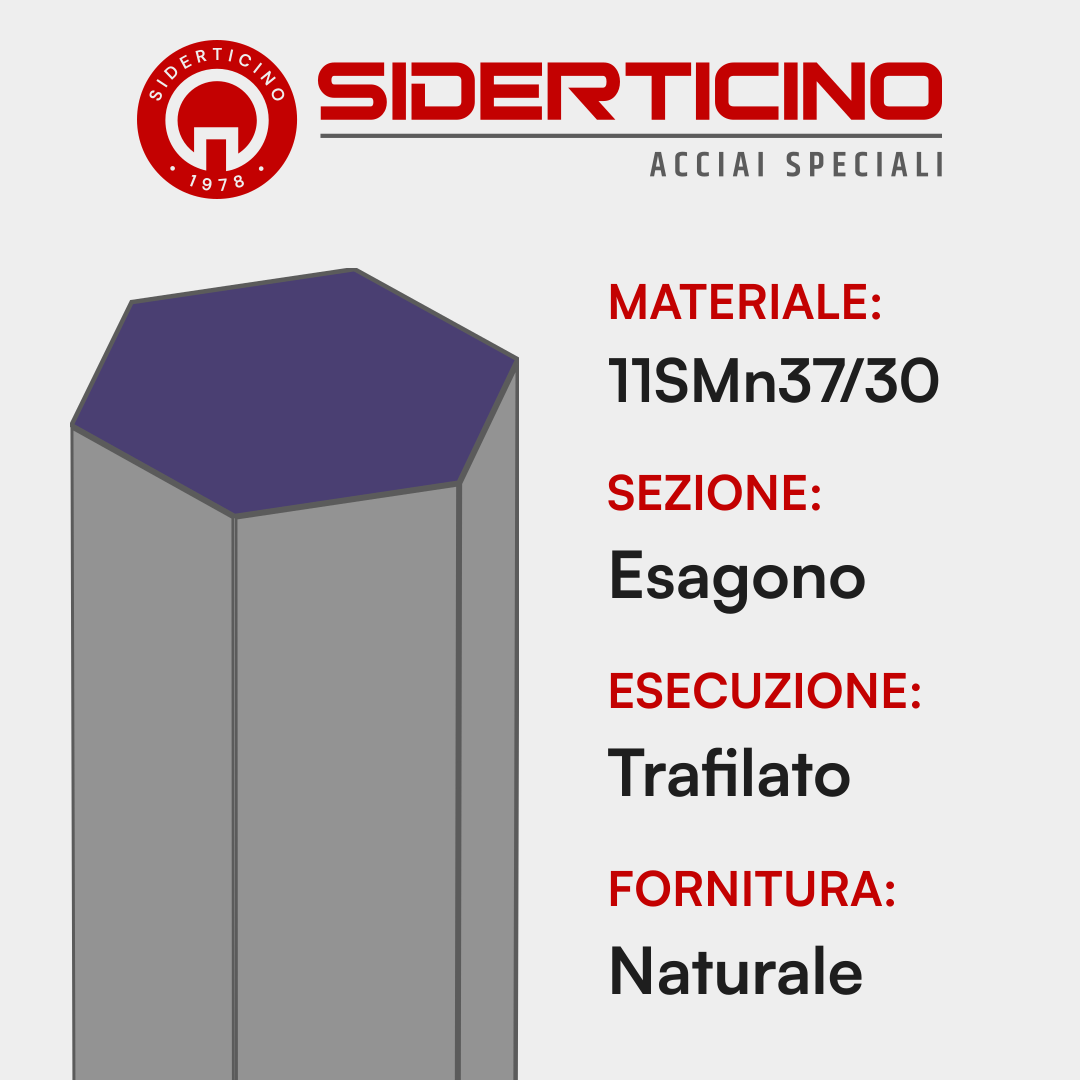
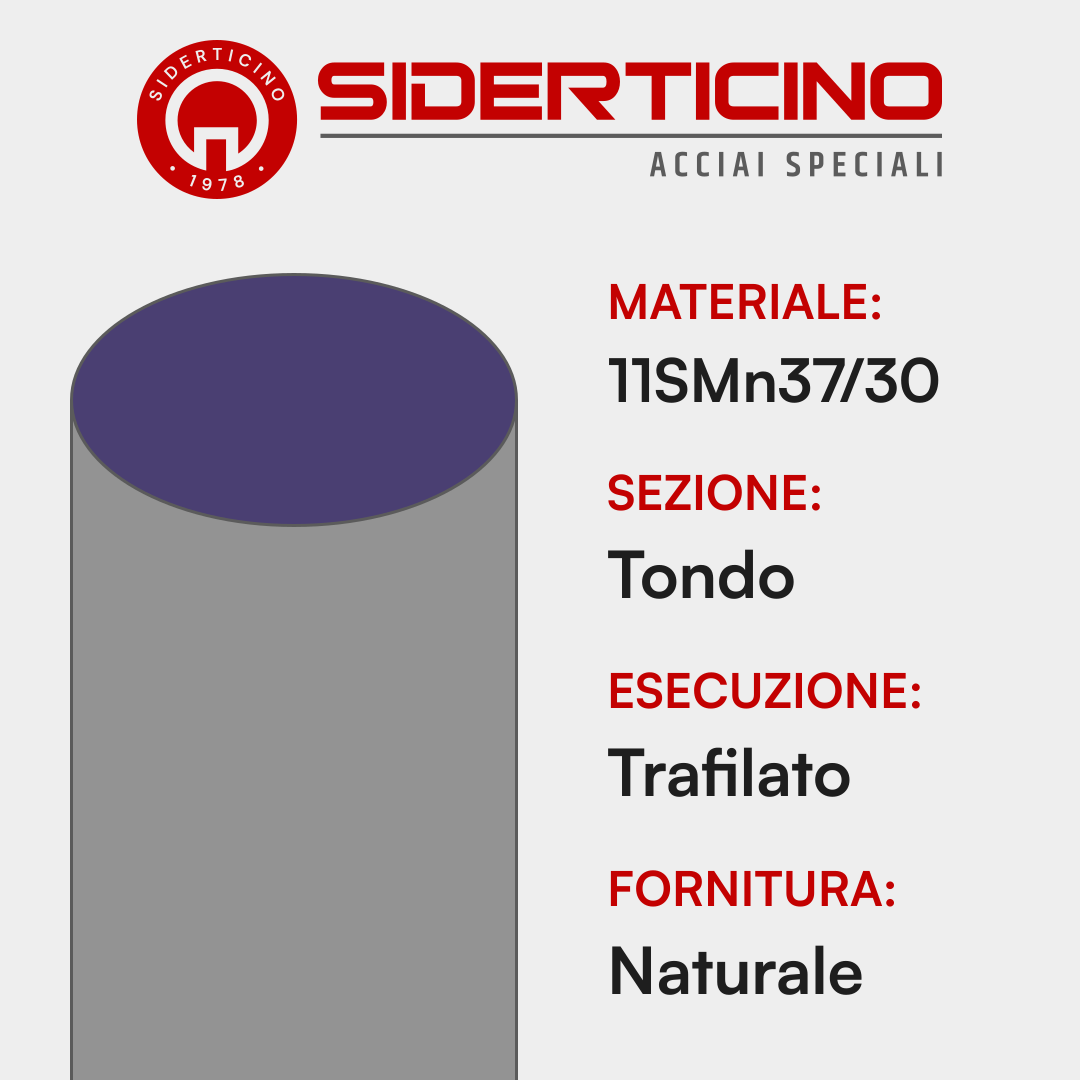
Grade 11SMn30 represents the most widely used sulfur-bearing carbon free-cutting steel for general applications, ensuring a good compromise between machinability and mechanical properties. The sulfur content of 0.27-0.33% ensures controlled formation of MnS inclusions for optimal chip-breaking capability.
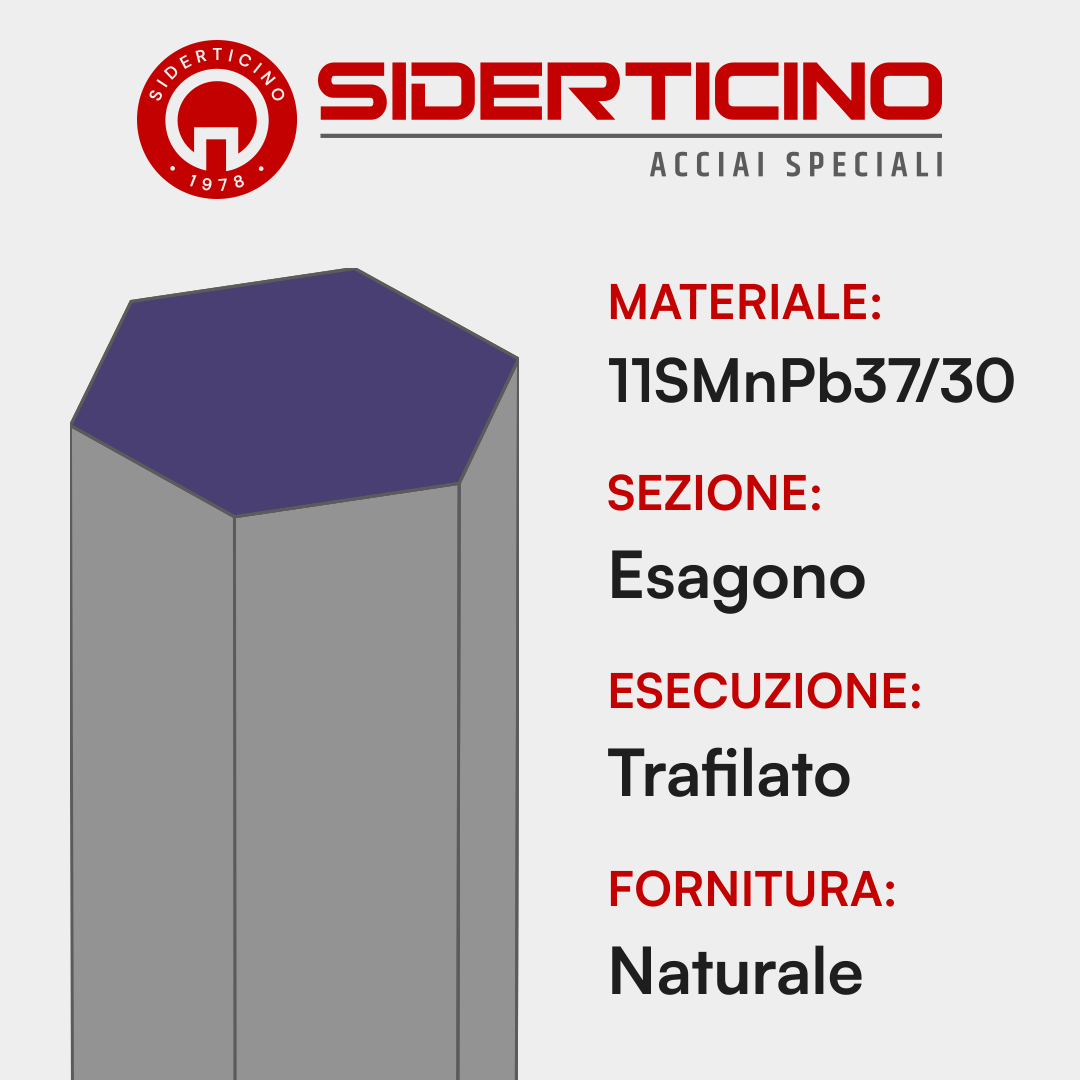
11SMnPb30 adds lead to further improve machinability, particularly advantageous for high-speed machining on automatic lathes. Grade 36SMnPb14, with a higher carbon content, is used for components requiring superior mechanical strength after quenching and tempering.
5. Chemical Composition and Alloying Elements
5.1. Role of Sulfur in Chip-Breaking
Sulfur in free-cutting steels plays the fundamental role of a machinability-improving element through the formation of manganese sulfide (MnS) inclusions. These inclusions are characterized by a melting point of ~1610°C, but the most critical aspect for machinability is that they decompose at ~1180°C in a reducing atmosphere, with a relevant softening temperature between 800-1000°C.
The morphology of sulfide inclusions is controlled through the Mn/S ratio, typically maintained between 4:1 and 6:1 to ensure complete MnS formation and avoid the presence of iron sulfide (FeS), which would be detrimental to mechanical properties. Uniform distribution of the inclusions requires optimized casting and deformation processes.
5.2. Effect of Lead as a Solid Lubricant
Lead in sulfur-lead free-cutting steels acts as a solid lubricant uniformly distributed throughout the microstructure. During machining, lead forms thin films on the tool surface, reducing friction and the heat generated, significantly extending tool life.
The practically nil solubility of lead in iron ensures the presence of free metal particles that migrate toward the cutting surfaces during plastic deformation. The lubricating effect is particularly pronounced at the operating temperatures typical of high-speed machining (200-400°C).
5.3. Influence of Tellurium and Bismuth
Tellurium and bismuth represent alternatives to lead for improving machinability in free-cutting steels. Tellurium, used in concentrations of 0.02-0.05%, forms tellurides that improve chip-breaking capability through mechanisms similar to sulfide inclusions.
Bismuth, with concentrations of 0.05-0.20%, acts as a solid lubricant alternative to lead, ensuring comparable performance in terms of friction reduction and improved surface finish.
5.4. Control of Residual Elements
Strict control of residual elements is critical in free-cutting steels to ensure uniform properties and consistent machinability. Phosphorus and nitrogen must be limited to prevent brittleness, while control of oxygen and hydrogen is essential to minimize the formation of undesired inclusions.
The presence of elements such as nickel, chromium and molybdenum in residual amounts can influence local hardenability and modify behavior during heat treatments, requiring specific controls for critical applications.
6. Mechanical Properties and Machinability
6.1. Machinability and Chip-Breaking Indices
The quantification of machinability in free-cutting steels uses standardized indices that allow objective comparisons between different materials. The most widely used machinability index is based on cutting speed for a standardized tool life, normalized against a reference steel (typically AISI 1112 = 100%).
Lead-containing free-cutting steels typically achieve machinability indices of 150-200%, while sulfur-only grades reach 120-150%. The evaluation considers cutting speed, tool life, cutting forces and surface quality according to ISO 3685 standards.
6.2. Optimal Cutting Speeds
Optimal cutting speeds for free-cutting steels vary depending on chemical composition, type of machining and the characteristics of the tool used. For turning operations with cemented carbide tools, typical speeds are:
- Sulfur-only steels: 250-350 m/min
- Sulfur and lead steels: 300-450 m/min
- Tellurium/bismuth steels: 280-400 m/min
Optimization requires balancing production speed, tool life and surface quality, considering overall operating costs.
6.3. Cutting Tool Life
Cutting tool life represents a critical parameter for the economic evaluation of free-cutting steels. Improved machinability translates into tool life increases of 50-150% compared to conventional steels, with significant economic benefits for large-volume production.
The predominant wear mechanisms include crater wear on the rake face and flank wear, both delayed by the presence of lubricating elements that reduce cutting temperatures and chip adhesion.
6.4. Surface Finish and Tolerances
The surface finish achievable with free-cutting steels is generally superior to conventional steels thanks to reduced chip adhesion and the formation of lubricating films. Typical roughness values obtainable under optimized conditions are:
- Turning: Ra 0.8-1.6 μm
- Milling: Ra 1.6-3.2 μm
- Drilling: Ra 3.2-6.3 μm
Achievable dimensional tolerances depend on the thermal stability of the process and the rigidity of the machine-workpiece-tool system.
7. Heat Treatments and Delivery Conditions
7.1. As-Rolled (Untreated) Condition
The as-rolled (untreated) condition represents the most common delivery condition for free-cutting steels intended for direct machining. The ferritic-pearlitic microstructure, obtained through controlled cooling after rolling, ensures uniform hardness and optimal machinability.
Control of rolling parameters is critical to obtain uniform distribution of sulfide inclusions and consistent mechanical properties along the entire length of the semi-finished product.
7.2. Normalizing and Annealing
Normalizing is applied to free-cutting steels to obtain a uniform microstructure and relieve residual stresses from hot working. Treatment at 870-920°C followed by air cooling ensures fine grain and homogeneous mechanical properties.
Soft annealing, carried out at 650-700°C, is used to maximize machinability by reducing the hardness of the material. This treatment promotes spheroidization of pearlite, improving ductility and facilitating cold forming operations.
7.3. Quenching and Tempering for Free-Cutting Steels
Heat treatments for free-cutting steels during quenching and tempering require particular attention due to the presence of sulfide inclusions that can influence the final properties. Quenching is carried out at optimized austenitizing temperatures (840-870°C) to completely dissolve cementite without excessively altering the inclusions.
Tempering, typically at 550-650°C, allows the desired compromise between hardness and toughness to be achieved. The presence of sulfur can slightly reduce transverse toughness compared to equivalent conventional steels.
7.4. Limitations in Heat Treatments
Limitations in heat treatments of free-cutting steels mainly arise from the presence of non-metallic inclusions that can cause anisotropy in mechanical properties. Transverse impact energy is typically 20-30% lower than in the longitudinal direction.
Sulfide inclusions can also act as stress concentrators during rapid cooling, increasing the risk of quench cracking for massive sections or complex geometries.
8. Production and Processing
8.1. Casting and Composition Control
Casting processes for free-cutting steels require strict controls to ensure uniform distribution of machinability elements. The sequence of alloying element additions is critical: manganese is added first to ensure deoxidation, followed by sulfur to form controlled MnS inclusions.
Control of casting temperature and ladle residence time influences the final morphology of the inclusions, requiring optimized parameters for each specific grade.
8.2. Rolling and Cold Drawing
Rolling of free-cutting steels requires specific parameters to achieve controlled elongation of sulfide inclusions in the rolling direction. A minimum deformation ratio of 3:1 is generally required to fully develop the oriented inclusion structure.
Cold drawing further improves the orientation of inclusions and surface properties, but requires temperature control to avoid breakage of the more brittle inclusions.
8.3. Machining Parameters
Optimization of machining parameters for free-cutting steels requires simultaneous consideration of cutting speed, feed rate, depth of cut and tool characteristics. Optimal parameters vary significantly between different operations:
Turning:
- Speed: 250-450 m/min
- Feed: 0.1-0.4 mm/rev
- Depth: 1-5 mm
Milling:
- Speed: 200-350 m/min
- Feed: 0.05-0.2 mm/tooth
- Axial depth: 0.5-3 mm
Optimization of Production Cycles
Optimization of production cycles with free-cutting steels requires a systematic approach that considers productivity, quality and operating costs. The use of real-time monitoring systems allows cutting parameters to be automatically adapted to variable operating conditions.
Integration with advanced CAD/CAM systems facilitates the programming of optimized tool paths to maximize the benefits of superior machinability.
9. Industrial Applications of Free-Cutting Steels
9.1. Automotive Industry and Components
The automotive industry represents the sector with the greatest use of free-cutting steels, where they are employed for the production of components requiring high volumes and precise tolerances. Typical applications include pins, bushings, fastening elements and fuel system components.
The machinability of free-cutting steels is particularly advantageous for operations on high-productivity machining centers, where reduced cycle times and increased tool life translate into significant economic benefits.
9.2. Production of Small Metal Parts
Small metal parts represent an ideal application for free-cutting steels, taking advantage of the ability to produce large volumes with high dimensional precision. Screws, nuts, washers and fastening elements are typically produced on multi-spindle automatic lathes that benefit from superior machinability.
Productivity can increase by 30-50% compared to conventional steels, with simultaneous improvement in surface quality and dimensional consistency.
9.3. Hydraulic and Pneumatic Sector
The hydraulic sector uses free-cutting steels for components requiring high surface finishes and tight tolerances. Pistons, rods and valve bodies benefit from the ability to achieve reduced roughness and precise geometries through high-speed machining.
Corrosion resistance and compatibility with hydraulic fluids are additional considerations that influence the selection of the specific free-cutting steel grade.
9.4. Household Appliances and Electronic Devices
The household appliance and electronic device industry uses free-cutting steels for components requiring high production volumes and low costs. Connection elements, supports and decorative components take advantage of superior machinability for high-precision operations.
The evolution toward increasing miniaturization requires the development of free-cutting steels with optimized machinability for micro-machining and sub-millimeter tolerances.
10. Limitations and Design Considerations
10.1. Reduced Weldability
The weldability of free-cutting steels is significantly compromised by the presence of sulfur and lead, which cause the formation of brittle compounds in the heat-affected zone. The high sulfur content promotes hot cracking during solidification of the molten metal.
Applications requiring welding must consider grades with reduced machinability element content or plan post-weld heat treatments to improve joint properties.
10.2. Limited Transverse Toughness
The transverse toughness of free-cutting steels is reduced compared to conventional steels due to the preferential orientation of elongated sulfide inclusions during rolling. The reduction can reach 30-40% for stresses perpendicular to the rolling direction.
Component design must take this anisotropy into account, orienting the main stresses parallel to the rolling direction whenever possible.
10.3. Fatigue Resistance
The fatigue resistance of free-cutting steels can be negatively affected by non-metallic inclusions that act as stress concentrators for crack initiation. The effect is particularly pronounced for high-frequency cyclic loading.Surface treatments such as controlled shot peening can improve fatigue resistance through the induction of compressive residual stresses.
10.4. Selection Criteria
Selection criteria for free-cutting steels must balance machinability advantages with limitations in mechanical properties. Economic evaluation must consider the entire production cycle, including material costs, machining, tooling and quality control costs.
Optimal selection requires specific analysis for each application, considering production volumes, required tolerances, in-service stresses and durability requirements.
11. Quality Control and Characterization
11.1. Standard Machinability Tests
Machinability tests for free-cutting steels follow standardized protocols that allow objective comparisons between different materials. Tests include evaluation of cutting speed, tool life, cutting forces and surface quality according to ISO 3685 standards.
Chip morphology is analyzed to verify the formation of short, easily evacuated segments, a fundamental characteristic for high-speed automated machining.
11.2. Metallographic Controls
Metallographic controls for free-cutting steels include evaluation of the distribution and morphology of sulfide inclusions, characterization of the microstructure and verification of the absence of metallurgical defects. Quantification of inclusions follows standardized methods to ensure comparability of results.
Electron microscope examination allows detailed characterization of the chemical composition of the inclusions and their interface with the metal matrix.
11.3. Chip Morphology Analysis
Chip morphology analysis represents a specific control for free-cutting steels, verifying the formation of short segments and ease of evacuation. The parameters evaluated include average segment length, aspect ratio and tendency to tangle.
The correlation between chip morphology and machining parameters allows optimization of production cycles to maximize the benefits of superior machinability.
11.4. Tool Wear Testing
Tool wear tests for free-cutting steels quantify the extension of tool life and identify the predominant wear mechanisms. The evaluation considers flank wear, crater wear and possible chipping of the cutting edge.
The results allow optimal selection of tool geometries and coatings to maximize productivity in specific applications.
12. Comparison with Other Machining Steels
12.1. Free-Cutting Steels vs Conventional Steels
The comparison between free-cutting steels and conventional steels highlights significant advantages in terms of productivity and machining quality. The 30-80% increase in cutting speed and the 50-150% increase in tool life translate into reductions in cycle times and operating costs.
Limitations include slightly lower mechanical properties and restrictions on applicability for welded components or components subjected to transverse stresses.
12.2. Cost-Benefit Analysis
Cost-benefit analysis for free-cutting steels must consider the higher material cost (typically 10-20% more) against the benefits in productivity and reduced machining costs. The break-even point is typically reached for production volumes exceeding 1000 pieces for medium-complexity components.
Indirect benefits include improved surface quality, reduced scrap and greater flexibility in production scheduling.
12.3. Replacement Criteria
Criteria for replacing conventional steels with free-cutting steels include evaluation of production volume, geometric complexity, required tolerances and in-service stresses. Replacement is more advantageous for components with high machining content and complex geometries.
The analysis must consider any necessary changes in process parameters and tools used to maximize the benefits of superior machinability.
13. Innovations and Future Trends
13.1. Eco-Friendly Free-Cutting Steels (Lead-Free)
The development of lead-free free-cutting steels represents an important trend driven by environmental considerations and increasingly restrictive regulations. Lead substitute elements include tellurium, bismuth and rare earths, which ensure comparable machinability with lower environmental impact.
Technical challenges include optimizing concentrations to maximize the lubricating effect while maintaining acceptable mechanical properties and competitive costs.
13.2. Optimization for CNC Machining
Optimization of free-cutting steels for high-speed CNC machining requires specific compositions for milling, drilling and complex machining operations. Development includes more precise control of inclusion distribution and optimization for advanced tool geometries.
Integration with industrial automation systems requires greater consistency of properties to ensure reliability of automated processes.
13.3. Developments in Chemical Composition
Developments in the chemical composition of free-cutting steels include the use of microalloying elements to simultaneously optimize machinability and mechanical properties. Elements such as vanadium, titanium and niobium in controlled concentrations can improve inclusion structure and material strength.
Research focuses on compositions that allow more effective heat treatments while maintaining machinability advantages.
14. Frequently Asked Questions about Free-Cutting Steels
What is the main difference between free-cutting steels and conventional steels?
Free-cutting steels contain specific elements (sulfur, lead, tellurium) that significantly improve machinability through the formation of inclusions that facilitate chip breakage and reduce friction during cutting. This results in higher machining speeds and longer tool life.
Why do free-cutting steels have limited weldability?
The presence of sulfur and lead in free-cutting steels causes the formation of brittle compounds during welding, increasing the risk of hot cracking. The high sulfur content (0.15-0.35%) significantly exceeds the recommended limits for good weldability (<0.05%).
How is the optimal free-cutting steel grade selected?
Selection considers production volume, geometric complexity, required tolerances and in-service stresses. For high volumes and complex geometries, lead-containing grades are preferred, while for applications with higher mechanical requirements, quenched and tempered grades with controlled machinability element content are used.
What are the economic advantages of free-cutting steels?
Advantages include productivity increases of 30-80%, tool life increases of 50-150% and improved surface quality. The higher material cost (10-20%) is typically offset by reduced machining costs for high volumes.
Can free-cutting steels be heat treated?
Yes, but with limitations. Heat treatments for free-cutting steels are possible but require optimized parameters due to the presence of sulfide inclusions. Transverse toughness is reduced and some treatments can alter the distribution of the inclusions.
Are there eco-friendly alternatives to lead in free-cutting steels?
Yes, tellurium, bismuth and rare earths represent alternatives to lead with lower environmental impact. These elements ensure comparable machinability but require specific optimization of concentrations and may involve higher costs.
Free-cutting steels represent a mature technological solution for modern manufacturing industry, offering significant advantages in productivity and machining quality. The continuous evolution toward more sustainable compositions and optimization for advanced CNC technologies ensures growing relevance for the needs of Industry 4.0.