1. Valve Steels: Complete Technical Guide for Industry Professionals
Valve steels represent a highly specialized category of metallurgical materials designed to guarantee exceptional performance under the most severe operating conditions in the process industry.
These materials, characterized by optimized mechanical properties and superior corrosion resistance, constitute the fundamental element for the safety and reliability of petrochemical, oil & gas and power generation plants, where the failure of a valve can lead to catastrophic consequences both from an economic and operational safety standpoint.
2. Definition and Fundamental Characteristics of Valve Steels
Valve steels are metal alloys specifically developed to meet the critical performance requirements of industrial valves operating under conditions of high pressure, elevated temperature and chemically aggressive environments.
The classification of valve steels distinguishes them from standard materials due to the unique combination of mechanical strength, toughness, corrosion resistance and dimensional stability at operating temperatures that can reach 650°C for carbon steels and exceed 800°C for stainless steels for valves.
The distinctive feature of these materials lies in their ability to maintain structural integrity under cyclic stresses, operating pressures up to 1500 bar and in the presence of corrosive process fluids such as hydrogen sulfide (H₂S), chlorides and hydrocarbons at high temperature.
2.1. Performance Requirements for Critical Applications
The performance requirements for valve steels in industrial applications of valve steels are defined by the severe operating conditions of industrial process systems.
Mechanical strength must ensure structural integrity under operating pressures that, in petrochemical applications, can reach 420 bar for standard services and over 1400 bar for special offshore applications.
Low-temperature toughness is critical for cryogenic applications and offshore winter services, where steels must maintain adequate mechanical properties down to -46°C according to ASTM A352 specifications for low-temperature grades.
Charpy-V impact resistance must exceed 27 J at -29°C to ensure operational safety under severe climatic conditions.
2.2. Severe Operating Conditions and Stresses
The severe operating conditions typical of industrial applications of valve steels include repeated thermal cycles, pulsating pressures, presence of high-pressure hydrogen and fluids containing H₂S at concentrations above 50 ppm.
High-temperature valve steels must resist creep and oxidation, maintaining stable mechanical properties for operational periods of 20-30 years.
Resistance to thermal fatigue is particularly critical in power generation applications, where valves are subject to start-up and shutdown cycles that induce cyclic thermal stresses with temperature gradients exceeding 100°C/hour.
2.3. Selection Criteria for Safety and Reliability
Selection criteria for valve steels must primarily consider the fluid-temperature-pressure compatibility matrix, followed by an assessment of the risk of catastrophic failure.
Risk analysis must include evaluation of the probability of failure due to localized corrosion, erosion-corrosion and hydrogen embrittlement, particularly critical in high-pressure hydrogen services.
3. Classification of Valve Steels According to International Standards
3.1. ASTM A216, A217, A351 Standards for Castings
The ASTM standard for valve steels for cast components is mainly regulated by ASTM A216 for carbon steels, A217 for low-alloy steels and A351 for austenitic stainless steels.
ASTM A216 covers three main grades (WCA, WCB, WCC) with differences in chemical composition and mechanical properties, where WCB represents the most widely used grade for general services up to 425°C. ASTM A217 defines alloyed grades with specific compositions:
- WC6: C 0.05-0.20%, Mn 0.50-0.80%, Si 0.60% max, Cr 1.00-1.50%, Mo 0.44-0.65%
- WC9: C 0.05-0.18%, Mn 0.40-0.70%, Si 0.25-0.75%, Cr 2.00-2.75%, Mo 0.90-1.20%
- WC1: C 0.05-0.20%, Mn 0.50-0.80%, Si 0.60% max, Cr 1.00-1.50%
A351 steels include austenitic grades CF8 (304 cast) and CF8M (316 cast) for superior corrosion resistance.
3.2. ASTM A182, A276 Standards for Forgings
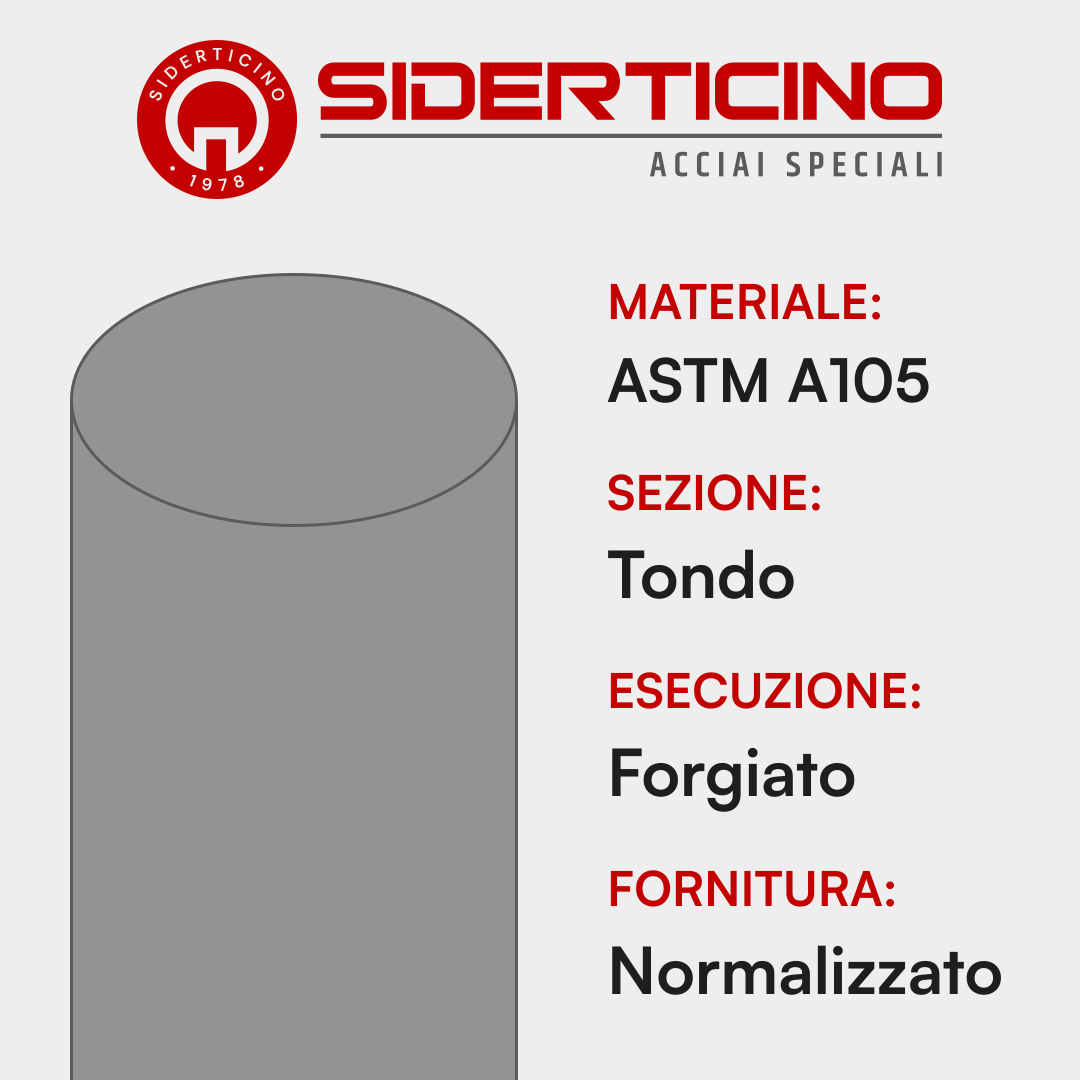
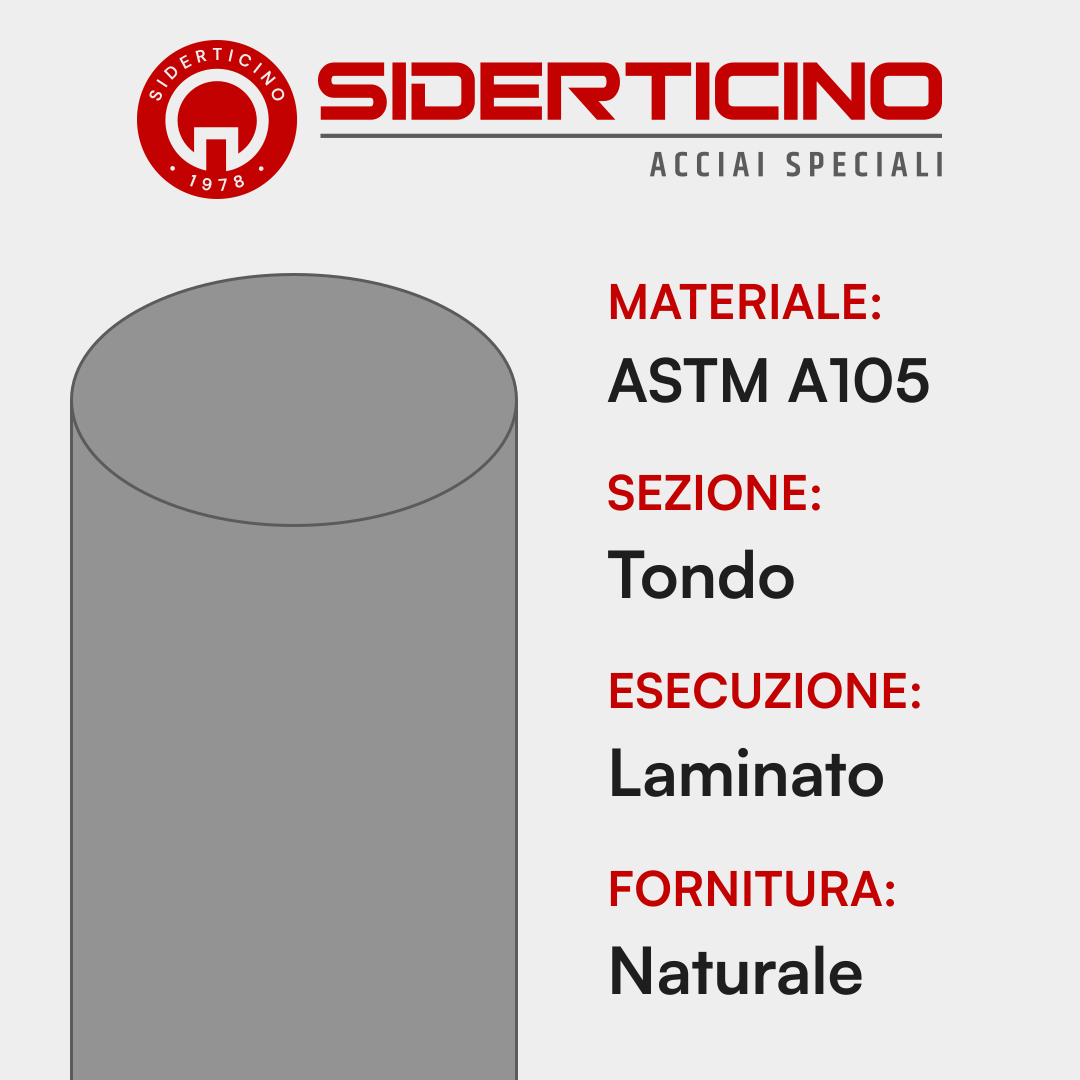
ASTM A182 and A276 standards regulate forgings and bars respectively for small-size, high-pressure valve steels. ASTM A182 covers carbon grades (A105), low-alloy grades (F11, F22, F91) and stainless grades (F304, F316, F321) with mechanical properties guaranteed after forging and heat treatment.
The superiority of forged components over cast ones is particularly evident for pressures above 300 bar and diameters below DN100, where the fibrous structure of the forging ensures superior transverse toughness and lower scatter in mechanical properties.
3.3. API 6A Specifications for Oil & Gas
API 6A specifications define stringent requirements for valve steels intended for wellhead equipment and christmas trees in the oil & gas sector.
The API 6A standard for valve materials establishes pressure classes from 2000 to 20000 psi with specific requirements for resistance to H₂S corrosion according to NACE MR0175.
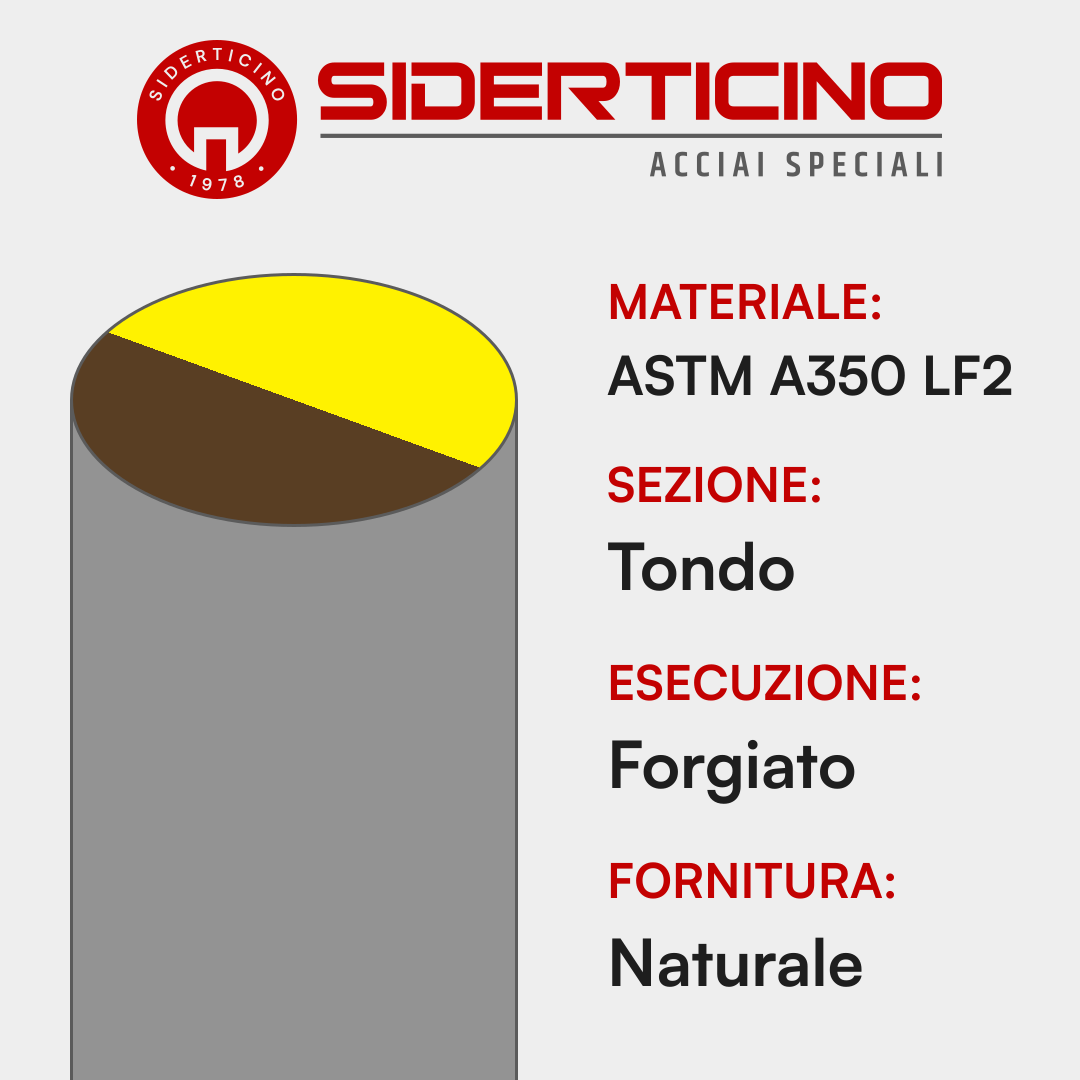
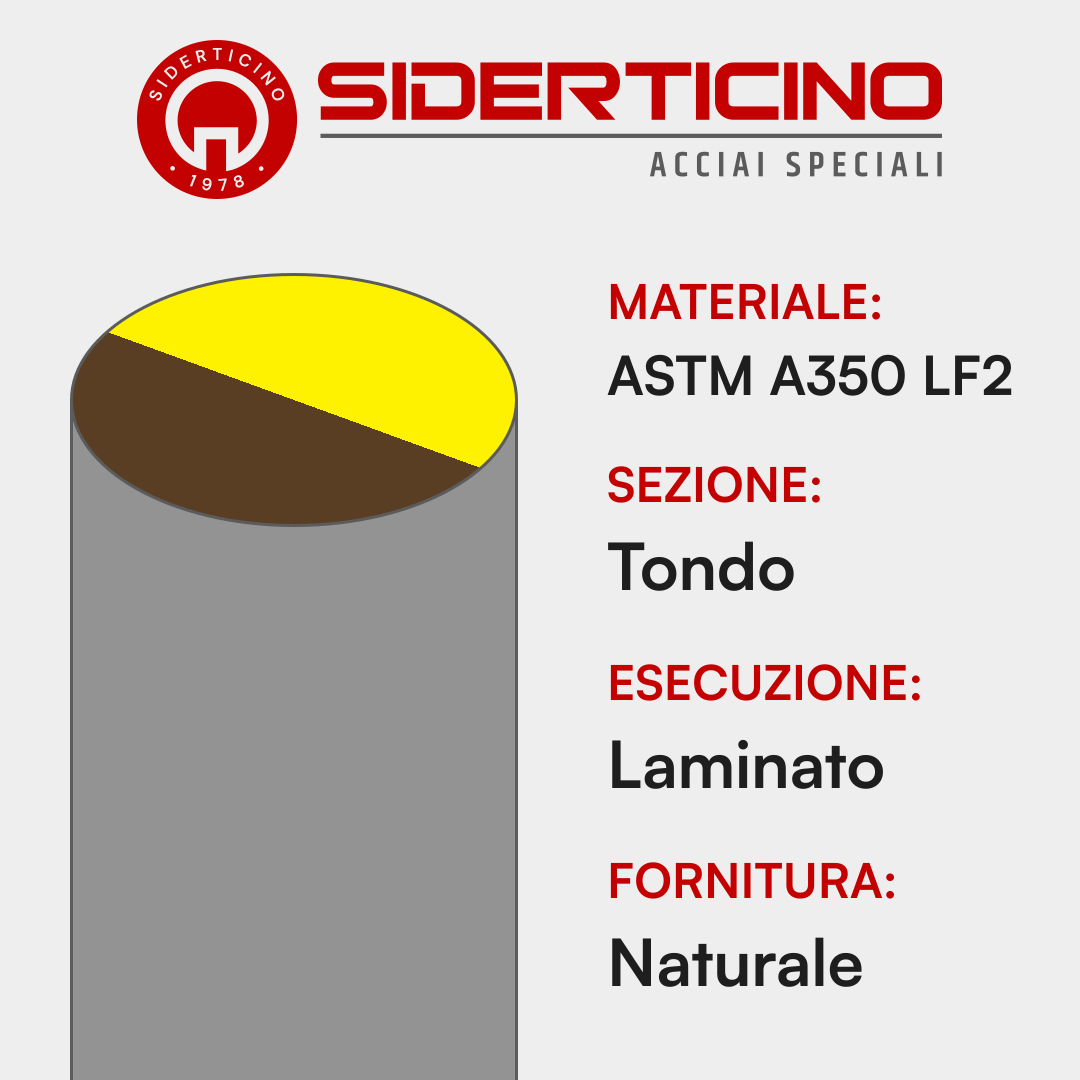
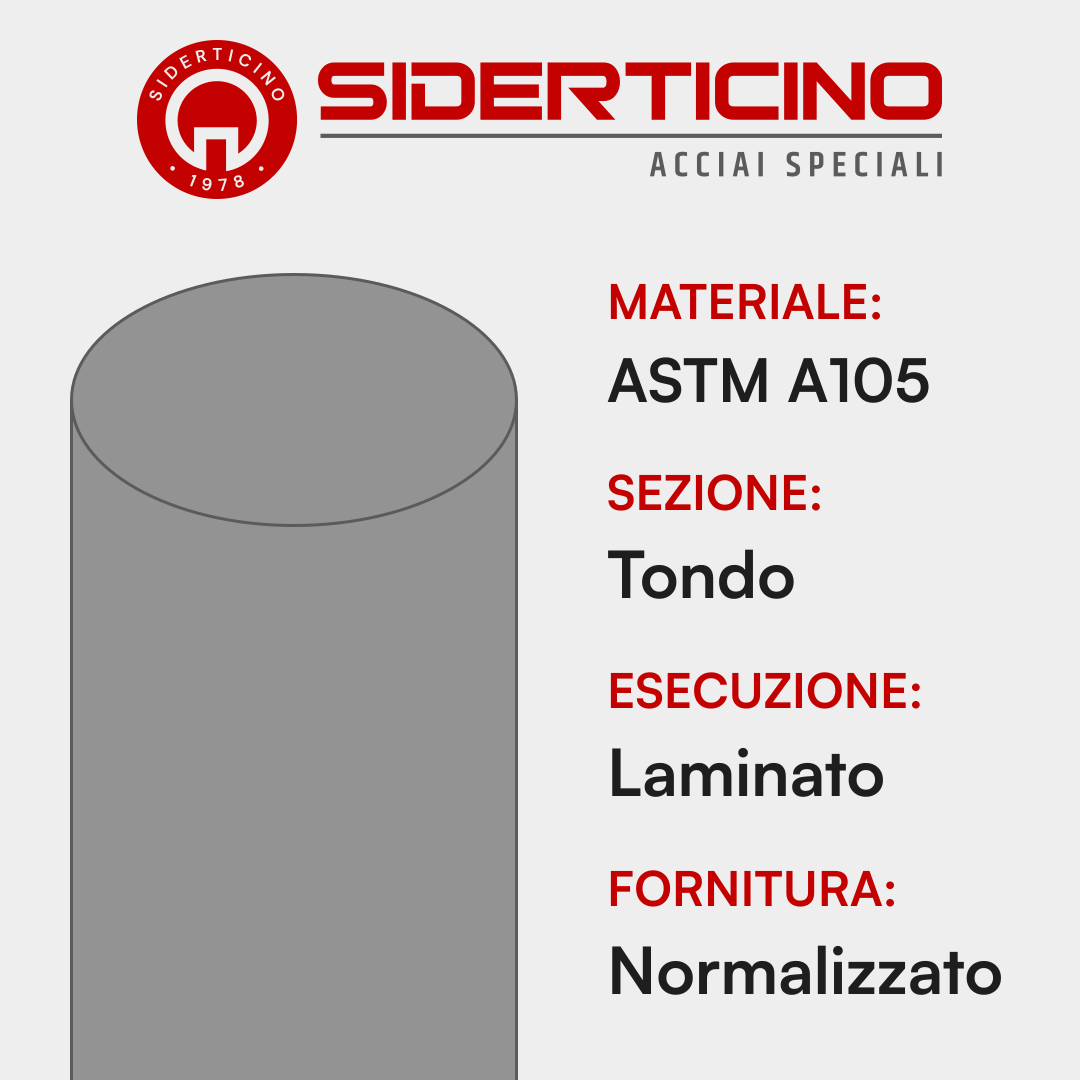
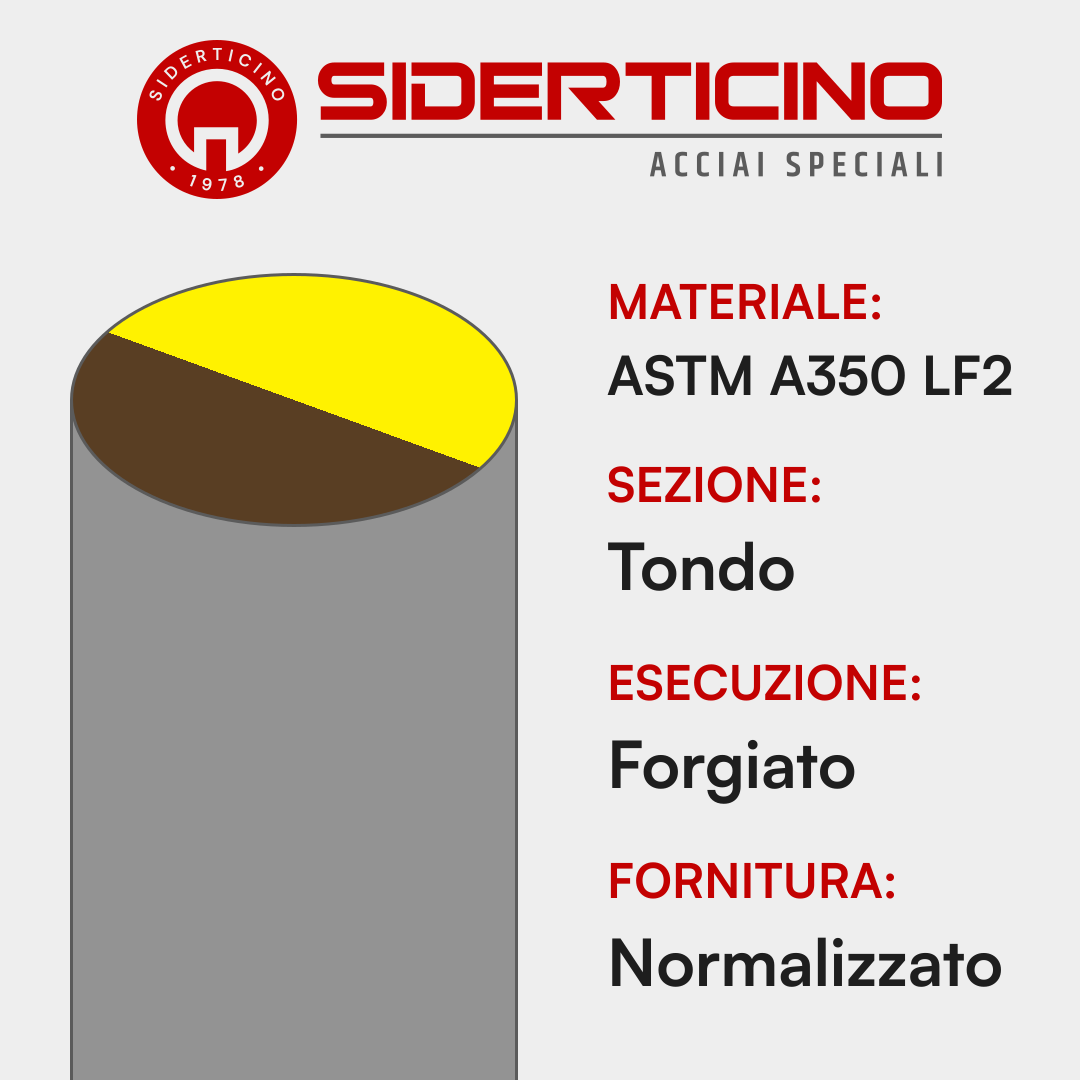
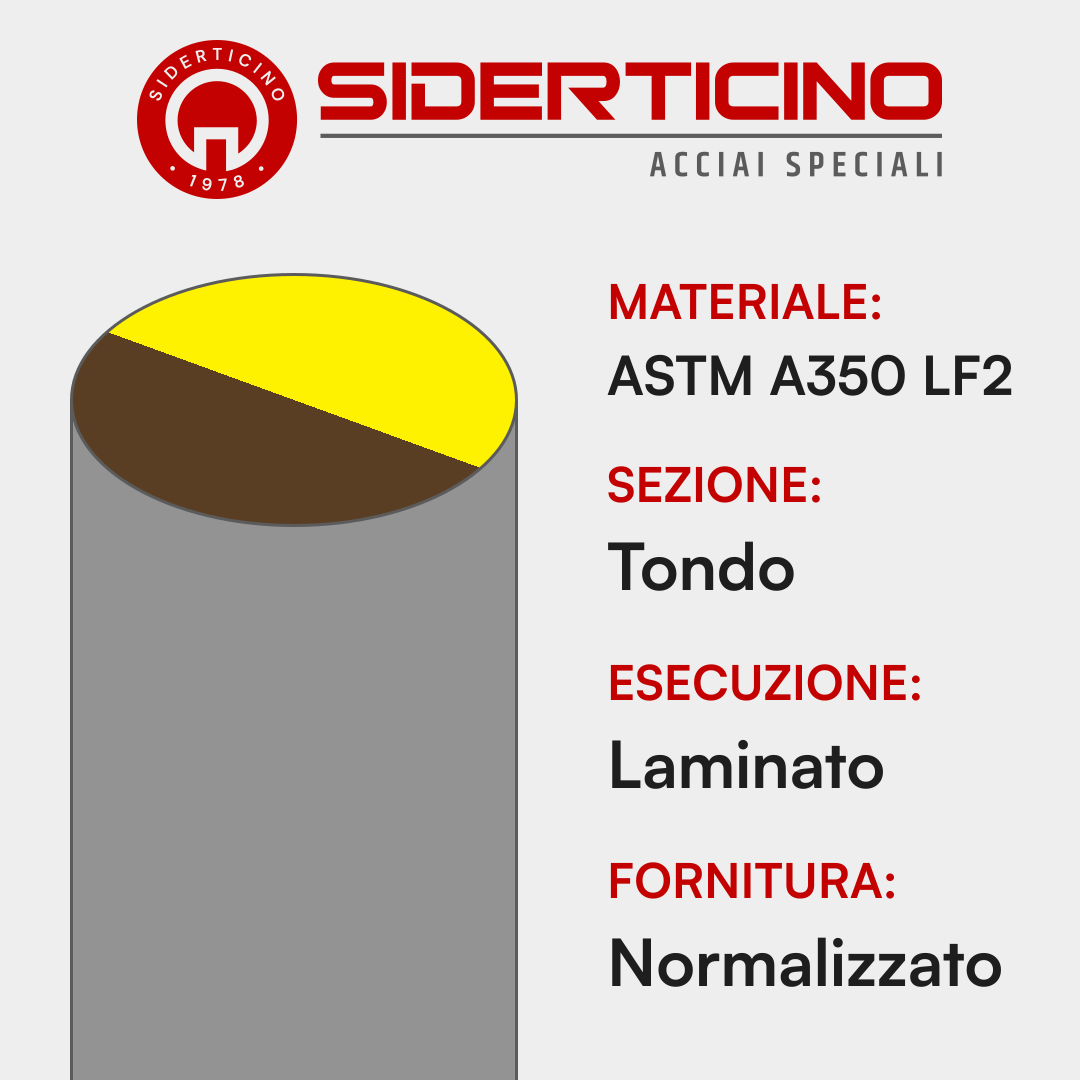
Materials qualified under API 6A include carbon steels (ASTM A105, A350 LF2), low-alloy steels (A182 F22) and stainless steels (A182 F316, A182 F6NM) with mandatory certifications for sour service when the H₂S concentration exceeds NACE limits.
3.4. Comparative Table of International Designations
| Standard | Designation | Max Temp. (°C) | Main Application |
| ASTM A216 | WCB | 425 | General services |
| ASTM A217 | WC6 | 565 | Medium temperature |
| ASTM A217 | WC9 | 565 | High temperature |
| ASTM A351 | CF8M | 750 | Corrosive services |
| API 6A | F22 | 565 | Oil & Gas HP |
4. Main Categories of Valve Steels
4.1. Carbon Steels for Valves (A216 WCB, A217 WC6/WC9)
Carbon steels represent the most widely used category for valve steels in standard process industry services.
ASTM A216 WCB, with a composition of 0.30% C max, 1.00% Mn max, constitutes the reference material for valve bodies up to 425°C and moderate pressures.
The mechanical properties of valve steels in grade WCB after normalizing include a minimum yield strength of 250 MPa, tensile strength of 485-620 MPa and minimum elongation of 22%.
The pearlitic-ferritic microstructure ensures good toughness and machinability for post-casting finishing operations.
4.2. Austenitic Stainless Steels (316/316L, 321, 347)
Austenitic stainless steels for valves represent the standard choice for corrosion resistance of valve steels in chemically aggressive environments.Grade 316/316L, with 2.0-3.0% Mo, ensures superior resistance to pitting and crevice corrosion in the presence of chlorides.
The stabilized grades 321 (Ti) and 347 (Nb+Ta) prevent intergranular corrosion in welded areas while maintaining optimal corrosion resistance after heat treatments.
The maximum service temperature for 316L is limited to 425°C to prevent carbide precipitation and loss of corrosion resistance.
4.3. Martensitic Stainless Steels (410, 420, F6NM)
Hardenable martensitic steels for valves combine high mechanical strength with moderate corrosion resistance.
Grade 410 (12% Cr) reaches hardness up to 40 HRC after quenching and tempering, while 420 (13% Cr) offers higher hardness for wear applications. F6NM (UNS S41500) represents a martensitic-austenitic evolution with 4% Ni that combines mechanical strength (Rm > 650 MPa) with superior toughness and improved corrosion resistance compared to conventional martensitic steels.
4.4. Duplex and Super Duplex Steels (2205, 2507)
Duplex and super duplex valve steels offer unique combinations of mechanical strength and corrosion resistance for the most severe industrial applications of valve steels.
Grade 2205 (22% Cr, 3% Mo, 5% Ni) provides double the yield strength of austenitic steels with corrosion resistance comparable to 316L.
Super duplex 2507 (25% Cr, 4% Mo, 7% Ni) extends applicability to temperatures up to 300°C in environments containing H₂S and chlorides, with superior resistance to stress corrosion cracking thanks to its ferritic-austenitic two-phase structure.
4.5. Special Alloys for Extreme Applications (Hastelloy, Inconel)
Nickel-based alloys represent the most advanced category for extreme industrial applications of valve steels where conventional stainless steels are inadequate.
Hastelloy C-276 ensures universal corrosion resistance in the presence of oxidizing and reducing acids up to 650°C. Inconel 625 and 686 may represent economically advantageous alternatives for specific applications where Hastelloy’s corrosion resistance is not fully required, maintaining lower costs and better supply availability.
5. Carbon and Low-Alloy Steels for Valves
5.1. ASTM A216 WCB – Standard for General Services
ASTM A216 WCB constitutes the reference material for valve steels in general process industry services, with over 60% of industrial valves produced in this grade.
The chemical composition with 0.30% C max, 1.00% Mn max, 0.60% Si max ensures good weldability and uniform mechanical properties after normalizing.
The mechanical properties of valve steels for WCB include a minimum yield strength of 250 MPa, tensile strength of 485-620 MPa with minimum elongation of 22% and minimum Charpy-V impact energy of 27 J at 0°C. The normalized microstructure exhibits fine ferritic grain with uniform pearlitic distribution ensuring optimal toughness.
5.2. A217 WC6 and WC9 – Chromium-Molybdenum Steels
ASTM A217 grades WC6 (1.25Cr-0.5Mo) and WC9 (2.25Cr-1Mo) represent the main category of high-temperature valve steels for services up to 565°C.
The addition of chromium and molybdenum improves creep and oxidation resistance, extending the service temperature beyond the limits of carbon steels. WC6 is preferentially used for temperatures of 450-510°C in steam and light hydrocarbon services, while WC9 extends applicability to 565°C with superior creep resistance thanks to its higher molybdenum content.
Resistance to corrosion-erosion in the presence of high-velocity steam is superior compared to carbon steels.
5.3. A217 WC1 – Medium-Temperature Applications
Grade A217 WC1 (1.25% Cr) represents an economical solution for valve steels in medium-temperature services of 375-450°C where the creep resistance of WC6 is not fully required. The simplified composition ensures lower costs while maintaining improved oxidation resistance compared to carbon steels.
The main application includes refinery services with moderate-temperature hydrocarbons, medium-pressure steam systems and petrochemical applications where corrosion-oxidation resistance takes priority over long-term creep resistance.
5.4. Temperature Limitations and Applicability
Temperature limitations for carbon and low-alloy steels are determined by specific metallurgical phenomena that compromise long-term structural integrity.
The 425°C limit for WCB is set to maintain adequate long-term mechanical properties, considering creep phenomena and loss of strength, not for direct graphitization, which requires prolonged exposure times.
Cr-Mo steels present limitations for hydrogen attack at temperatures above 400°C in the presence of high-pressure hydrogen, requiring evaluation according to Nelson curves to define operating limits based on hydrogen partial pressure and service temperature.
6. Stainless Steels for Valves
6.1. 300 Series Austenitic Steels (304, 316, 321, 347)
The 300 series austenitic stainless steels for valves constitute the most widely used category for corrosion resistance of valve steels in chemically aggressive environments. Grade 304 (18Cr-8Ni) represents the base material for atmospheric corrosion resistance and moderate services, while 316 (18Cr-10Ni-2Mo) extends applicability to environments containing chlorides.
The presence of 2-3% molybdenum in 316 ensures superior resistance to pitting corrosion (PREN > 25) and crevice corrosion, critical for industrial applications of valve steels in the presence of seawater or chloride-containing solutions.
The stabilized grades 321 (Ti) and 347 (Nb+Ta) prevent sensitization in the weld zone while maintaining optimal resistance to intergranular corrosion.
6.2. Martensitic Steels for High Performance
Hardenable martensitic valve steels combine high mechanical strength with moderate corrosion resistance for applications where wear resistance is a priority.
Grade 410 (12% Cr) reaches tensile strength up to 850 MPa after quenching and tempering, while 420 (13% Cr) offers higher hardness up to 50 HRC. F6NM represents a super-martensitic evolution with 4% Ni that combines mechanical strength (Rm > 750 MPa) with Charpy-V toughness > 50 J at 0°C and corrosion resistance superior to conventional martensitic steels, particularly advantageous for subsea valves.
6.3. Ferritic Steels for Corrosion Resistance
Ferritic stainless steels represent an economical category for corrosion resistance of valve steels where the mechanical strength of austenitic steels is not required.
Grades 430 (17% Cr) and 444 (18% Cr, 2% Mo) offer superior resistance to stress corrosion cracking compared to austenitic steels in the presence of chlorides.
The application may extend to water treatment and desalination systems where resistance to stress corrosion cracking is critical, maintaining lower costs than duplex steels and zero magnetic response for applications with electromagnetic compatibility requirements.
6.4. Duplex for Severe Corrosive Environments
Duplex and super duplex valve steels represent the most advanced category of stainless steels for severe corrosive environments, combining high mechanical strength (Rp0.2 > 450 MPa) with superior corrosion resistance.
Grade 2205 (22% Cr, 3% Mo, 5% Ni) ensures pitting resistance equivalent to 316L with double the mechanical strength. Super duplex 2507 (25% Cr, 4% Mo, 7% Ni) extends applicability to compatibility of valve steels with corrosive fluids containing H₂S up to 150°C and high-concentration chlorides, with superior resistance to stress corrosion cracking thanks to its ferritic-austenitic two-phase structure.
7. Mechanical Properties and Corrosion Resistance
7.1. High-Temperature Mechanical Strength
High-temperature mechanical strength for high-temperature valve steels is characterized by the retention of tensile and creep properties over prolonged periods. Cr-Mo steels present optimal creep resistance for services up to 565°C, with creep rupture curves defined according to ASTM A387.
Hydrogen embrittlement resistance of valve steels becomes critical at temperatures above 400°C in the presence of high-pressure hydrogen, requiring evaluation according to Nelson curves to define operating limits based on hydrogen partial pressure and the chemical composition of the steel.
7.2. Low-Temperature Toughness
Low-temperature toughness is critical for cryogenic and low-temperature valve steels in LNG applications and arctic services. A352 LCB and LCC steels ensure a minimum Charpy-V impact energy of 27 J at -46°C, while special grades reach -101°C for cryogenic services.
Austenitic stainless steels maintain excellent toughness down to cryogenic temperatures thanks to their stable austenitic structure, while duplex and martensitic steels present toughness transitions that limit applicability below -50°C.
7.3. Resistance to Localized Corrosion
Localized corrosion resistance of valve steels is assessed through the Pitting Resistance Equivalent Number (PREN = %Cr + 3.3×%Mo + 16×%N), which defines pitting resistance in the presence of chlorides. PREN values > 40 ensure resistance in seawater, while PREN > 50 is required for concentrated solutions.
Stress corrosion cracking of valve steels is particularly critical for austenitic steels in the presence of chlorides and temperatures above 60°C, requiring the use of duplex or martensitic steels to ensure long-term resistance in critical services.
7.4. Compatibility with Process Fluids
Compatibility of valve steels with corrosive fluids requires specific evaluation for each material-fluid-temperature combination according to NACE and API guidelines. The presence of H₂S requires materials qualified for sour service according to NACE MR0175, while high-pressure hydrogen services follow API 941.
8. Heat Treatments and Delivery Conditions
8.1. Normalizing and Quenching and Tempering for Carbon Steels
Heat treatments of valve steels in carbon grade involve normalizing at 900-950°C followed by air cooling to obtain a uniform pearlitic-ferritic structure. Quenching and tempering, with quenching from 900°C and tempering at 600-650°C, improves the strength-toughness trade-off for critical applications.
Control of austenitic grain size during normalizing is critical to achieve optimal toughness, requiring controlled temperatures and optimized holding times to avoid excessive grain growth that compromises Charpy impact energy.
8.2. Solution Annealing for Stainless Steels
Solution annealing for austenitic stainless steels for valves is carried out at 1050-1150°C followed by water quenching to dissolve carbides and obtain a single-phase austenitic structure.
The treatment eliminates residual casting stresses and ensures optimal corrosion resistance. Duplex steels require solution annealing at 1040-1100°C to balance the ferritic and austenitic phases, with rapid cooling to prevent the precipitation of intermetallic phases that would compromise toughness and corrosion resistance.
8.3. Stress Relief and Stabilization
Stress relieving treatment at 580-650°C is applied to valve steels after heavy machining or welding to eliminate residual stresses.
Treatment duration varies from 1 to 8 hours depending on thickness and degree of deformation. Stabilization for austenitic stainless steels containing titanium or niobium is carried out at 850-950°C to promote the precipitation of stabilizing carbides and prevent sensitization during high-temperature service.
8.4. Microstructure and Property Control
Microstructural control for valve steels requires metallographic examination to verify structural uniformity and the absence of defects such as segregations, excessive inclusions or brittle phases. Duplex steels require control of phase balance (45-55% ferrite) to ensure optimal properties.
9. Limitations of Valve Steels
Here are the main limitations of valve steels worth knowing:
- Maximum temperature: limited by microstructure and creep resistance
- Operating pressure: conditioned by hardenability and section size
- Chemical compatibility: requires specific evaluation for each fluid
- Thermal shock: limitations for rapid thermal gradients >100°C/h
- Hydrogen embrittlement: critical for high-hardness steels in H₂ services
- Stress corrosion cracking: particularly severe for austenitic steels in chlorides
- High costs: premium materials require economic justification
- Supply availability: long lead times for special alloys
10. Production Processes and Quality Control
10.1. Melting and Precision Casting
Melting processes for forged and cast industrial valve steels use electric arc or induction furnaces with rigorous control of chemical composition and pouring temperature.
Sand casting or investment casting ensures high dimensional accuracy, reducing subsequent machining operations. Atmosphere control during melting is critical for stainless steels to prevent oxidation and ensure uniform chemical compositions.
The use of argon-oxygen decarburization (AOD) is standard for stainless steels to achieve low carbon and nitrogen content.
10.2. Forging for Critical Components
Forging for high-pressure valve steels ensures superior mechanical properties thanks to the elimination of residual porosity and improvement of the fibrous structure. Forging ratios of 3:1-6:1 are typical for obtaining optimal properties in the direction of principal stresses.
Non-destructive testing of valve steels for forged components includes ultrasonic testing for detecting internal defects and dimensional checks to verify compliance with design tolerances, particularly critical for high-pressure applications.
10.3. Precision Machining
Machining for valve steels requires optimized tools and parameters for each material category. Austenitic stainless steels require moderate cutting speeds and abundant lubrication to prevent surface work hardening, while duplex steels require coated tools due to their higher hardness.
10.4. Non-Destructive Testing (UT, PT, RT)
Non-destructive testing of valve steels includes ultrasonic testing (UT) for volumetric defects, penetrant testing (PT) for surface defects and radiography (RT) for weld inspection. Operator qualification according to ASNT SNT-TC-1A is mandatory for critical applications.
Acceptance criteria follow specific standards such as ASTM A609 for castings or ASME BPVC for pressure components, with quality levels defined based on application criticality and safety requirements.
11. Industrial Applications of Valve Steels
11.1. Petrochemical Industry and Refineries
The petrochemical industry represents the main sector for industrial applications of valve steels, where extreme performance is required in the presence of high-temperature hydrocarbons, acids and corrosive atmospheres.
High-pressure valves in special steels for catalytic cracking use Cr-Mo steels for creep resistance up to 565°C and operating pressures up to 40 bar. Reforming services require materials resistant to hydrogen attack and carburization, with 5Cr-0.5Mo and 9Cr-1Mo steels for temperatures up to 650°C.
The selection of petrochemical valve materials must consider compatibility with catalysts and resistance to corrosion-erosion from solid particulate matter.
11.2. Oil & Gas Upstream/Downstream Sector
The oil & gas sector uses valve steels for the industry’s most severe operating conditions, with wellhead equipment subject to pressures up to 1400 bar and temperatures up to 180°C in the presence of H₂S and CO₂. NACE sour service certification for valves according to MR0175 is mandatory for H₂S concentrations above 0.05 kPa. Downstream applications include transport and storage systems where fatigue resistance and atmospheric corrosion resistance are priorities. Duplex materials are preferred for offshore applications thanks to the combination of high mechanical strength and resistance to seawater corrosion.
11.3. Thermoelectric and Nuclear Power Plants
Thermoelectric power plants require high-temperature valve steels for high-pressure and high-temperature steam systems, with P91 (9Cr-1Mo-V-Nb) materials for temperatures up to 600°C and austenitic steels for higher temperatures. Creep resistance is critical for main control valves with a required operating life of 30 years.
Nuclear applications may require materials with low cobalt content to minimize neutron activation, with 316LN stainless steels and Ni-Cr-Fe alloys for high-temperature primary circuits.
11.4. Chemical and Pharmaceutical Industry
The chemical industry uses stainless steels for valves for universal corrosion resistance in the presence of organic and inorganic acids. Grades 316L and 904L are standard for services with concentrated acids, while Hastelloy C-276 is required for mixed acids and high temperatures.
The pharmaceutical industry requires special surface finishes (Ra < 0.4 μm) and complete traceability certifications to ensure FDA compliance, with materials qualified for repeated sterilization at 130°C in autoclave.
12. Corrosion Resistance in Specific Environments
12.1. H₂S Corrosion (Sour Service)
NACE sour service certification for valves defines the requirements for materials in services containing hydrogen sulfide, with hardness limits of HRC < 22 for carbon steels and HRC < 30 for low-alloy steels to prevent sulfide stress cracking. Qualification according to NACE MR0175 is mandatory for H₂S partial pressures above 0.05 kPa. Duplex stainless steels present higher resistance thresholds with hardness limits up to HRC 35, while austenitic steels present no hardness limitations thanks to their crystal structure, which is not susceptible to hydrogen embrittlement.
12.2. Chloride Corrosion and Marine Environments
Resistance to chloride corrosion for valve steels is assessed through the PREN (Pitting Resistance Equivalent Number), with minimum values of PREN > 25 for seawater and PREN > 40 for concentrated brines. Duplex 2205 (PREN ≈ 32/33) and super duplex 2507 (PREN ≈ 42/45) ensure superior performance to standard austenitic steels. The temperature limit for pitting resistance in seawater is about 40°C for 316L, 60°C for 2205 and 80°C for 2507, defining the application limits for marine and desalination services.
12.3. High-Temperature Oxidation Resistance
High-temperature oxidation of valve steels limits the applicability of carbon steels to 450°C in an oxidizing atmosphere, while Cr-Mo steels extend the limit to 565°C thanks to the formation of protective oxide layers. Stainless steels maintain oxidation resistance up to 800-900°C depending on chromium content.
Erosion and cavitation resistant valve steels may require special surface treatments or coatings for applications with high-velocity fluids containing solid particulate matter, particularly critical in sand production services in oil & gas.
12.4. Hydrogen Compatibility (Hydrogen Service)
Hydrogen embrittlement resistance of valve steels is critical for services with high-pressure, high-temperature hydrogen, where the diffusion of atomic hydrogen can cause hydrogen attack in carbon steels. Nelson curves define operating limits based on hydrogen partial pressure and temperature.
Cr-Mo steels present superior resistance to hydrogen attack thanks to the presence of stable carbides that trap hydrogen, while austenitic stainless steels are immune to the phenomenon thanks to their crystal structure.
13. Standards and Certifications
13.1. NACE Certifications for Sour Service
NACE certifications for Sour Service according to MR0175 and MR0103 define the requirements for materials in services containing H₂S, with qualification tests for sulfide stress cracking and hydrogen induced cracking. Documentation must include certificates of conformity with complete traceability from melting to the finished component.
13.2. PED Qualifications for Pressure Equipment
The PED 2014/68/EU directive requires CE certifications for valves with pressure × volume above defined limits, with design, manufacturing and quality control requirements according to harmonized standards. Materials must be qualified according to PED Annex I with guaranteed mechanical properties.
13.3. API 6A Standard for Wellhead Equipment
The API 6A standard for valve materials for wellhead equipment requires complete material qualification with pressure testing according to PSL (Product Specification Level) 1-4. Higher levels require extensive non-destructive testing and third-party certifications to ensure quality and traceability.
13.4. Nuclear Certifications (ASME III)
Nuclear certifications according to ASME BPVC Section III require complete material qualification with extensive checks on chemical composition, mechanical properties and non-destructive testing. Documentation must include complete pedigree from raw material to finished component with N-stamp certifications.
14. Selection and Design Criteria
14.1. Selection Matrix for Temperature/Pressure
The selection matrix for valve steels must primarily consider the operating temperature-pressure combination, followed by chemical compatibility with the process fluid.
Pressures above 300 bar generally require forged materials, while temperatures above 450°C require low-alloy or stainless steels.
14.2. Chemical Compatibility with Process Fluids
Compatibility of valve steels with corrosive fluids requires specific evaluation for each material-fluid combination according to corrosion databases and operational experience. The presence of chlorides, H₂S, organic acids and elevated temperatures defines compatible materials with adequate safety margins.
14.3. Cost-Benefit Analysis for Life Cycle
The lifecycle cost analysis of premium valve steels must consider initial costs, scheduled maintenance, plant availability and replacement costs. Premium materials can justify initial costs 200-300% higher through reduced maintenance and greater operational reliability.14.4. Safety and Reliability Criteria
Safety criteria for valve steels must consider the consequences of failure with risk classification according to HAZOP and SIL methodologies. Safety-critical applications require materials with extensive qualification testing and conservative safety margins.
15. Innovations and Future Trends
15.1. Advanced Steels for Extreme Applications
The development of advanced valve steels focuses on alloys optimized for temperatures above 700°C and pressures beyond 1500 bar. Advanced Fe-Ni-Cr-Mo alloys may extend applicability to supercritical conditions while maintaining lower costs than superalloys.
15.2. Innovative Production Technologies
Innovative production technologies include additive manufacturing for complex geometries, isothermal forging for optimized properties and digitally controlled heat treatments. 3D printing could revolutionize the production of prototypes and small batches for premium materials.
15.3. Sustainability and Circular Economy
Sustainability in the production of valve steels includes CO₂ emission reduction, use of high-quality scrap and lower energy consumption processes. Recycling of stainless steels ensures complete alloy recovery with quality equivalent to virgin material.
15.4. Digitalization and Industry 4.0
Integration with Industry 4.0 includes sensors for real-time performance monitoring, predictive analytics for scheduled maintenance and complete digital traceability from material to installed component. Monitoring systems could prevent catastrophic failures through early detection of material degradation.
16. Frequently Asked Questions About Valve Steels
What is the main difference between cast and forged valve steels?
Forged and cast industrial valve steels present significant differences: forgings offer superior mechanical properties, greater toughness and uniformity thanks to the elimination of porosity, and are preferred for high pressures and small sizes. Castings are economical for large sizes but present more variable properties.
Why is resistance to H₂S so critical in the oil & gas sector?
NACE sour service certification for valves is essential because H₂S causes sulfide stress cracking in high-hardness steels, leading to sudden failures. Qualification according to NACE MR0175 ensures resistant materials for concentrations above 0.05 kPa of H₂S.
How is the optimal steel selected for high temperatures?
The selection of high-temperature valve steels considers maximum temperature (450°C for carbon steels, 565°C for Cr-Mo, over 800°C for stainless steels), creep resistance for sustained loads and compatibility with the process fluid. Oxidation resistance is critical for oxidizing services.
What are the advantages of duplex steels over austenitic steels?
Duplex and super duplex valve steels offer double the mechanical strength (Rp0.2 > 450 MPa vs 250 MPa), superior resistance to chloride stress corrosion cracking and lower nickel content, reducing costs and price volatility.
Why is non-destructive testing essential?
Non-destructive testing of valve steels (UT, PT, RT) is essential for detecting internal defects that could cause catastrophic failures in service. Operator qualification and rigorous acceptance criteria ensure reliability for critical applications.
How does digitalization affect material selection?
Digitalization enables predictive analysis for the lifecycle cost of premium valve steels, real-time performance monitoring and maintenance optimization. Digital databases facilitate selection based on operational experience and performance-cost correlations.
Valve steels represent a continuously evolving technology to meet the growing safety, reliability and efficiency needs of the modern process industry, where metallurgical innovation combines with digitalization to ensure superior performance in the most critical applications of industrial engineering.