1. S355 Steel: Introduction and General Characteristics
S355 steel represents one of the most widespread and versatile structural steels in the European industrial landscape, standardized by EN 10025-2 as a non-alloy steel for structural applications at room temperature. This ferrous alloy, characterized by an excellent combination of mechanical strength, weldability and machinability, constitutes the benchmark technical solution for metal structures, heavy fabrication and mechanical components requiring structural reliability and ease of processing.
S355 owes its designation to the minimum yield strength of 355 MPa according to the EN 10025-2 classification, which defines the mechanical characteristics as a function of material thickness. The designation “S” identifies steels for structural use (structural steels), while the number “355” specifies the minimum yield strength for thicknesses up to 16 mm. This European standardization ensures uniformity in technical specifications and facilitates structural design according to the Eurocodes.
The properties of S355 derive from a balanced chemical composition that favors controlled carbon content and manganese to optimize the strength-weldability ratio. The limited presence of residual elements such as phosphorus and sulfur ensures good deformability properties and resistance to cold brittleness.
This formulation gives the material stable and predictable mechanical characteristics, fundamental for the design of structures according to codified calculation methodologies.
The broad spectrum of S355 applications includes civil and industrial metal construction, bridges, building structures, shipbuilding fabrication and components for earth-moving machinery. The versatility of this steel is demonstrated by its adoption as a standard material for structural sections (IPE, HE, UPN), plates for welded structures and mechanical components requiring good strength characteristics without the need for complex heat treatments.
1.1 S355 vs Conventional Steels Differences
The differences between S355 and conventional steels are mainly manifested in the superior metallurgical quality and rigorous standardization of mechanical properties. Compared to lower-class carbon steels such as S235, S355 has a yield strength 50-60% higher (355 MPa vs 235 MPa), allowing structural sections to be reduced with resulting advantages in terms of weight and material costs.
The weldability of S355 steel is favored by a contained carbon equivalent; the CEV limits are not unique but depend on the variant (JR/J0/J2), product form and thickness according to Table 6 of EN 10025-2, and must therefore be verified on the specific product or on the supply limits declared by the manufacturer, provided they comply with the standard.
Compared with special alloy steels, S355 maintains contained costs thanks to its simplified chemical composition, while still ensuring adequate mechanical performance for most structural applications. Standardization according to EN 10025-2 ensures constant availability and homogeneous quality from various European manufacturers.
1.2 S355 Advantages for Industrial Applications
The advantages of S355 in industrial applications include the excellent strength-to-weight ratio that allows structures to be optimized, reducing material costs and simplifying assembly operations. The yield strength of 355 MPa for standard thicknesses allows lighter structures to be designed compared to lower-class steels, with significant benefits for foundations, transport and installation costs.
The excellent machinability of S355 facilitates cutting, drilling, bending and cold forming operations without the need for preliminary heat treatments. The controlled hardness (≤200 HB for information) ensures good performance with standard tools and reduces tool wear compared to harder steels, translating into economic advantages for machining operations. The hardness mentioned for S355 steel is to be understood as a typical informative supply value from the manufacturer and not as a requirement prescribed by EN 10025-2, which only establishes tensile and impact energy requirements for the grade and thickness considered.
The atmospheric corrosion resistance of S355 is standard for non-alloy steels, but can be improved through protective painting or galvanizing, keeping protection costs low compared to stainless steels for applications where corrosion resistance is not a critical requirement.
1.3 S355 Standards and Certifications
The standards for S355 mainly follow the European standardization EN 10025-2:2019, which defines the technical delivery conditions for non-alloy structural steels. The standard specifies requirements for chemical composition, mechanical properties, dimensions and tolerances, as well as test and quality control methods to ensure material conformity and traceability.
The classification for impact energy according to EN 10025-2 provides for the S355JR (impact test at +20°C with KV≥27J), S355J0 (impact test at 0°C with KV≥27J) and S355J2 (impact test at -20°C with KV≥27J) variants, allowing the appropriate grade to be selected based on the expected operating conditions and low-temperature toughness requirements.
The quality certifications for S355 include certificates of conformity according to EN 10204, typically 2.1 certificates for standard applications or 3.1 for critical structural uses. Specifications may include additional through-thickness requirements (Z properties according to EN 10164) for critical welded applications where resistance to delamination is decisive for structural safety.
2. Chemical Composition of S355 Steel: Alloying Elements and Regulatory Specifications
The chemical composition of S355 is rigorously defined by EN 10025-2 to ensure the specified mechanical properties and the excellent weldability that characterizes this structural steel. The formulation favors basic elements such as carbon and manganese, while keeping the content of residual elements low to optimize machinability and structural performance.
The chemical limits of S355 steel depend on the variant (JR/J0/J2), the product form and the thickness as provided by EN 10025-2; it is not correct to use a single set of maximums for all variants and forms, since some grades (e.g. S355J2) adopt stricter limits for P and S and sometimes a lower maximum C compared to S355JR.
Application example (informative): for S355JR plates, C ≤ 0.24; Mn ≤ 1.60; Si ≤ 0.55; P ≤ 0.035; S ≤ 0.035; N ≤ 0.012 are often declared, while for S355J2 plates the limits for P and S are typically ≤ 0.025, with an optional C ≤ 0.22; in any case, adhere to the limits stated in the order specification and in the supplier’s EN 10204 3.1 certificate.
The carbon equivalent must be calculated using the relationship CEV = C + Mn/6 + (Cr+Mo+V)/5 + (Ni+Cu)/15 and compared with the limits for the variant/thickness in Table 6 of EN 10025-2 or with the manufacturer’s supply limits when more restrictive.
| Element | Maximum Content (%) | Metallurgical Function | Reference Standard |
| C | 0,22 | Base strength | EN 10025-2 |
| Si | 0,55 | Deoxidizer | EN 10025-2 |
| Mn | 1,60 | Hardenability | EN 10025-2 |
| P | 0,040 | Brittleness control | EN 10025-2 |
| S | 0,040 | Inclusion control | EN 10025-2 |
| N | 0,014 | Aging control | EN 10025-2 |
The carbon equivalent of S355 (CEV) is calculated according to the formula CEV = C + Mn/6 + (Cr+Mo+V)/5 + (Ni+Cu)/15 and is ≤0.45% for thicknesses up to 40mm, ensuring excellent weldability without the need for preheating for most applications. This parameter is fundamental for assessing susceptibility to hydrogen cracking during welding and for defining appropriate welding procedures. Refer to EN 10025-1/-2 for the use of the formula and the limits.
It is important to note that the chemical limits of S355 steel vary by JR/J0/J2 variant and by product form; for example, for S355JR (plates) they are typically C ≤ 0.24; Mn ≤ 1.60; Si ≤ 0.55; P ≤ 0.035; S ≤ 0.035; N ≤ 0.012, while for S355J2 P and S are generally limited to ≤ 0.025, as per EN 10025-2 and manufacturer’s technical data sheets.
2.1 S355 International Equivalences
Correspondences with ASTM A572 Grade 50, BS 4360 (Grade 50B/50C) and UNI 7070 (Fe510) are to be understood as historical-commercial comparability and not as a 1:1 regulatory equivalence; test methods, chemical limits and impact requirements may differ, and substitutability requires project-specific technical-contractual verification.
ISO 630 designations use the “E” series and should not be assumed to be automatic synonyms of the EN “S” series; any use of ISO grades as alternatives to S355 requires a full comparison of requirements (chemistry, mechanics, impact energy) and product form.
| Standard | Designation | Equivalence | Specific Notes |
| EN 10025-2 | S355J2 | Reference | European standard |
| ASTM A572 | Grade 50 | Equivalent | USA standard |
| BS 4360 | Grade 50B | Equivalent | UK standard |
| ISO 630 | E355 | Equivalent | International standard |
The slight differences between international equivalences mainly concern test methods and impact energy requirements, while the fundamental mechanical properties and chemical composition remain substantially uniform, facilitating interchangeability for most standard structural applications. It should be noted that these correspondences are technical-commercial in nature and not regulatory.
3. Mechanical Characteristics of S355 Steel: Properties and Structural Performance
The mechanical characteristics of S355 are defined by EN 10025-2 as a function of material thickness, ensuring predictable structural performance for design according to codified methodologies. A detailed understanding of the mechanical properties of S355 is fundamental for structural engineers and designers working in the metal construction and industrial fabrication sector.
3.1 Mechanical Properties of S355 in the Annealed Condition
The mechanical properties of S355 in the annealed condition do not represent the standard delivery condition for this structural steel, which is normally supplied in the hot-rolled condition according to EN 10025-2. However, when required for specific machinability needs, annealing at 650-700°C followed by slow cooling gives the material a globulized ferritic-pearlitic structure with reduced hardness.
In the annealed condition, S355 has a reduced tensile strength of about 450-500 MPa with a yield strength of about 250-280 MPa, values lower than the standard condition but with a significant improvement in deformability. The percentage elongation can reach 26-30%, facilitating complex cold forming operations requiring severe deformation.
The hardness of annealed S355 typically stands at around 130-160 HB, ensuring excellent machinability for turning, milling and drilling operations with conventional tools. This metallurgical condition is rarely used for S355, generally preferring the hot-rolled condition, which offers the best mechanical properties-cost ratio for structural applications.
3.2 Mechanical Strength of S355 in the Quenched and Tempered Condition
S355 in the quenched and tempered condition does not represent a standard treatment for this structural steel, since quenching and tempering (quenching + tempering) is mainly applied to alloy steels to improve mechanical properties. However, for special applications requiring high mechanical strength, quenching and tempering can be applied to S355 with parameters adapted to its chemical composition.
Quenching and tempering of S355, with quenching from 850-880°C in water followed by tempering at 550-600°C, can increase the tensile strength up to 650-750 MPa while maintaining good toughness. The yield strength can reach 450-550 MPa, values higher than the standard condition but with an increase in process costs that must be justified by the required performance.
Deformability properties after quenching and tempering may decrease, with elongation of 18-22% and reduction of area of 40-50%, still maintaining characteristics adequate for most mechanical applications requiring high strength combined with sufficient toughness for dynamic loads.
3.3 S355 Hardness After Heat Treatment
The hardness of S355 in the standard hot-rolled condition according to EN 10025-2 is specified as a maximum of 200 HB to ensure good machinability. This controlled hardness allows cutting, drilling and machining operations with standard tools without the need for preliminary treatments for most applications.
After normalizing of S355 at 880-920°C followed by air cooling, hardness can increase to 180-220 HB depending on the cooling rate and section thickness. This treatment is applied to homogenize the microstructure after hot working or to improve toughness in critical applications where metallurgical quality must be optimized.
The hardness after quenching of S355 from temperatures of 850-880°C can reach 300-450 HV depending on the cooling medium used, but this treatment involves a drastic reduction in toughness and an increase in brittleness. Subsequent tempering at temperatures of 400-600°C allows hardness and toughness to be balanced according to specific application needs, although these treatments are not standard for S355.
3.4 S355 Impact Energy and Toughness
The impact energy of S355 is specified by EN 10025-2 through Charpy V-notch impact tests at different test temperatures for the JR (+20°C), J0 (0°C) and J2 (-20°C) variants. The minimum absorbed energy is specified as 27 J for all grades, ensuring adequate toughness for structural applications in different climatic conditions.
The toughness of S355J2 at -20°C with a Charpy energy of at least 27 J ensures non-brittle behavior even at low temperatures, a fundamental characteristic for structures exposed to severe climatic conditions or for critical applications where brittle fracture must be avoided. This property is particularly important for bridges, offshore structures and industrial plants in regions with harsh winter temperatures.
The crack propagation characteristics of S355 are influenced by metallurgical quality and the presence of non-metallic inclusions. Rigorous control of chemical composition according to EN 10025-2 ensures uniform and predictable toughness, a fundamental parameter for design according to fracture mechanics methodologies when required by critical applications.
3.5 S355 Fatigue and Dynamic Behavior
The fatigue behavior of S355 under cyclic loads is defined by structural Eurocodes (EN 1993-1-9), which specify the S-N curves for different categories of construction details and load conditions. High-cycle fatigue resistance depends significantly on weld quality and the presence of stress concentrators.
The fatigue strength of S355 for the base material is characterized by a fatigue limit (at 2×10⁶ cycles) of about 160-180 MPa for alternating stresses (refer to EN 1993-1-9 for details), a value that decreases significantly in the presence of welds or critical geometric details. Fatigue design must consider not only the base material properties but also the construction details and the execution quality of welded joints.
The dynamic behavior of S355 under impact loads is characterized by the ability to absorb energy through plastic deformation before fracture, a property quantified through Charpy impact energy tests. The ferritic-pearlitic microstructure typical of hot-rolled steel gives a good balance between strength and toughness for structural applications subject to variable loads.
4. Physical Characteristics of S355 Steel: Thermal and Structural Properties
The physical characteristics of S355 represent fundamental parameters for structural design and the analysis of the thermomechanical behavior of components. This technical data is essential for thermal expansion calculations, conductivity, self-weight of structures and finite element analyses that consider thermo-structural coupling.
The density of S355 is standardized at 7.85 g/cm³, a typical value for carbon steels reflecting the simplified chemical composition without heavy alloying elements. This parameter is fundamental for calculating the self-weight of metal structures and for determining permanent actions in structural design according to the Eurocodes.
The modulus of elasticity of S355 is specified as 210 GPa according to EN 1993-1-1 for all structural steels, a value used to calculate elastic deformations and to analyze structural stability. The shear modulus stands at 81 GPa, a parameter necessary for torsional instability analysis and for calculating structural elements subject to torsion.
The thermal properties of S355 include a melting temperature of about 1520-1540°C, typical of non-alloy carbon steels. Thermal conductivity ranges from 54 W/m·K at room temperature down to about 27 W/m·K at 600°C, parameters relevant for thermal analyses and for the design of structures subject to significant thermal gradients or fire protection.
| Physical Property | Value | Unit of Measure | Reference Standard |
| Density | 7,85 | g/cm³ | EN 1993-1-1 |
| Elastic Modulus | 210 | GPa | EN 1993-1-1 |
| Shear Modulus | 81 | GPa | EN 1993-1-1 |
| Thermal Conductivity | 54 (20°C) | W/m·K | EN 1993-1-2 |
| Thermal Expansion | 12 × 10⁻⁶ | K⁻¹ | EN 1993-1-5 |
| Specific Heat | 465 | J/kg·K | EN 1993-1-2 |
The linear thermal expansion coefficient of S355 is specified as 12 × 10⁻⁶ K⁻¹ according to EN 1993-1-5, a value that must be considered in the design of structures subject to thermal excursions to avoid excessive stresses from restraint. This parameter is particularly critical for bridges, large-span roofs and industrial structures where thermal variations can generate significant forces if not adequately compensated by expansion joints.
The specific heat of S355, equal to 465 J/kg·K at room temperature, represents important data for fire protection calculations and for modeling the thermal behavior of metal structures subject to fires. The electrical resistivity of about 0.20 Ω·mm²/m indicates electrical properties typical of carbon steels, a parameter relevant for applications involving leakage currents or for the design of cathodic protection systems.
5. Heat Treatments of S355 Steel: Processes and Optimal Parameters
The heat treatments of S355 generally do not represent a necessity for this structural steel, which is supplied in the hot-rolled condition with optimal mechanical properties for most applications. However, specific treatments can be applied for particular needs of structural homogenization, machinability improvement or property optimization for specialized mechanical applications.
5.1 S355 Quenching: Temperatures and Techniques
Quenching of S355 is not a standard treatment for this structural steel due to the relatively low carbon content (≤0.22%), which limits the hardening capacity. However, for special applications requiring localized hardness increase, surface quenching techniques can be applied with parameters adapted to the material’s chemical composition.
The quenching temperature for S355 is in the range of 850-880°C, corresponding to the austenitic zone for this chemical composition. Cooling in water or polymers can generate martensitic structures with hardness of 300-450 HV, but involves high risks of cracking and brittleness that limit its practical applicability for structural components.
The cooling media for S355 quenching mainly include water to maximize the cooling rate, polymer solutions for distortion control on complex geometries, or oil to reduce residual stresses. Localized quenching by induction heating can be applied to surface-harden contact areas while maintaining core toughness, although this application is rare for S355.
5.2 S355 Tempering: Optimal Parameters
Tempering of S355 is mainly applied to relieve residual stresses after intensive machining or complex welding, rather than to optimize mechanical properties as in alloy steels. Tempering temperatures are chosen to maintain the mechanical properties specified by EN 10025-2, avoiding degradation of structural performance.
The tempering temperatures for S355 are typically in the range of 580-650°C for complete relief of residual stresses while maintaining the original mechanical characteristics. Lower temperatures (400-500°C) can be used for partial stress relieving when rigorous maintenance of the original mechanical properties is required, while higher temperatures involve risks of reduced mechanical strength.
The tempering time of S355 varies between 1-2 hours for standard thicknesses (≤40mm), ensuring complete thermal homogenization of the section. Cooling is carried out slowly in the furnace or in still air to avoid thermal shocks that could generate new residual stresses, nullifying the effectiveness of the stress relieving treatment.
5.3 S355 Normalizing: Conditions and Applications
Normalizing of S355 represents the most commonly applied heat treatment for this steel when homogenization of the microstructure is required after irregular hot working or to improve toughness in critical applications. The process consists of heating to the austenitic zone followed by air cooling to obtain a fine and homogeneous ferritic-pearlitic structure.
The normalizing temperatures for S355 are between 880-920°C according to the specific chemical composition and section thickness. Heating must be carried out at a controlled rate (50-100°C/h) to avoid excessive thermal gradients that could cause stresses and distortions, particularly important for components with complex geometry or thin sections.
The cooling after normalizing of S355 is carried out in still air to obtain intermediate cooling rates that favor the formation of fine ferritic-pearlitic structures with a good strength-toughness balance. For sections of high thickness (>80mm), forced air cooling may be necessary to avoid the formation of coarse structures that would compromise mechanical properties.
5.4 S355 Heat Treatment Quality Control
Quality control of S355 heat treatments involves systematic checks of mechanical and metallographic properties to ensure conformity with the original EN 10025-2 specifications or with additional requirements defined for specialized applications. Control methodologies include standardized mechanical tests and microstructural analyses on representative samples.
The verification of post-treatment mechanical properties of S355 includes tensile tests according to ISO 6892-1, Charpy V-notch impact energy tests according to ISO 148-1 and HB hardness measurements according to ISO 6506-1. The values must remain within the limits specified by EN 10025-2 for the specific grade (S355JR, J0 or J2), ensuring that the heat treatment has not compromised the structural performance of the material.
The metallographic control of S355 after heat treatment analyzes microstructure homogeneity, ferritic grain size and pearlite distribution through optical and, where applicable, scanning electron microscopy. The absence of anomalous structures (bainite, martensite) must be verified to confirm the effectiveness of the treatment and its suitability for standard structural applications.
5.5 Common Defects and Solutions in S355 Heat Treatments
Common defects in S355 heat treatments mainly include geometric distortions, surface oxidation and occasional local variations in mechanical properties related to non-uniform heating or cooling. Early identification and correction of these issues is fundamental for maintaining the quality of the treated material.
Distortions from S355 heat treatment can be minimized through appropriate supports during heating, rigorous control of heating and cooling rates, and the possible use of hot presses to maintain geometry during phase transformations. The design of specific fixtures to support components during treatment is often necessary for complex geometries.
Surface oxidation of S355 during heat treatments can be controlled through protective atmospheres (nitrogen, argon) or the application of temporary protective coatings that are removed after treatment. Excessive oxidation may require chemical pickling or shot blasting operations to restore the surface characteristics necessary for subsequent machining or painting.
6. Industrial Applications of S355 Steel: Sectors and Strategic Uses
The applications of S355 dominate the metal construction and industrial fabrication sector, where the combination of structural strength, excellent weldability and contained costs makes it the preferred choice for a wide range of structural applications. This steel represents the reference material for structural engineers and designers working in the civil and industrial construction sector.
6.1 S355 Automotive Applications
Automotive applications of S355 are limited compared to other specialized steels, focusing mainly on structural frame components and body elements requiring mechanical strength combined with ease of processing and welding. The automotive sector generally favors high-strength steels (AHSS) for weight optimization, but S355 finds use in specific applications where costs and machinability are priorities.
Frames for commercial vehicles in S355 benefit from good weldability and the excellent strength-cost ratio for applications where weight is not the critical design parameter. The yield strength of 355 MPa ensures adequate structural safety for high payloads while maintaining competitive production costs compared to more sophisticated steels.
Automotive sector applications of S355 also include engine mounts, structural cross-members and floor pan components for industrial vehicles where robustness and ease of repair are preferred over weight optimization. Standard corrosion resistance can be improved through surface treatments (galvanizing, painting) to ensure adequate durability in the automotive environment.
6.2 S355 Machine Tool Sector
The S355 machine tool sector uses this steel for bases, beds and load-bearing structures requiring high rigidity and dimensional stability under machining loads. Good weldability facilitates the construction of complex welded structures at contained costs compared to casting, while maintaining adequate mechanical properties for structural applications.
Machine tool bases in S355 exploit the high elastic modulus (210 GPa) to minimize deformations under load and ensure machining precision. The ferritic-pearlitic structure gives good vibration damping properties, an important characteristic for precision machines where dynamic stability influences the quality of machining operations.
Load-bearing structures for CNC machining centers in S355 benefit from ease of machining for producing guides, grooves and precision holes. Controlled hardness (≤200 HB for information) allows milling and grinding operations with standard tools while maintaining the tight tolerances necessary for assembling precision components.
6.3 S355 Mechanical Industry and Construction
The S355 mechanical industry and construction sector represents the primary application area for this structural steel, where it is used for metal fabrication, bridges, industrial buildings and civil structures. Standardization according to EN 10025-2 and compatibility with the structural Eurocodes make it the reference material for structural design in Europe.
Metal structures in S355 include industrial buildings, warehouses, plant structures and infrastructure where structural strength and ease of assembly are priority parameters. Availability in standard sections (IPE, HE, UPN, L, T) and plates facilitates modular design and structural optimization according to codified methodologies.
Bridges and viaducts in S355 exploit the toughness properties (J0, J2 variants) to ensure structural safety even at low temperatures, a fundamental requirement for transport infrastructure exposed to severe climatic conditions. Fatigue resistance according to EN 1993-1-9 allows the design of structures subject to cyclic traffic loads with design lifetimes of 100+ years.
6.4 S355 Specialist Sectors
S355 specialist sectors include naval, oil, energy and mining applications where robustness, weldability and commercial availability are more important than sophisticated mechanical properties. These sectors often require additional certifications and rigorous quality controls to ensure reliability under severe operating conditions.
The S355 naval industry uses this steel for hulls, superstructures and structural components of commercial vessels where resistance to marine corrosion is ensured through cathodic protection systems and specific coatings. Variants with through-thickness properties (Z-quality) may be required for critical applications where resistance to delamination is essential for navigation safety.
S355 energy applications include support structures for wind farms, supports for solar panels and fabrication for power plants where standardization and contained costs facilitate the realization of large-scale projects. Resistance to dynamic wind loads and ease of maintenance represent significant advantages for applications in the energy field.
6.5 Performance Comparison vs Other Steels
The comparison of S355 with other structural steels highlights specific advantages that justify its widespread use in the metal construction sector. Compared to S235, S355 offers a yield strength 50% higher, allowing structural optimization and weight reduction with significant economic benefits.
| Steel | Yield Strength (MPa) | Tensile Strength (MPa) | Weldability | Relative Cost | Main Applications |
| S355 | 355 | 510-680 | Excellent | Medium | Structures, fabrication |
| S235 | 235 | 360-510 | Excellent | Low | Light structures |
| S460 | 460 | 540-720 | Good | High | Special structures |
| S690 | 690 | 770-940 | Fair | Very high | Critical applications |
Compared to high-strength steels (S460, S690), S355 maintains significantly lower costs and superior weldability, factors that make it preferable for most standard structural applications where weight optimization does not justify the additional costs of special steels. High commercial availability and consolidated standardization represent additional advantages for designers and builders.
7. Frequently Asked Questions about S355 Steel: Technical Answers for Professionals
The frequently asked questions about S355 reflect the practical needs of structural engineers, qualified welders and technicians working in the metal construction sector. This chapter collects the most recurring questions, providing precise technical answers based on European standards and official specifications to support the correct application of this structural steel.
7.1. What is the difference between S355JR, S355J0 and S355J2?
The S355JR/J0/J2 variants differ in guaranteed impact energy (27 J at +20°C/0°C/−20°C respectively); for some product forms, J2 also adopts stricter chemical limits (typically lower P and S) and, sometimes, a lower maximum C compared to JR, as per the manufacturer’s product specifications and in accordance with EN 10025-2.
7.2. Does S355 require preheating for welding?
The weldability of S355 is excellent thanks to the controlled carbon equivalent (CEV ≤ 0.45% for thicknesses ≤40mm, see Table 6 EN 10025-2). For thicknesses up to 30mm and standard welds, preheating is generally not necessary with low-hydrogen electrodes under normal environmental conditions (>5°C). For thicknesses above 30mm, severe environmental conditions (temperatures <0°C, high humidity) or geometries with high restraint, preheating of 100-150°C may be recommended to prevent cold cracking.
The correct preheating is determined according to EN 1011-2 as a function of CEV/CET, thickness, diffusible hydrogen of the filler material, heat input and restraint. It is recommended to avoid fixed rules based solely on thickness and to define the temperature using method A of the preheating curves, adopting low-hydrogen consumables and qualified WPS/PQR.
7.3. What are the international equivalences of S355?
The international equivalences of S355 include ASTM A572 Grade 50 (USA), BS 4360 Grade 50B (United Kingdom), ISO 630 E355 (international) and UNI 7070 Fe510C (Italy). It should be noted that these correspondences are historical-commercial in nature and not regulatory, so in regulated projects it is mandatory to fully compare chemical-mechanical requirements, impact energy and test methods.
While the mechanical properties are substantially equivalent, there may be slight differences in impact energy requirements and test methods. For international projects, it is advisable to verify the specific requirements of the destination country and any additional certifications required.
| Technical Question | Summary Answer | Reference Standard |
| Minimum yield strength | 355 MPa (thicknesses ≤16mm) | EN 10025-2 |
| Maximum carbon equivalent | 0,45% (thicknesses ≤40mm) | EN 10025-2 |
| Maximum hardness | 200 HB | EN 10025-2 |
| Minimum impact energy | 27 J (variable temperature) | EN 10025-2 |
7.4. Can S355 be used for high-temperature applications?
S355 for high-temperature applications is not recommended above 200-250°C for continuous use, as mechanical properties degrade significantly with increasing temperature. For structural applications at higher temperatures, special high-temperature steels (P235GH, P355GH according to EN 10028) are preferable, as they maintain adequate mechanical properties up to 400-500°C with chemical compositions optimized for creep resistance.
7.5. How is the carbon equivalent of S355 calculated?
The calculation of the carbon equivalent of S355 follows the formula CEV = C + Mn/6 + (Cr+Mo+V)/5 + (Ni+Cu)/15 according to EN 10025-2. For a typical composition of S355 (C=0.20%, Mn=1.40%, Si=0.30%, other elements negligible), the CEV is about 0.43%, a value that ensures excellent weldability without the need for preheating for most standard structural applications.
7.6. Is S355 suitable for large-thickness welded structures?
S355 for large-thickness welded structures maintains good properties up to thicknesses of 80-100mm according to EN 10025-2, although mechanical properties progressively decrease with increasing thickness. For thicknesses above 40mm, the S355J2 variant is recommended to ensure adequate toughness, while thicknesses >80mm may require special steels with compositions optimized for massive sections (S355N, S355NL according to EN 10025-3).
8. Siderticino’s Offering for S355 Steel: Specialist Solutions
The Siderticino offering for S355 steel stands out for the completeness of its product range and specialized commercial support, meeting the diverse needs of the metal construction, industrial fabrication and structural engineering markets. Following the consolidated approach for structural steels, Siderticino guarantees certified quality according to EN 10025-2 and complete traceability for applications where structural reliability represents a non-negotiable requirement.
8.1. Product Range and Available Formats
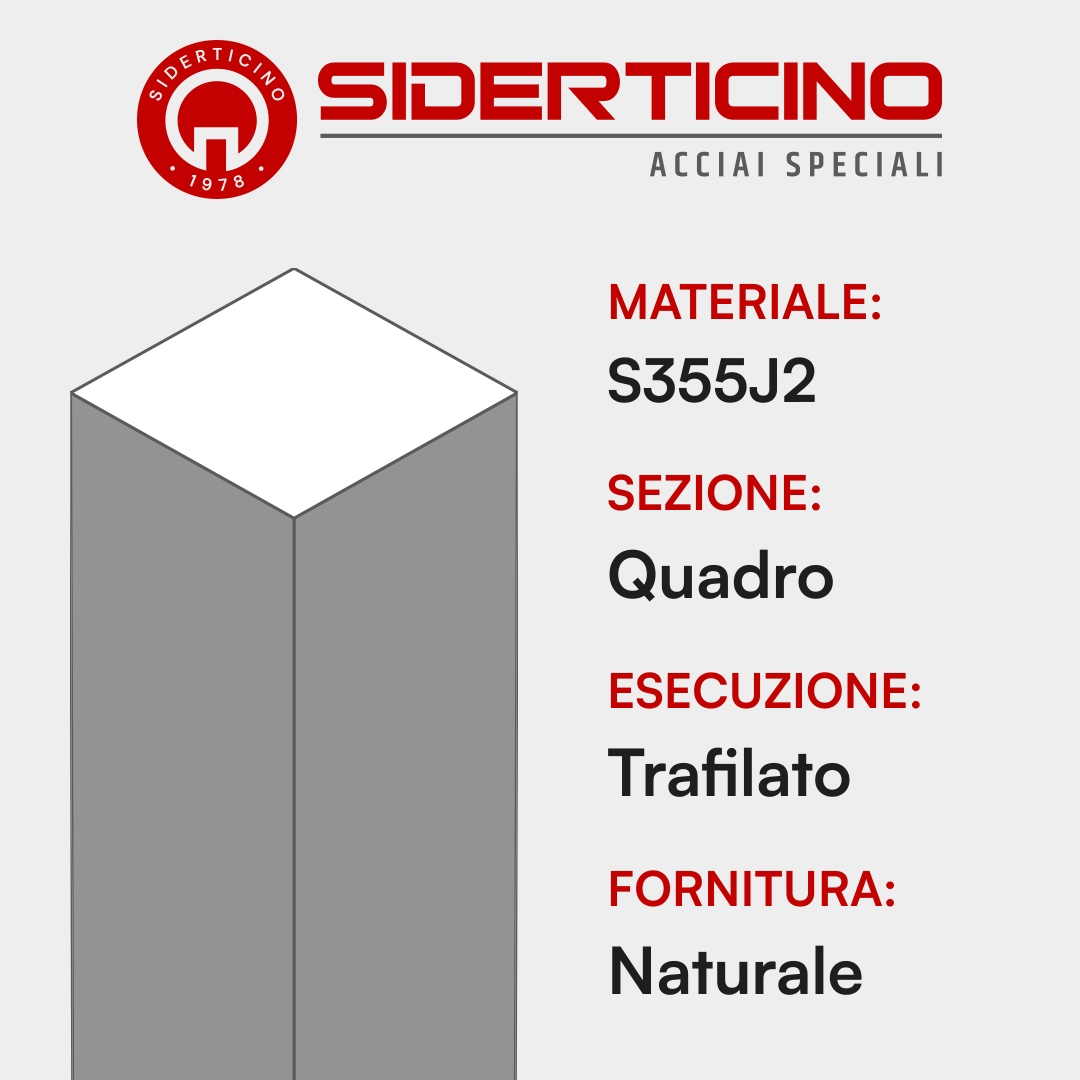
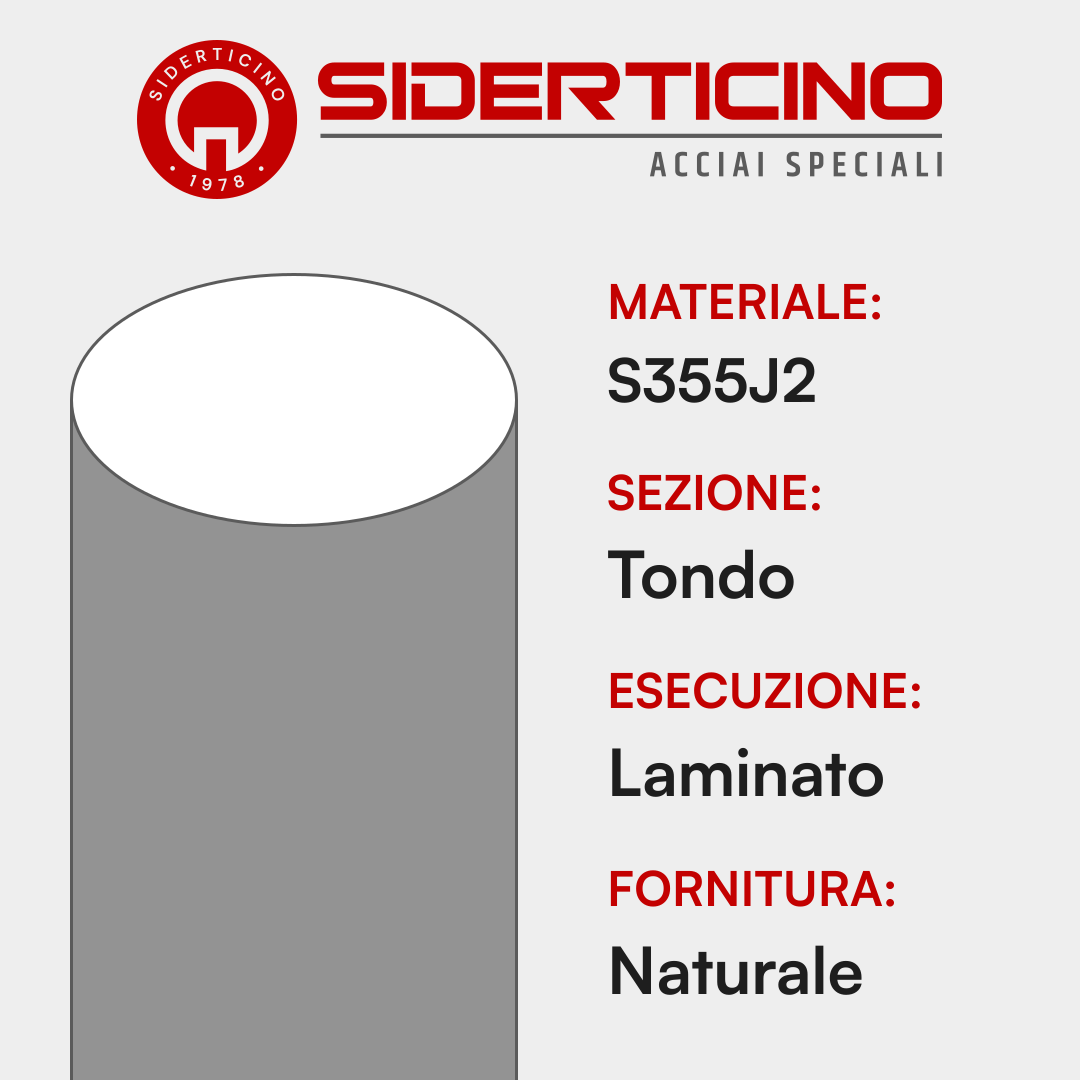
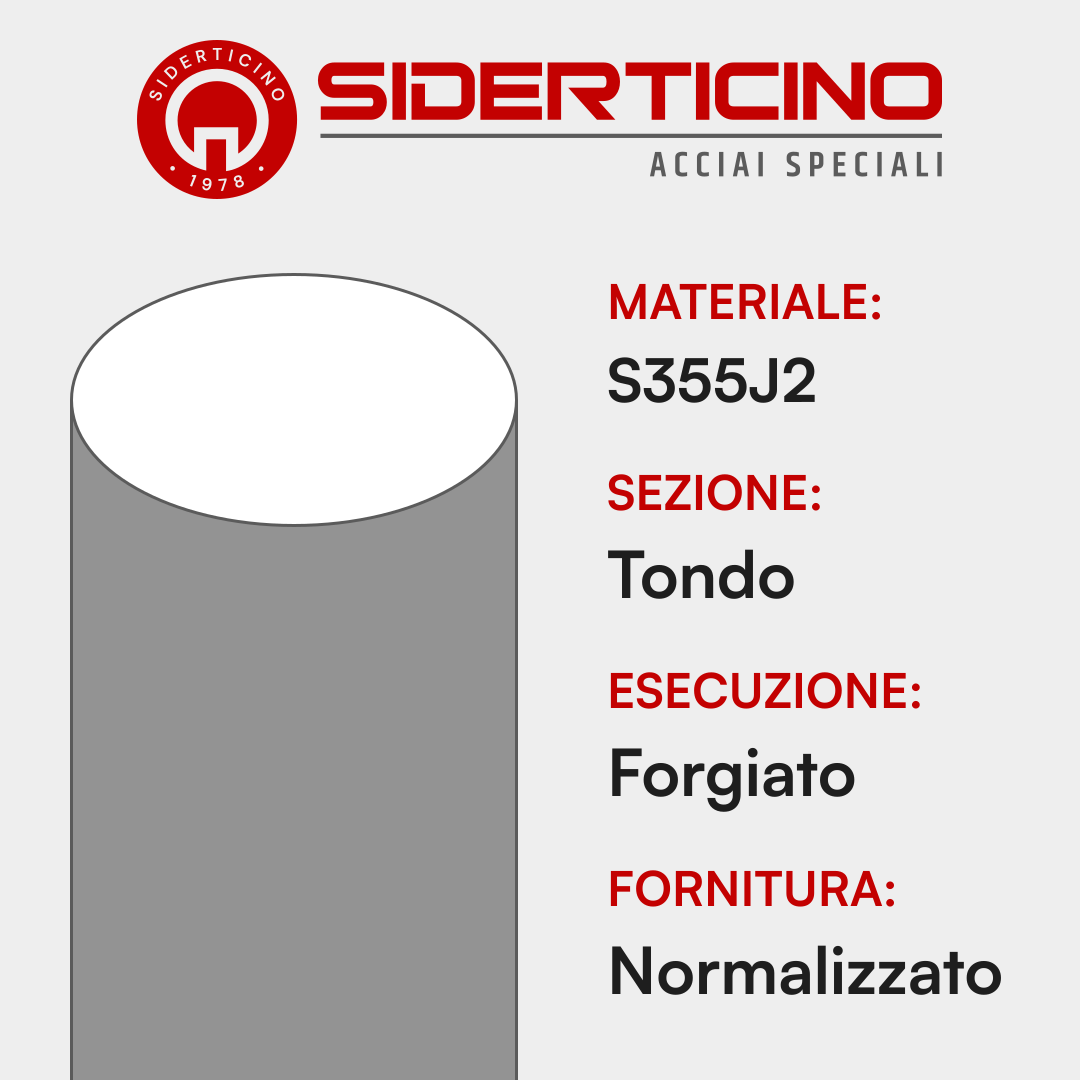
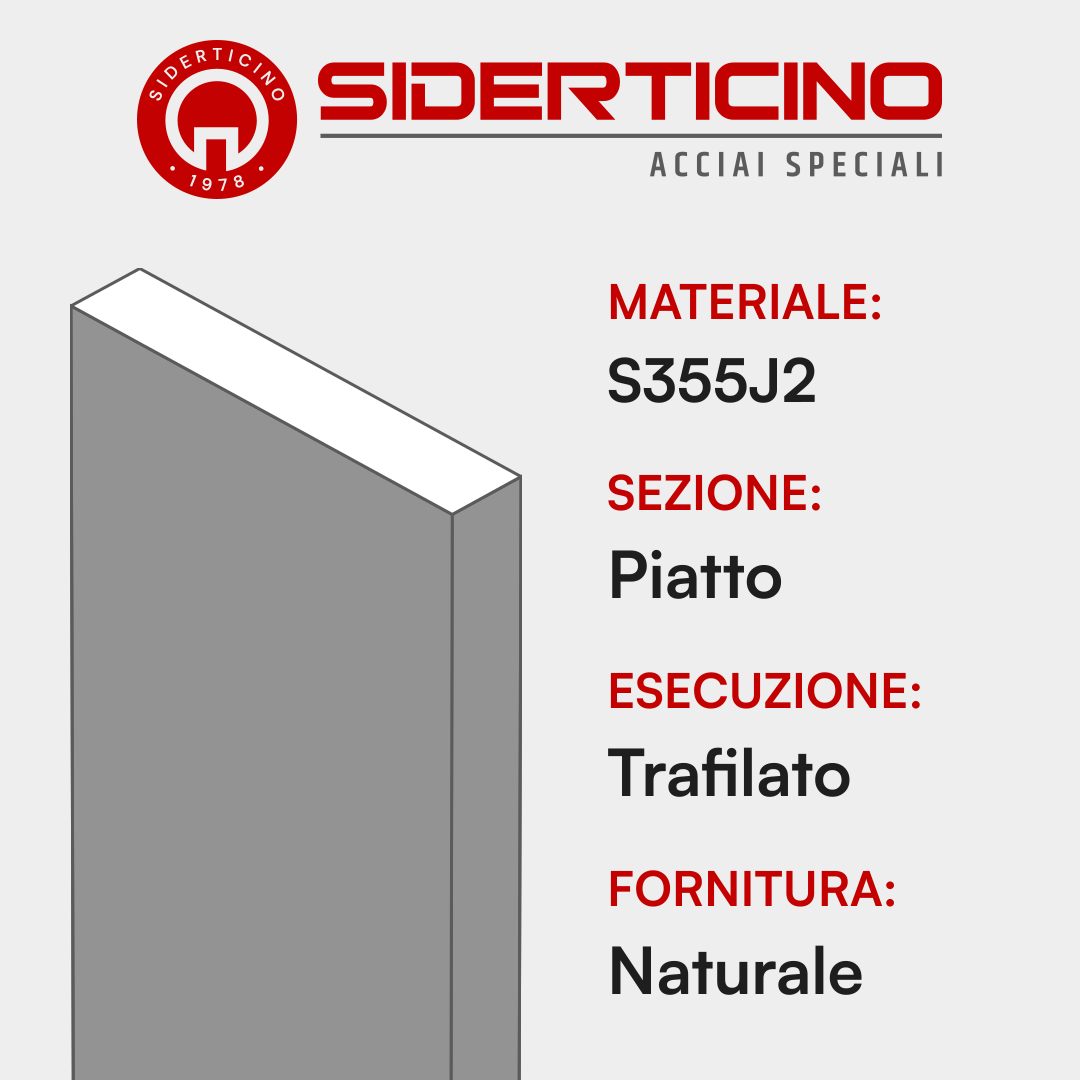
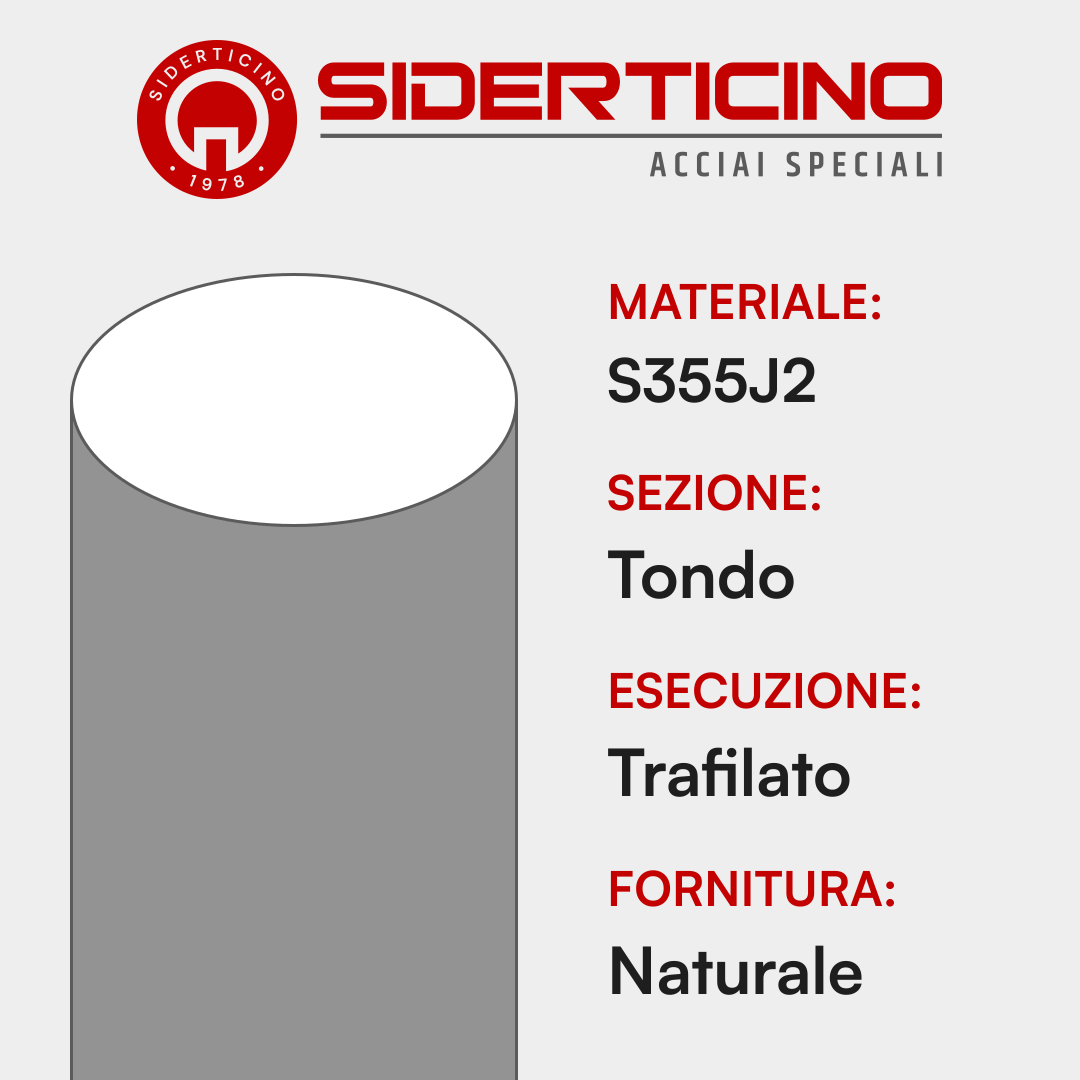
Every supply of S355 steel is accompanied by certification according to EN 10204 (typically 3.1 for structural applications), attesting chemical composition, mechanical properties and impact energy compliant with the required variant (JR, J0 or J2). The documentation includes cast analysis, mechanical tests on representative samples and dimensional checks according to the specified tolerances.
8.2. Dedicated Logistics Service
The dedicated logistics for S355 includes organized storage by variant and format, protective packaging for long transports and deliveries scheduled according to site requirements. The availability of local stock and consolidated relationships with European producers ensure competitive delivery times even for large quantities and special non-standard formats.
8.3. Certifications and Regulatory Compliance
The S355 certifications provided by Siderticino follow the requirements of EN 10025-2 to ensure regulatory compliance and suitability for structural applications according to the Eurocodes. Full traceability from the original cast to final delivery ensures appropriate documentation for projects requiring specific certifications or rigorous acceptance checks.
For special applications, additional certifications can be provided such as through-thickness properties (Z-quality according to EN 10164), ultrasonic testing according to EN 10160, or certifications for specific sectors (naval, oil, energy) that require higher quality standards than the standard specifications of EN 10025-2.
9. Machinability of S355 Steel: Cutting Parameters and Optimal Techniques
The machinability of S355 shows favorable characteristics for standard machining operations thanks to controlled hardness (≤200 HB, value to be verified on the manufacturer’s certificate) and optimized chemical composition that minimizes the presence of elements that could compromise chip removal. The ferritic-pearlitic structure typical of hot-rolled steel provides good cutting properties with conventional tools.
The cutting parameters for S355 have been optimized for various machining operations. For turning with coated carbide tools, the recommended cutting speeds are 200-250 m/min with feeds of 0.20-0.40 mm/rev and depths of cut up to 5-8 mm. Milling operates effectively at peripheral speeds of 180-220 m/min with feeds per tooth of 0.10-0.20 mm/z, using carbide cutters with geometries optimized for carbon steels.
Drilling S355 requires moderate speeds of 100-150 m/min with feeds of 0.15-0.30 mm/rev for HSS or carbide twist drills. The use of 6-8% emulsifiable cutting fluids significantly improves tool life and surface quality, particularly important for precision holes requiring tight tolerances for structural bolted connections.
| Operation | Cutting Speed | Feed | Depth | Recommended Tool |
| Turning | 200-250 m/min | 0.20-0.40 mm/rev | 5-8 mm | Coated carbide |
| Milling | 180-220 m/min | 0.10-0.20 mm/z | 2-5 mm | Positive geometry carbide cutters |
| Drilling | 100-150 m/min | 0.15-0.30 mm/rev | – | HSS or coated carbide |
| Grinding | 30-35 m/s | – | 0.01-0.03 mm | Aluminum oxide |
The achievable surface finishes on S355 reach Ra 1.6-3.2 μm for standard turning and Ra 0.8-1.6 μm for finish milling with optimized parameters. Cylindrical and surface grinding can achieve finishes of Ra 0.2-0.4 μm using aluminum oxide wheels with appropriate bonds. Surface quality is important for structural components requiring protective coatings, as surface irregularities can compromise the adhesion and durability of protective coatings.
The cold forming of S355 benefits from the excellent formability guaranteed by the minimum elongation of 22% according to EN 10025-2. Bending, rolling and drawing operations are easily achievable with standard equipment, although it is important to consider the orientation of the grain flow relative to the deformation direction to optimize the mechanical properties of the finished component.
10. Weldability of S355 Steel: Procedures and Precautions
The weldability of S355 represents one of the most appreciated characteristics of this structural steel, a result of the optimized chemical composition with controlled carbon equivalent (CEV ≤ 0.45% for thicknesses ≤40mm; see table 6 EN 10025-2) according to EN 10025-2. This property facilitates the realization of complex welded structures without the need for particular precautions for most standard structural applications.
The welding procedures for S355 include all conventional processes: shielded metal arc welding (SMAW), MIG/MAG welding (GMAW), TIG welding (GTAW) and submerged arc welding (SAW). The choice of procedure depends on application factors such as thicknesses to be welded, welding positions, required productivity and final quality needed for the specific application.
The preheating temperatures for S355 vary depending on thickness and environmental conditions. For thicknesses up to 30mm and ambient temperatures >5°C, preheating is generally not necessary when using low-hydrogen electrodes (≤5 ml/100g according to AWS A5.1). For thicknesses 30-50mm or severe environmental conditions (T<0°C, high humidity), preheating of 100-150°C is recommended to prevent hydrogen cracking in the heat-affected zone.
| Thickness (mm) | Ambient Temperature | Recommended Preheat | Interpass Temperature |
| ≤20 | >5°C | Not necessary | <250°C |
| 20-30 | >5°C | Not necessary | <250°C |
| 30-50 | >0°C | 100-150°C | 150-250°C |
| >50 | Any | 150-200°C | 150-300°C |
The filler materials for S355 welding must be selected to ensure mechanical strength of the joint not lower than the base material. For SMAW welding, AWS E7018 type electrodes (or equivalent EN ISO 2560-A E 42 4 B 42 H5) are recommended, while for MIG/MAG processes AWS ER70S-6 type wires (equivalent EN ISO 14341-A G 42 4 M G3Si1) are used. The choice must also consider impact energy requirements when specified, particularly for the J0 and J2 variants which require guaranteed toughness at low temperatures.
The control of heat input in S355 welding is important to maintain optimal properties in the heat-affected zone. The welding energy should be kept between 1.0-3.0 kJ/mm for most applications, with lower values for thin sections and higher values for larger thicknesses. Excessive heat input could cause grain growth in the HAZ with consequent reduction in toughness, particularly critical for variants requiring impact energy at low temperatures.
The post-welding treatments for S355 are generally not necessary for standard structural applications, thanks to the excellent weldability of the material. However, for structures subject to dynamic loads or severe service conditions, stress relieving treatment at 580-620°C may be recommended to relax residual stresses and optimize the fatigue strength of welded joints.
11. Quality Control and Testing of S355 Steel: Standard Methodologies
Quality control of S355 strictly follows the requirements of EN 10025-2 to ensure compliance with specifications and reliable performance in structural applications. Control methodologies include standardized mechanical tests, dimensional checks, chemical verifications and non-destructive testing when specified for critical applications.
The standard mechanical tests for S355 include tensile tests according to ISO 6892-1 to verify tensile strength (Rm), yield strength (ReH), elongation (A%) and reduction of area (Z%) on longitudinal samples taken from the finished material. Impact energy is evaluated through Charpy V tests according to ISO 148-1 at the temperature specified for the variant (JR: +20°C, J0: 0°C, J2: -20°C) with minimum absorbed energy of 27 J. Brinell hardness is measured according to ISO 6506-1 with verification of the maximum limit of 200 HB.
The chemical checks on S355 verify compliance with the composition specified in EN 10025-2 through spectrometric analysis on representative samples from each cast. Particular attention is paid to controlling the carbon equivalent (CEV ≤ 0.45% for thicknesses ≤40mm; see table 6 EN 10025-2) which ensures the excellent weldability characteristic of this structural steel.
| Controlled Property | Test Method | Control Frequency | Acceptance Criteria |
| Tensile strength | ISO 6892-1 | Every cast | According to EN 10025-2 |
| Charpy V impact energy | ISO 148-1 | Every cast | ≥27 J at specified T |
| Brinell hardness | ISO 6506-1 | Every batch | ≤200 HB |
| Chemical composition | Spectrometry | Every cast | According to EN 10025-2 |
| Dimensions/tolerances | Metric checks | Continuous | According to EN product standards |
The non-destructive testing on S355 may include ultrasonic testing according to EN 10160 for detection of internal defects (inclusions, laminations), magnetic particle inspection according to ISO 17638 for surface defects, and rigorous dimensional checks according to specific product standards (EN 10029 for plates, EN 10034 for sections). These checks are particularly important for critical structural applications where material reliability is fundamental for safety.
The quality documentation for S355 includes certificates according to EN 10204 attesting compliance with specifications, typically 2.1 certificates (manufacturer’s declaration of conformity) for standard applications or 3.1 (specific inspection certificate) for critical structural applications. Traceability from the original cast to the finished product ensures unique identification and quality responsibility throughout the entire supply chain.
The control of through-thickness properties according to EN 10164 may be required for critical welded applications where resistance to delamination (reduction of area) is important for structural safety. The Z15, Z25 and Z35 classes specify minimum reduction of area values in the through-thickness direction, verified through tensile tests on samples oriented perpendicular to the plate surface.