1. Hard-Chrome Plated Bars: Technical Guide for Industry Professionals
Hard-chrome plated bars represent a specialized category of metallurgical components characterized by exceptional surface properties obtained through the hard-chrome plating surface treatment.
These elements, widely used in the hydraulic and pneumatic industry, constitute the technological solution of excellence for applications requiring high wear resistance, corrosion protection and extreme dimensional precision under the most severe operating conditions.
2. Definition and Fundamental Characteristics of Hard-Chrome Plated Bars
Hard-chrome plated bars are steel components subjected to an industrial galvanic hard-chrome plating process, specifically designed to guarantee superior performance in the most critical industrial applications of hard-chrome plated bars.
The classification of hard-chrome plated bars distinguishes them from standard components through the unique combination of surface hardness, corrosion resistance and geometric precision obtained through the electrolytic deposition of metallic chromium.
The distinctive peculiarity of these materials lies in their ability to maintain consistent performance in severe operating environments, ensuring extended service life and exceptional reliability in the most demanding hydraulic and pneumatic systems.
The mechanical properties of hard-chrome plated bars resulting from the galvanic process include high surface hardness, superior corrosion resistance of hard-chrome plated bars and precision dimensional tolerances of hard-chrome plated bars.
2.1. Principles of the Hard-Chrome Plating Treatment
The galvanic hard-chrome plating process is based on the electrodeposition of metallic chromium from the electrolytic solution containing chromic acid and specific catalysts. The electrochemical reaction takes place at the surface of the cathode (bar to be chrome plated) with deposition of metallic chromium according to the reaction: CrO₃ + 6H⁺ + 6e⁻ → Cr + 3H₂O.
Control of operating parameters such as current density, bath temperature and electrolytic composition determines the final characteristics of the chrome deposit.
Optimal conditions provide for temperatures of 45-55°C, current density of 15-25 A/dm² and chromic acid concentrations of 250-400 g/l (some high-efficiency processes employ higher values, up to 50 A/dm²).
2.2. Composition of the Base Steel and Substrate
The selection of the base steel for hard-chrome plated bars is fundamental to ensure optimal adhesion of the chrome deposit and mechanical properties suitable for the final applications. The most commonly used steels have chemical compositions optimized for uniform hardenability and homogeneous microstructure necessary for precision chrome plating.
The carbon content of the base steel influences the response to preliminary heat treatments and the hardness of the substrate, fundamental parameters for the success of the subsequent galvanic process. Alloying elements such as chromium and molybdenum improve hardenability and ensure uniform properties on large-size sections.
2.3. Characteristics of the Chrome Coating
The chrome coating has specific metallographic characteristics that determine the final performance of hard-chrome plated bars. The microstructure of the deposit is characterized by a columnar structure with preferential orientation perpendicular to the surface, ensuring high hardness and wear resistance.
The hardness of the chrome deposit typically ranges from 850 to 1150 HV depending on the deposition conditions and post-plating treatments. The presence of controlled micro-cracks in the deposit contributes to overall toughness and resistance to thermal and mechanical shocks.
3. Classification of Hard-Chrome Plated Bars According to International Standards
3.1. European Standards and ISO Regulations
The European standard for hard-chrome plated bars is regulated by specific ISO standards for galvanic treatments and corrosion resistance. ISO 9227 defines the test methods for evaluating corrosion resistance through neutral salt spray (NSS) tests, while ISO 4540 establishes the criteria for evaluating results.
The European classification of hard-chrome plated bars considers parameters such as deposit thickness, surface hardness, corrosion resistance and dimensional tolerances. Requirements vary depending on the class of use and the operating conditions expected for the specific application.
3.2. ASTM Specifications for Hard-Chrome Plated Bars
ASTM standards for hard-chrome plated bars include specifications for the galvanic process, quality controls and characterization tests. ASTM B177 defines the requirements for industrial chromium deposits, while ASTM B571 establishes the test methods for the thickness of electrolytic coatings.
ASTM specifications particularly emphasize process controls and reproducibility of deposit characteristics, critical aspects for industrial applications where reliability is a priority.
3.3. Classification by Chrome Plating Thickness
The classification of hard-chrome plated bars by chrome deposit thickness represents the main parameter for selection depending on the specific application. Standard thicknesses range from 15 μm for light applications up to 50 μm for severe operating conditions with high wear.
The correlation between chrome plating thickness and performance is direct: greater thicknesses ensure superior durability but require more rigorous controls to avoid excessive residual stresses that could cause delamination of the coating.
3.4. Comparative Table of International Standards
| Standard | Thickness (μm) | Hardness (HV) | Corrosion Test | Main Application |
| ISO Class A | 15-25 | 850-950 | 24h NSS | Light cylinders |
| ISO Class B | 25-35 | 900-1000 | 48h NSS | Pneumatic rods |
| ISO Class C | 35-50 | 950-1100 | 72h NSS | Heavy-duty hydraulics |
| ASTM Type I | 20-30 | 900-1050 | 48h NSS | General applications |
4. Base Steel Grades for Hard-Chrome Plated Bars
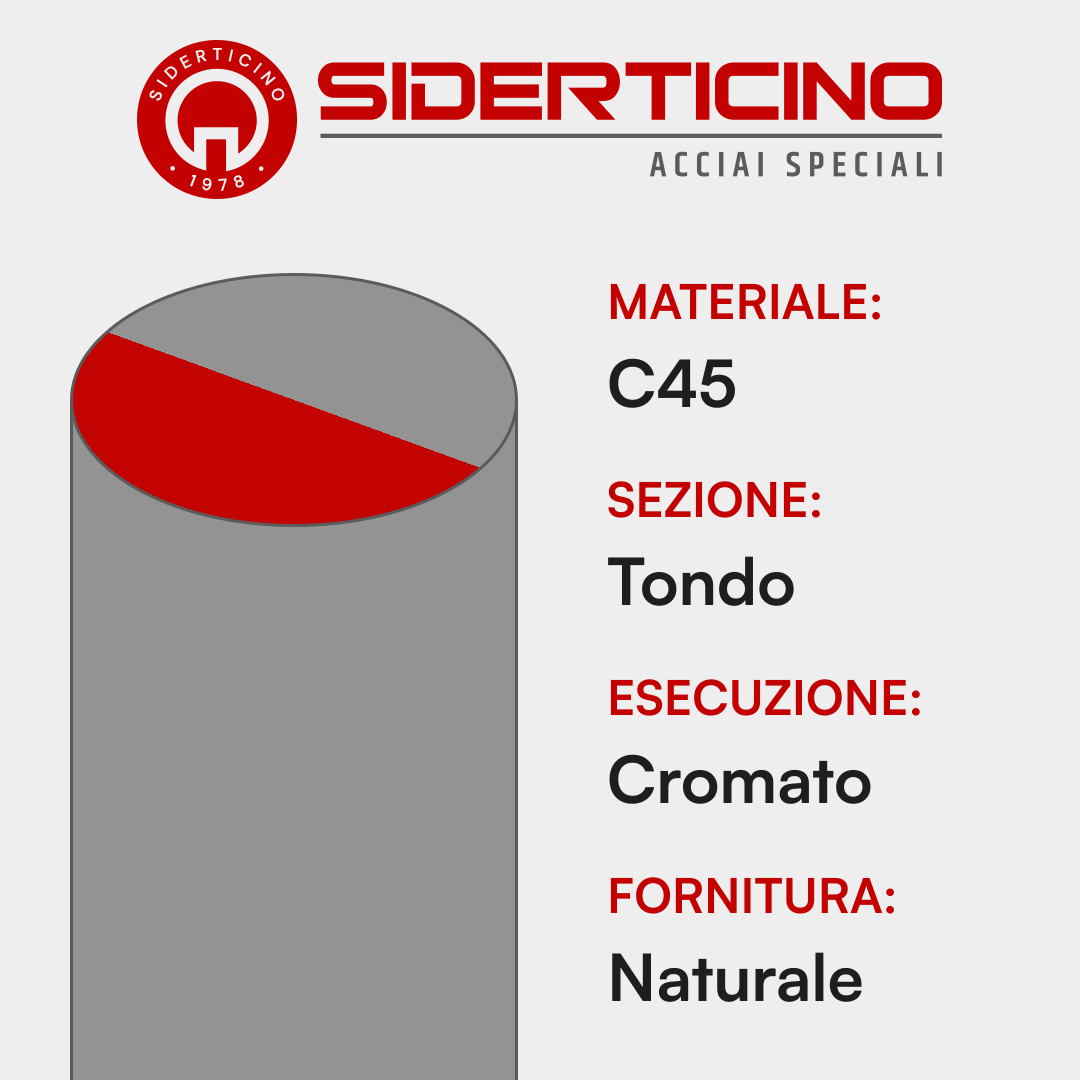
4.1. C45E – Standard Steel for Chrome Plating
C45E steel represents the most widely used standard grade for hard-chrome plated bars in general hydraulic applications. The composition with 0.42-0.50% carbon ensures the optimal balance between mechanical strength and machinability necessary for the production of precision bars.
The mechanical properties of hard-chrome plated bars on C45E substrate include yield strength of 355-430 MPa after quenching and tempering and core hardness of 180-220 HB, values that ensure adequate structural strength for medium-power hydraulic cylinders.
4.2. 20MnV6 – High-Strength Applications
Grade 20MnV6 is used for hard-chrome plated bars intended for high-strength applications where superior mechanical properties are required. The presence of manganese and vanadium improves hardenability and mechanical strength, allowing use in high-pressure hydraulic systems.
The microstructure after quenching and tempering has fine grain and uniform distribution of carbides, characteristics that promote adhesion of the chrome deposit and ensure superior performance under cyclic loading conditions.
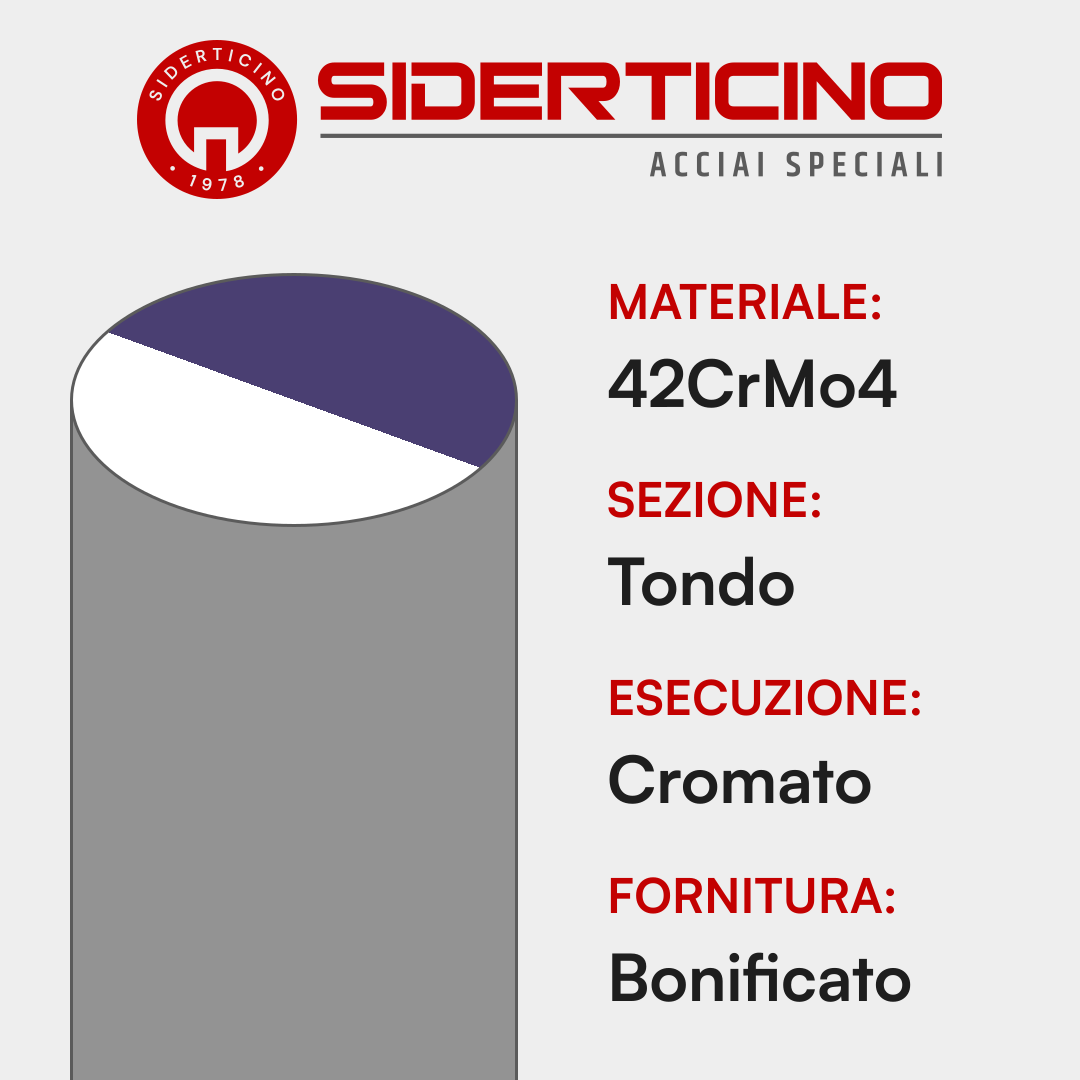
4.3. 42CrMo4 – Bars for High Loads
42CrMo4 steel represents the optimal choice for hard-chrome plated bars subjected to high loads and severe operating conditions. The composition with chromium and molybdenum ensures high hardenability and uniform mechanical properties even on large-size sections.
The industrial applications of hard-chrome plated bars in 42CrMo4 include rods for hydraulic cylinders of earthmoving machinery, where mechanical stresses and environmental conditions require exceptional performance and extended durability.
4.4. 38MnVS6 – Special Grades for Critical Applications
Grade 38MnVS6 could be used for critical applications requiring a combination of high mechanical strength and good machinability. The presence of controlled sulfur improves machinability on machine tools, facilitating finishing operations prior to chrome plating.
However, the presence of sulfur requires particular attention in surface preparation before chrome plating to avoid adhesion problems with the galvanic deposit.
5. Chrome Plating Process and Technological Parameters
5.1. Surface Preparation and Grinding
Surface preparation represents the critical phase of the production process of hard-chrome plated bars, determining the adhesion and final quality of the galvanic deposit. The standard sequence includes precision grinding to obtain controlled roughness, followed by cleaning and surface activation operations.
The optimal roughness for chrome plating is between Ra 0.1-0.4 μm, a value that ensures mechanical adhesion of the chrome deposit without compromising the final finish. Grinding must be carried out with controlled parameters to avoid surface metallurgical alterations.
5.2. Galvanic Chrome Plating Process
The galvanic chrome plating process for hard-chrome plated bars uses electrolytic baths based on chromic acid with specific catalytic additives. Optimal operating parameters include bath temperature of 50-55°C, current density of 20-25 A/dm² and a CrO₃/H₂SO₄ ratio of 100:1.
Control of pH and chloride ion concentration is critical to ensure uniformity of the deposit and prevent the formation of surface defects. The duration of the process varies depending on the target thickness and the dimensions of the component.
5.3. Thickness Control and Deposit Quality
Control of the chrome deposit thickness is carried out using non-destructive techniques such as magnetic or eddy-current gauges. The thickness distribution must be uniform with variations of less than ±10% of the nominal value to ensure homogeneous performance along the entire length of the bar.
The quality of the deposit is evaluated through adhesion checks, surface hardness and absence of defects such as porosity, inclusions or excessive cracking that could compromise in-service performance.
5.4. Finishing and Polishing After Chrome Plating
Post-plating finishing operations include controlled polishing to achieve the specified final roughness and dimensional stabilization operations. Polishing must be carried out with optimized parameters to avoid localized overheating that could alter the characteristics of the deposit.
The typical final roughness for hydraulic hard-chrome plated bars is Ra 0.05-0.20 μm, a value that ensures smooth sliding of seals and minimizes wear of sealing components.
6. Mechanical Properties and Performance Characteristics
6.1. Surface Hardness and Wear Resistance
Surface hardness represents the main performance characteristic of hard-chrome plated bars, directly determining wear resistance and service life. Typical hardness values of the chrome deposit range from 850 to 1150 HV depending on deposition conditions and post-plating treatments.
The correlation between surface hardness and wear resistance is direct but not linear, as there is an optimal value beyond which the brittleness of the deposit can cause delamination under high loads. Optimization requires balancing hardness and toughness.
6.2. Corrosion Resistance and Protection
The corrosion resistance of hard-chrome plated bars is one of the main advantages of the galvanic treatment, ensuring effective protection in corrosive environments typical of hydraulic applications. Metallic chromium forms passivating surface oxides that protect the substrate from corrosive attack.
Neutral salt spray (NSS) tests according to ISO 9227 typically show resistance of over 72 hours for deposits of 25-35 μm thickness, values that ensure adequate durability for most industrial applications.
6.3. Dimensional Tolerances and Precision
The dimensional tolerances of hard-chrome plated bars are determined by the precision of the production process and the characteristics of the galvanic deposit. Standard f7 tolerance is commonly achievable for diameters up to 200 mm, while tighter tolerances require post-plating finishing operations.
Dimensional control must consider the effects of chrome plating on final dimensions, requiring undersizing of the substrate to compensate for the deposit thickness and any deformations induced by the galvanic process.
6.4. Surface Roughness and Finish
The final surface roughness of hard-chrome plated bars is determined by preliminary preparation and post-plating finishing operations. Typical values for hydraulic applications are Ra 0.05-0.20 μm, a range that ensures optimal sliding of seals while minimizing wear.
Surface finish significantly influences tribological performance and seal life, requiring rigorous controls to maintain the specifications required by the most critical applications.
7. Technical Specifications and Quality Parameters
7.1. Chrome Plating Thickness (15-50 μm)
The thickness of the chrome deposit represents the fundamental technical parameter for the performance of hard-chrome plated bars. The selection of the optimal thickness depends on operating conditions: 15-25 μm for light applications, 25-35 μm for standard uses, 35-50 μm for severe conditions.
Increasing the thickness improves wear resistance and durability, but increases the risks of residual stresses and delamination. Optimization requires specific analysis of operating conditions and expected loads.
7.2. Standard and Special f7 Tolerances
The f7 tolerance represents the industry standard for hydraulic hard-chrome plated bars, ensuring precision fits with standard seals. For diameters from 20 to 50 mm, the f7 tolerance corresponds to deviations of +0.013/+0.034 mm.
Tighter tolerances (f6, e8) are achievable through additional finishing operations, necessary for precision applications or critical fits where sliding must be optimized.
7.3. Corrosion Resistance Tests (NSS)
Neutral salt spray (NSS) corrosion resistance tests according to ISO 9227 represent the standard quality control for hard-chrome plated bars. Acceptance criteria require absence of base corrosion for specified durations: 24h for class A, 48h for class B, 72h for class C.
The evaluation of results follows ISO 4540 criteria, considering the extent and type of corrosion observed. The presence of controlled micro-cracks in the deposit can influence the results, requiring specialist interpretation.
7.4. Dimensional and Geometric Controls
Dimensional controls for hard-chrome plated bars include verification of diameter, straightness, concentricity and surface roughness. Measuring instruments must ensure precision adequate to the required tolerances, typically micrometers with a resolution of 0.001 mm.
Straightness is critical for hydraulic applications, with maximum deviations of 0.1 mm/m for standard bars. Geometric controls are carried out on coordinate measuring machines for complex geometries.
8. Industrial Applications of Hard-Chrome Plated Bars
8.1. Hydraulic Systems and Cylinders
Hydraulic systems represent the main application for hard-chrome plated bars for hydraulic and pneumatic use, where they are used as rods for hydraulic cylinders in construction equipment, industrial presses and material handling equipment. The required performance includes wear resistance, hydraulic sealing and dimensional precision.
The mechanical properties of hard-chrome plated bars in hydraulic applications must ensure resistance to cyclic loads, operating pressures up to 350 bar and variable sliding speeds. Chrome plating ensures superior durability and reduced maintenance.
8.2. Pneumatic Actuators and Components
Pneumatic actuators use hard-chrome plated bars for rods and guides where dimensional precision and wear resistance are required in often contaminated environments. Operating conditions include pressures up to 10 bar, high cycle frequencies and possible presence of abrasive particulate matter.
Chrome plating ensures a smooth surface for optimal sliding of pneumatic seals and corrosion resistance in industrial environments with the presence of moisture and chemical agents.
8.3. Earthmoving and Agricultural Machinery
Earthmoving and agricultural machinery represent severe applications for hard-chrome plated bars where operating conditions include high loads, contaminated environments and intense mechanical stresses. Cylinder rods for excavators, loaders and tractors require exceptional performance.
Specifications for these applications call for chrome plating thicknesses of 35-50 μm, high-strength base steels (42CrMo4) and rigorous quality controls to ensure reliability under critical operating conditions.
8.4. Automotive and Transportation Sector
The automotive sector may use hard-chrome plated bars for active suspension components, power steering systems and engine control actuators. Specifications require high dimensional precision and fatigue resistance for extended service life cycles.
Automotive regulations require specific certifications and complete traceability of the production process to ensure quality and reliability of critical components.
9. Advantages and Limitations
9.1. Performance Advantages of Chrome Plating
The performance advantages of hard-chrome plated bars include high surface hardness (850-1150 HV), excellent wear resistance, corrosion protection and precision surface finish. Chrome plating ensures durability increases of 300-500% compared to untreated components in hydraulic applications.
The chrome-plated surface has a reduced coefficient of friction that improves the efficiency of hydraulic systems and reduces seal wear. Corrosion resistance extends service life in aggressive industrial environments.
9.2. Technical and Application Limitations
The limitations of hard-chrome plated bars include brittleness of the chrome deposit, which can cause chipping under severe impacts, limitations in repairability and higher costs compared to alternative treatments.
The presence of micro-cracks in the deposit, while contributing to toughness, can promote the onset of localized corrosion in particularly aggressive environments. Welding operations or post-plating heat treatments are generally not recommended.
9.3. Comparison with Other Surface Treatments
Comparison with alternative treatments highlights specific advantages of chrome plating: higher hardness compared to nitriding (850-1150 HV vs 600-900 HV), better corrosion resistance compared to PVD coatings, optimal surface finish for hydraulic applications.
Limitations include higher costs, environmental issues of the galvanic process and lower impact resistance compared to surface heat treatments.
10. Selection and Evaluation Criteria
Selection criteria for hard-chrome plated bars must consider operating conditions, performance requirements, economic constraints and environmental regulations. Cost-benefit analysis must include treatment costs, durability benefits and maintenance reduction.
The evaluation must consider the availability of qualified chrome plating services, delivery times and the possibility of repair/re-plating for high-value components.
11. Quality Control and Certifications
11.1. Adhesion and Thickness Tests
Adhesion tests for chrome deposits use bend, indentation or cross-cut tests to evaluate deposit-substrate cohesion. Adequate adhesion is critical to prevent delamination in service.
Thickness measurement is carried out with magnetic or eddy-current instruments, calibrated for metallic chromium. The thickness distribution must be uniform with limited variations to ensure homogeneous performance.
11.2. Salt Spray Corrosion Tests
Neutral salt spray (NSS) corrosion tests according to ISO 9227 represent the standard test for evaluating the corrosion resistance of hard-chrome plated bars. Test conditions include a temperature of 35°C, relative humidity >95%, NaCl concentration of 50±5 g/l.
Results are evaluated according to ISO 4540, considering the extent of base corrosion, the type of corrosion products and uniformity of attack. Acceptance criteria vary depending on the class of use.
11.3. Dimensional and Geometric Controls
Dimensional controls include diameter measurement with precision micrometers, straightness verification with comparators and roughness control with calibrated roughness testers. Measurement traceability is essential for quality certifications.
Geometric controls for large-size bars use coordinate measuring machines (CMM) that ensure precision and repeatability of measurements in accordance with ISO/GPS standards.
11.4. Industry Certifications
Industry certifications for hard-chrome plated bars may include specific qualifications for the automotive industry (IATF 16949), aerospace (AS9100) or the nuclear sector with rigorous traceability and process control requirements.
Quality documentation must include base material certificates, galvanic process parameters, control results and compliance with customer specifications to ensure full traceability.
12. Machining and Post-Treatments
12.1. Machinability After Chrome Plating
The machinability of hard-chrome plated bars after the galvanic treatment could be limited by the hardness of the chrome deposit, which causes accelerated wear of cutting tools. Permissible operations include light grinding and controlled polishing.
Aggressive machining operations are not recommended due to the risk of deposit delamination or alteration of surface properties. Design must ensure final dimensions are achieved through chrome plating without subsequent machining.
12.2. Permissible Finishing Operations
Permissible finishing operations after chrome plating include controlled polishing with fine abrasives, lapping for precision geometries and possible dimensional stabilization treatments at low temperatures.
Process parameters must be optimized to avoid overheating that could alter the microstructure of the chrome deposit or induce excessive residual stresses.
12.3. Repairs and Re-Plating
Repairs to damaged hard-chrome plated bars may involve localized dechroming, substrate repair by welding and re-plating. Feasibility depends on the extent of the damage and the economic value of the component.
Complete re-plating requires total dechroming, possible re-quenching and tempering of the substrate and a new complete galvanic cycle. Repair costs must be compared with replacement to evaluate economic convenience.
12.4. Handling Precautions
Handling of hard-chrome plated bars requires precautions to avoid damage to the chrome deposit, which is sensitive to impacts and abrasion. The use of soft protection during handling and storage is recommended.
Assembly operations must avoid excessive stresses that could cause cracking in the deposit. The use of compatible lubricants during assembly prevents seizing and damage.
13. Innovations and Future Trends
13.1. Eco-Friendly and Sustainable Chrome Plating
The development of eco-friendly chrome plating could represent an important trend driven by increasingly restrictive environmental regulations on traditional galvanic processes. Alternative technologies include trivalent chrome plating and processes with reduced environmental impact.
Technical challenges include achieving performance comparable to traditional chrome plating while maintaining competitive costs and process reliability for large-scale industrial production.
13.2. Alternative Technologies to Hexavalent Chromium
Alternative technologies to hexavalent chromium include PVD/CVD coatings, advanced thermochemical treatments and composite deposits with specific properties. Development is driven by environmental considerations and REACH regulations.
Replacement requires complete performance validation for critical applications and adaptation of existing production processes with significant investments in new technologies.
13.3. Optimization for Industry 4.0
Optimization for Industry 4.0 could include real-time monitoring of galvanic parameters, automated quality control and complete digital traceability of the production process.
Integration with IoT systems would enable predictive quality control and automatic optimization of process parameters to maximize efficiency and reduce waste.
13.4. Developments in Production Processes
Developments in production processes could include complete automation of galvanic lines, in-line quality control systems and energy optimization to reduce environmental impact.
The evolution towards more sustainable processes requires research and development for new electrolytic formulations, recovery and recycling of process materials and reduction of energy consumption.
14. Frequently Asked Questions About Hard-Chrome Plated Bars
What is the main difference between hard-chrome plated bars and bars with other surface treatments?
Hard-chrome plated bars have higher surface hardness (850-1150 HV) compared to other treatments, excellent corrosion resistance and optimal surface finish for hydraulic applications. Chrome plating also ensures precision dimensional tolerances of hard-chrome plated bars and superior durability in severe operating environments.
Why is chrome plating preferred in hydraulic applications?
Chrome plating is preferred in hard-chrome plated bars for hydraulic and pneumatic use for the combination of surface hardness, corrosion resistance and smooth finish that ensures optimal sliding of seals. The chrome-plated surface reduces friction and seal wear, extending maintenance intervals.
How is the optimal chrome plating thickness selected?
The thickness selection considers operating conditions: 15-25 μm for light applications, 25-35 μm for standard uses, 35-50 μm for severe conditions. Increasing the thickness improves durability but increases costs and the risks of residual stresses.
What are the essential quality controls for hard-chrome plated bars?
Essential controls include chrome plating thickness measurement, adhesion tests, NSS corrosion tests according to ISO 9227, dimensional and geometric controls. The corrosion resistance of hard-chrome plated bars is evaluated through salt spray tests for durations specified according to the class of use.
Is it possible to repair damaged hard-chrome plated bars?
Repairs are possible through localized dechroming, substrate repair and re-plating. Feasibility depends on the extent of the damage and the value of the component. Complete repairs require total dechroming and a new galvanic cycle.
What are the future trends for hard-chrome plated bars?
Trends include the development of eco-friendly chrome plating, alternative technologies to hexavalent chromium, optimization for Industry 4.0 with digital monitoring and automation of galvanic processes. The evolution is driven by environmental regulations and growing sustainability demands.
Hard-chrome plated bars represent a well-established but continuously evolving technology to meet the growing needs of the modern hydraulic industry, ensuring superior performance and reliability in the most critical applications of industrial automation and construction machinery.