1. 18NiCrMo5 Steel: Introduction and General Characteristics
The 18NiCrMo5 steel, now called 17NiCrMo6-4 under the new standard, represents one of the most significant alloys in the landscape of case-hardening steels, specifically designed for industrial applications requiring high mechanical performance and wear resistance. This ferrous alloy, characterized by the presence of nickel, chromium and molybdenum, constitutes a well-established technical solution for components subjected to dynamic stresses and high loads.
18NiCrMo5 is classified according to UNI 7846:1978 (historical standard) as an alloy case-hardening steel, equivalent to the European designation 17NiCrMo6-4 (1.6566) and to the SAE/AISI 4317 classification. For updated regulatory specifications, refer to EN 10084 (Case hardening steels, delivery conditions) and ISO 683-3:2018 (or ISO 683-2/3 depending on the manufacturer) for technical specifications. This international standardization ensures uniformity in technical specifications and facilitates material identification across different global industrial contexts. The alphanumeric designation reflects the chemical composition of the steel, where the prefix “18” indicates the average percentage carbon content (0.18%), while the symbols Ni, Cr and Mo identify the characterizing alloying elements.
The properties of 18NiCrMo5 derive from the synergistic combination of alloying elements that give the material superior mechanical characteristics compared to conventional carbon steels. Nickel (1.2-1.5%) contributes to toughness and impact resistance, chromium (0.7-1.0%) improves hardenability and corrosion resistance, while molybdenum (0.15-0.25%) increases mechanical strength at high temperatures and dimensional stability. This combination allows, through appropriate heat treatments, a surface hardness between 58-62 HRC to be achieved while maintaining core toughness.
1.1. Differences 18NiCrMo5 vs Conventional Steels
The differences of 18NiCrMo5 compared to conventional steels mainly manifest in its superior response to heat treatments and mechanical performance after case hardening. Compared to simple carbon steels such as C45, 18NiCrMo5 shows significantly higher hardenability, allowing high hardness values to be achieved even on sections of greater thickness. The presence of alloying elements gives resistance to temper embrittlement, a phenomenon typical of non-alloy steels that limits applicability under severe operating conditions.
Compared with simpler case-hardening steels such as 16MnCr5, 18NiCrMo5 offers superior performance in terms of fatigue resistance (40-60% increase) and dimensional stability during heat treatments. The molybdenum content prevents austenitic grain growth during case hardening, maintaining uniform mechanical properties even for prolonged thermal cycles required to achieve high case-hardening depths.
1.2. Advantages of 18NiCrMo5 for Industrial Applications
The advantages of 18NiCrMo5 in industrial applications include its application versatility ranging from the automotive sector to heavy engineering, with particular reference to critical components such as gears, camshafts, half-shafts and bearings. The ability to maintain high mechanical performance under demanding operating conditions makes it ideal for applications where operational reliability is a non-negotiable parameter.
The excellent machinability of 18NiCrMo5 in the annealed condition (200-225 HB) facilitates turning, milling and drilling operations, reducing machining times and tool wear compared to harder steels. This characteristic translates into significant economic advantages for the production of series components, where the optimization of production processes directly influences the competitiveness of the finished product.
1.3. Standards and Certifications for 18NiCrMo5
The standards for 18NiCrMo5 follow well-established international standards that guarantee material quality and traceability. The Italian standard UNI 7846:1978 (historical standard) defines chemical composition, mechanical properties and testing methods, while the corresponding European standard EN 10084 establishes requirements for conformity certification. The designation 17NiCrMo6-4 (material number 1.6566) according to EN 10027-2 facilitates unambiguous material identification in international markets.
The quality certifications for 18NiCrMo5 include certificates according to EN 10204 type 2.1 (manufacturer’s certificate of conformity) or 3.1 (specific inspection certificate) for critical applications. Each heat is accompanied by certified chemical analysis, mechanical tests on representative samples and metallographic checks to verify the microstructure and purity index according to ISO 4967.
2. Chemical Composition of 18NiCrMo5 Steel: Alloying Elements and Standard Specifications
The chemical composition of 18NiCrMo5 represents the foundation of its exceptional mechanical properties, precisely defined by the UNI 7846:1978 standard. This complex alloy combines a base of iron with specific elements that give the material the hardenability, toughness and mechanical strength characteristics required for the most demanding applications in the mechanical sector.
The chemical specification of 18NiCrMo5 according to the Italian standard UNI 7846:1978 establishes strict parameters for each constituent element. The carbon content is between 0.15-0.21%, ensuring the right balance between hardness and toughness after case hardening. Silicon (0.15-0.40%) acts as a deoxidizer during production and contributes to mechanical strength, while manganese (0.60-0.90%) improves hardenability and neutralizes the harmful effects of sulfur. The residual elements phosphorus and sulfur are limited to a maximum of 0.035% respectively to prevent intergranular brittleness and ensure the material’s machinability.
The characterizing alloying elements of 18NiCrMo5 include chromium (0.70-1.00% per the historical UNI 7846:1978 standard and 0.80-1.10% for 17NiCrMo6-4, EN 10084), molybdenum (0.15-0.25%) and nickel (1.20-1.50%). Chromium increases hardness and corrosion resistance, forming stable carbides during heat treatments. Molybdenum is essential for mechanical strength at high temperatures and prevents temper embrittlement, while nickel gives exceptional toughness and improves impact resistance at low temperatures. This synergistic combination allows the properties of 18NiCrMo5 to be achieved, making it superior to conventional carbon steels.
| Element | Content (%) | Permitted Deviation | Metallurgical Function |
| C | 0.15-0.21 | ±0.02 | Base hardness |
| Si | 0.15-0.40 | ±0.03 | Deoxidizer, strength |
| Mn | 0.60-0.90 | ±0.04 | Hardenability |
| Cr | 0.70-1.00 | ±0.05 | Hardness, carbides |
| Mo | 0.15-0.25 | ±0.03 | High-temperature resistance |
| Ni | 1.20-1.50 | ±0.05 | Toughness, impact energy |
2.1. International Equivalents of 18NiCrMo5
The international equivalents of 18NiCrMo5 facilitate procurement and material substitution in multinational projects. The corresponding European designation 17NiCrMo6-4 (EN 1.6566) shows slight variations in the chemical composition of 18NiCrMo5, with carbon 0.14-0.20% and slightly different ranges for the other elements. The American SAE/AISI 4317 classification and the British BS 817M17 maintain substantial equivalence in final mechanical performance.
Some commercial variants include controlled additions of lead (0.15-0.35%) to improve machinability, or controlled sulfur (0.020-0.035%) to facilitate turning and milling operations. These modifications do not significantly alter the material’s mechanical characteristics but optimize production processes for specific applications where machining speed is a critical parameter.
3. Mechanical Characteristics of 18NiCrMo5 Steel: Properties and Structural Performance
The mechanical characteristics of 18NiCrMo5 represent the result of the synergistic interaction between chemical composition and heat treatments, giving this case-hardening steel superior performance for critical structural applications. A detailed understanding of the mechanical properties of 18NiCrMo5 is essential for correct material design and selection in industrial settings.
3.1. Mechanical Properties of 18NiCrMo5 in the Annealed Condition
The mechanical properties of 18NiCrMo5 in the annealed condition represent the material’s characteristics in the condition of maximum machinability, obtained through full annealing at 850°C followed by slow cooling in the furnace. In this metallurgical state, the structure consists of ferrite and globulized pearlite, with Brinell hardness between 200-225 HB according to the UNI 7846:1978 standard.
Tensile strength in the annealed condition stands at 600-650 MPa with a yield strength of 400-450 MPa, ensuring good deformability for cold forming operations. Percentage elongation reaches values of 12-15%, while reduction of area exceeds 35%, indicating excellent ductility for complex machining operations. These parameters make 18NiCrMo5 ideal for components requiring turning and milling operations before final heat treatment.
3.2. Mechanical Strength of 18NiCrMo5 in the Quenched and Tempered Condition
The mechanical strength of 18NiCrMo5 in the quenched and tempered condition varies significantly depending on delivery conditions and applied heat treatment parameters. Quenching and tempering, consisting of quenching followed by tempering, allows the strength-toughness ratio to be optimized for various structural applications.
In the quenched and tempered condition, tensile strength (Rm) ranges between 785-1520 MPa, with values decreasing as the piece thickness increases. For sections up to 11 mm, the UNI 7846:1978 standard specifies a strength between 1225-1520 MPa with a minimum yield strength (Re) of 980 MPa. Thicker sections (40-100 mm) show strength values between 785-1080 MPa with a minimum Re of 590 MPa.
| Thickness (mm) | Rm (MPa) | Re (MPa) | A (%) | KCU (J) | Hardness (HB) |
| ≤11 | 1225-1520 | ≥980 | ≥8 | ≥30 | 280-350 |
| 11-25 | 1030-1325 | ≥785 | ≥9 | ≥32.5 | 260-320 |
| 25-40 | 930-1230 | ≥735 | ≥9 | ≥32.5 | 245-300 |
| 40-100 | 785-1080 | ≥590 | ≥10 | ≥35 | 210-270 |
3.3. Hardness of 18NiCrMo5 After Case Hardening
The hardness of 18NiCrMo5 after case hardening represents the most critical performance parameter for evaluating the effectiveness of heat treatment and compliance with application specifications. The hardness profile obtained through controlled case hardening defines the component’s tribological performance and its wear resistance under severe operating conditions.
The surface hardness of 18NiCrMo5 reaches exceptional values between 58-64 HRC according to the UNI 7846:1978 standard, with optimal peaks of 62 HRC for automotive and precision engineering applications. These values result from the martensitic transformation of the carbon-enriched layer (0.8-1.2% surface C) obtained through gas case hardening at 920-930°C. The case-hardening depth, measured as the distance from the surface to the point with 50 HRC hardness, typically varies between 0.8-2.0 mm depending on process time and component geometry.
The hardness gradient of 18NiCrMo5 shows a characteristic gradual transition from the case-hardened surface to the base core. At 0.5 mm from the surface, values of 55-58 HRC are recorded, while at 1.0 mm the hardness drops to 45-50 HRC. The core maintains a hardness of 30-40 HRC, ensuring the structural toughness needed to absorb dynamic loads and impacts.
3.4. Impact Energy and Toughness of 18NiCrMo5
The deformability properties of 18NiCrMo5 show optimal behavior for dynamic applications. Percentage elongation (A%) varies between 8-10% depending on thickness, with higher values for larger sections reaching 10%. Reduction of area (Z%) exceeds 30% under optimal conditions, indicating excellent plastic deformation capacity before fracture.
The impact energy of 18NiCrMo5, measured according to the KCU standard, shows values between 30-35 J for various thicknesses, while ISO 148 tests report values of 205 kJ/m² for the material under standard conditions. These parameters indicate the material’s ability to absorb impact energy without brittle failure, a fundamental characteristic for components subjected to severe dynamic stresses such as gears and transmission shafts.
3.5. Fatigue and Dynamic Behavior of 18NiCrMo5
The fatigue behavior of 18NiCrMo5 represents one of the most significant aspects for automotive and industrial mechanical applications. High-cycle fatigue resistance, determined according to ISO 1143, shows fatigue limits 300-400% higher than the untreated material.
The martensitic structure of the case-hardened surface, combined with the toughness of the ferritic-pearlitic core, gives the component excellent resistance to fatigue crack propagation. The residual compressive stresses generated by case hardening further contribute to increasing fatigue life, particularly significant for high-speed rotating components where cyclic stresses represent the most likely failure mode.
4. Physical Characteristics of 18NiCrMo5 Steel: Thermal and Structural Properties
The physical characteristics of 18NiCrMo5 represent fundamental parameters for the design and structural analysis of mechanical components, directly influencing the material’s behavior during production processes and operating conditions. This technical data allows engineers to optimize steel performance in the various applications of 18NiCrMo5 and to correctly define machining parameters.
The density of 18NiCrMo5 is standardized at 7.85 g/cm³, a value typical of alloy steels reflecting the presence of the alloying elements nickel, chromium and molybdenum in the ferritic matrix. This parameter is essential for calculating the specific weight of components and for determining structural stresses during the design phase. The modulus of elasticity shows values between 205-210 GPa according to the technical sources consulted, with the shear modulus standing at around 80 GPa. These elastic parameters are fundamental for sizing elements subjected to static and dynamic loads, ensuring correct prediction of elastic deformations.
The thermal properties of 18NiCrMo5 show peculiar characteristics that influence machining processes and heat treatments. The melting temperature shows values ranging between 1430°C and 1480°C for the solidus. To obtain a precise value, verification through specific DTA analysis for production batches is required. Thermal conductivity varies significantly between 15 W/mK at 20°C and 40-42 W/m·K according to different technical sources, suggesting possible variations related to heat treatment conditions or the specific chemical composition of the batch.
| Physical Property | Value | Unit of Measure | Reference Standard |
| Density | 7.85 | g/cm³ | UNI 7846:1978 (historical standard) |
| Elastic Modulus | 205-210 | GPa | ISO 6892 |
| Shear Modulus | 80 | GPa | – |
| Melting Temperature | 1435-1643 | °C | |
| Thermal Conductivity | 15-42 | W/m·K | |
| Electrical Resistivity | ~0.16 | Ωmm²/m | – |
The thermal expansion coefficient of 18NiCrMo5 is specified between 11.5-12.0 × 10⁻⁶/K, a value compatible with most ferrous alloys that must be considered when designing mechanical couplings and defining dimensional tolerances for components subject to thermal variations. Electrical resistivity of ~0.16 Ωmm²/m indicates electrical properties typical of alloy carbon steels, a relevant parameter for applications involving induction heating during heat treatment processes.
5. Heat Treatments of 18NiCrMo5 Steel: Case-Hardening Processes and Optimal Parameters
The heat treatments of 18NiCrMo5 represent the fundamental process for giving this case-hardening steel the performance characteristics required by the most demanding industrial applications. The combination of case hardening, quenching and tempering allows the typical metallurgical configuration with hardened surface and tough core to be obtained, optimizing the ratio between surface wear resistance and structural toughness of the component.
5.1. Case Hardening of 18NiCrMo5: Parameters and Techniques
The case hardening of 18NiCrMo5 constitutes the fundamental thermochemical treatment for giving the material the performance characteristics required by the most demanding industrial applications. This surface carbon enrichment process operates through controlled atomic diffusion, optimizing the chemical and metallurgical profile of the surface layer to maximize wear resistance and operating life.
The case-hardening temperature of 18NiCrMo5 is set within the range 880-950°C depending on the component’s specifications and the required penetration depth. For standard automotive applications, the optimal temperature stands at 920-930°C, ensuring adequate carbon diffusion speed for industrial production cycles. Lower temperatures (880-900°C) are used for precision components requiring strict control of dimensional distortions, while higher values (940-950°C) accelerate the process for sections of greater thickness.
The atmosphere control for case hardening of 18NiCrMo5 mainly uses endothermic gas + methane (CH₄) mixtures for series applications, with carbon potential kept at 0.9-1.1% to avoid the formation of harmful surface carbides. Salt bath case hardening operates at similar temperatures using cyanide and carbonate mixtures, while solid case hardening uses carbonaceous compounds activated with 10-20% BaCO₃.
The case-hardening times for 18NiCrMo5 vary depending on the required depth according to the parabolic diffusion law. For a depth of 0.8 mm, 4-6 hours at 920°C are required, while thicknesses of 1.5-2.0 mm require 8-12 hours of processing. The cycle includes controlled heating phases (50-100°C/hour), isothermal holding and slow cooling down to quenching temperature.
5.2. Quenching of 18NiCrMo5: Temperatures and Cooling Media
The quenching of 18NiCrMo5 represents the critical phase for transforming the austenitic structure into martensite, giving the material the final mechanical properties required. The process requires precise control of temperatures and cooling media to optimize the hardness-toughness balance and avoid excessive distortion in the finished components.
The quenching temperatures for 18NiCrMo5 are differentiated between the core and case-hardened surface to optimize metallurgical transformations. Core quenching is performed at 840-870°C with oil, polymer or salt bath cooling, exploiting the critical temperatures Ac₁ (730°C) and Ac₃ (815°C) specific to the alloy. Quenching of the case-hardened surface requires lower temperatures of 800-830°C to optimize the martensitic transformation of the carbon-enriched layer.
The cooling media for quenching of 18NiCrMo5 include high-cooling-rate mineral oils for thin sections, polymer solutions for complex geometries requiring distortion control, and salt baths for components of greater thickness. The choice of cooling medium significantly influences residual stresses and the likelihood of quench cracking, critical parameters for the final quality of the component.
5.3. Tempering of 18NiCrMo5: Hardness-Toughness Optimization
The tempering of 18NiCrMo5 stabilizes the martensitic structure obtained from quenching and optimizes the hardness-toughness balance through controlled transformations of martensite into more stable structures. This treatment is essential to relieve internal stresses and give the material the toughness needed for dynamic applications.
The tempering temperatures of 18NiCrMo5 vary between 150-180°C to maintain high surface hardness (58-62 HRC) with improvement in core toughness. Higher temperatures (200-250°C) reduce hardness but significantly increase toughness, an optimal configuration for components subjected to impact loads. Holding time varies between 2-4 hours to ensure complete thermal homogenization of the section.
5.4. Quality Control of Heat Treatments for 18NiCrMo5
The quality control of heat treatments for 18NiCrMo5 involves systematic verification of process parameters and final component characteristics to ensure compliance with design specifications. Control methodologies include hardness measurements, metallographic analysis and mechanical tests on representative samples from each treatment batch.
The post-treatment hardness verification of 18NiCrMo5 is performed according to ISO 6507 for Vickers microhardness on a transverse metallographic section. Checks include hardness profiles at 0.1 mm intervals for the first 2.0 mm of depth, with particular attention to the surface-core transition zone. The effective case-hardening depth is measured as the distance from the surface to the point with 50 HRC hardness according to ISO 2639.
5.5. Common Defects and Solutions for Heat Treatments of 18NiCrMo5
The common defects in heat treatments of 18NiCrMo5 include geometric distortions, quench cracking, surface oxidation and non-uniform case hardening. Early identification of these problems and the implementation of appropriate solutions is essential to maintain production quality and reduce scrap.
The heat treatment distortions of 18NiCrMo5 can be minimized through appropriate supports during case hardening, control of heating and cooling rates, and optimization of quenching sequences. The use of isothermal salt bath quenching allows residual stresses to be reduced while maintaining the mechanical properties required for most industrial applications.
6. Industrial Applications of 18NiCrMo5 Steel: Sectors and Strategic Uses
The applications of 18NiCrMo5 span the most demanding industrial sectors, where the combination of surface hardness and core toughness is a fundamental requirement for components subjected to severe stresses. This case-hardening steel is preferentially used in applications requiring wear resistance, high mechanical strength and long-term operational reliability.
6.1. Automotive Applications of 18NiCrMo5
The automotive applications of 18NiCrMo5 represent the most significant market segment for this case-hardening steel, where the combination of surface wear resistance and core toughness is decisive for components subjected to severe dynamic stresses. The automotive sector requires materials capable of ensuring operational reliability over high mileage, reducing maintenance costs and improving vehicle energy efficiency.
Camshafts made of 18NiCrMo5 constitute the most widespread application, exploiting the surface hardness of 58-62 HRC obtained through case hardening to resist wear from contact with tappets and rocker arms. The complex geometry of the eccentrics requires strict control of distortions during heat treatment, obtained through case-hardening cycles at 920°C for 6-8 hours followed by differential quenching. The core maintains high toughness (30-35 HRC) to absorb shocks during valve opening and closing, while the case-hardened surface ensures durability for 200,000+ km of mileage.
The transmission components made of 18NiCrMo5 include differential gears, half-shafts, planetary gears and pinions where contact fatigue resistance is the critical design parameter. The fatigue resistance of 18NiCrMo5 after case hardening exceeds that of the base material by 300-400%, allowing weight and size reduction while maintaining structural performance.
6.2. Machine Tool Sector 18NiCrMo5
The machine tool sector 18NiCrMo5 uses this steel for components requiring high dimensional precision and wear resistance under continuous operating conditions. Spindles, main shafts, gearbox gears and transmission components exploit the properties obtained through controlled case hardening to ensure machining precision and extended operational life.
Linear guides and sliding components for CNC machines benefit from high surface hardness combined with core toughness, essential characteristics for maintaining micrometric precision during prolonged machining cycles. The dimensional stability of 18NiCrMo5 after heat treatment ensures the maintenance of tolerances required for high-precision applications.
6.3. Hydraulic and Pneumatic Industry 18NiCrMo5
The hydraulic and pneumatic industry 18NiCrMo5 extensively uses this steel for the production of hydraulic cylinders, pistons, valves and components subjected to high pressures. The combination of surface wear resistance and structural toughness allows it to withstand the cyclic stresses typical of industrial hydraulic systems, with particular reference to earthmoving machinery and process plants.
Hydraulic cylinders made of 18NiCrMo5 typically operate at pressures of 200-350 bar with continuous movement cycles requiring wear resistance and dimensional stability. The case-hardened surface (58-60 HRC) resists abrasion from seals and maintains the surface finish needed for hydraulic sealing, while the tough core absorbs structural loads without permanent deformation.
6.4. Aerospace and Defense 18NiCrMo5
The aerospace and defense sector 18NiCrMo5 represents a specialized application where this steel is selected for critical components requiring excellent performance under extreme conditions. Landing gear systems, jet engine transmission components and flight control actuators exploit the excellent fatigue resistance and the ability to maintain stable mechanical properties even under thermal and mechanical stress.
Some military applications include armament parts and armored vehicles where certifications according to specific NATO standards are required. Complete material traceability and rigorous quality controls ensure reliability for components where structural failure poses risks to operational safety.
6.5. Performance Comparison vs Other Case-Hardening Steels
The comparison of 18NiCrMo5 with other case-hardening steels highlights specific advantages that justify its selection for critical applications. Compared to 16MnCr5, 18NiCrMo5 offers 40-60% higher hardenability and resistance to temper embrittlement, fundamental characteristics for components of greater thickness or complex geometries.
| Steel | Hardenability | Fatigue Resistance | Core Toughness | Typical Applications |
| 18NiCrMo5 | Excellent | 300-400% vs base | 30-40 HRC | Automotive, aerospace |
| 16MnCr5 | Good | 200-250% vs base | 25-35 HRC | General mechanical engineering |
| 20MnCr5 | Medium | 150-200% vs base | 20-30 HRC | Light applications |
The molybdenum content in 18NiCrMo5 provides superior resistance to austenitic grain growth during case hardening, allowing finer microstructures and superior mechanical properties to be obtained compared to simpler case-hardening steels. This characteristic is particularly advantageous for applications requiring prolonged case-hardening cycles or high temperatures.
7. Frequently Asked Questions about 18NiCrMo5 Steel: Technical Answers for Professionals
The frequently asked questions about 18NiCrMo5 reflect the concrete needs of designers, engineers and technicians working in the steel industry. This chapter collects recurring questions regarding the characteristics of 18NiCrMo5, providing precise technical answers based on official standards and specifications to support the correct selection and application of this case-hardening steel.
What is 18NiCrMo5 steel and what are its main characteristics?
18NiCrMo5 is an alloy case-hardening steel composed of nickel, chromium and molybdenum, categorized as a surface-hardening steel. The designation reflects the chemical composition of 18NiCrMo5, where “18” indicates the carbon percentage (0.18%), while “Ni”, “Cr” and “Mo” indicate the presence of nickel (1.20-1.50%), chromium (0.70-1.00% per the historical UNI 7846:1978 standard and 0.80-1.10% for 17NiCrMo6-4, EN 10084) and molybdenum (0.15-0.25%). This steel is particularly valued for its ability to undergo case hardening, a heat treatment that significantly increases surface hardness while maintaining a tougher, more ductile core.
7.1. What are the main industrial applications of 18NiCrMo5?
The applications of 18NiCrMo5 span industrial sectors where surface hardness and mechanical strength are critical. It is widely used for the production of gears, crankshafts, transmission components and parts subjected to high mechanical loads or repeated stress cycles. Thanks to its wear resistance and ability to maintain high surface hardness, it is ideal for bearings, bushings and cams. It is commonly used in the construction of industrial machinery, agricultural equipment and machine tools. The properties of 18NiCrMo5 obtained through case hardening make it perfect for applications where a hard, wear-resistant surface combined with a tough core is essential.
7.2. How does 18NiCrMo5 compare with other alloy steels?
Compared to other steel alloys, 18NiCrMo5 stands out for its excellent response to heat treatments of 18NiCrMo5, particularly case hardening. This process allows an extremely hard, wear-resistant surface to be obtained while maintaining good core toughness. Unlike simple carbon steels, 18NiCrMo5 offers superior mechanical strength and better ability to withstand dynamic loads and impacts. Compared to alloys without nickel or chromium, this steel ensures superior fatigue resistance and greater dimensional stability during use. Excellent machinability allows the production of high-precision components via CNC machining. However, compared to stainless steels, 18NiCrMo5 has more limited corrosion resistance, potentially requiring protective treatments to extend service life under aggressive conditions.
| Technical Question | Brief Answer | Reference Standard |
| Surface hardness after case hardening | 58-62 HRC | UNI 7846:1978 (historical standard) |
| Typical tensile strength | 800-1100 MPa | EN 10084 |
| Equivalent European designation | 17NiCrMo6-4 (1.6566) | EN 10084 |
| Case-hardening temperature | 880-930°C |
7.3. What are the main mechanical characteristics of 18NiCrMo5?
The mechanical characteristics of 18NiCrMo5 are characterized by balanced properties that make it ideal for components subjected to high stress. Typical tensile strength varies from 800 to 1100 MPa, depending on the applied heat treatment. Yield strength is generally between 500 and 700 MPa, ensuring good ability to absorb elastic loads before permanent deformation. After case hardening, surface hardness can reach values between 58 and 62 HRC, providing excellent wear resistance. Core toughness, combined with surface hardness, allows the material to withstand repeated load cycles without fracturing.
7.4. What is the difference between 18NiCrMo5 and equivalent designations?
18NiCrMo5 according to UNI 7846:1978 (historical standard) corresponds to the current 17NiCrMo6-4 (EN 1.6566) according to EN 10084:2008 with slight variations in composition. The equivalent AISI designation is 4317, while the British BS designation is 817M17. On request, this steel grade can be supplied with additions of lead (Pb) 0.15-0.35% or sulfur (S) 0.020-0.035% to improve machinability. The main differences concern slightly different tolerances in the content of alloying elements and national regulatory specifications, but the mechanical performance remains substantially equivalent across the different designations.
8. Siderticino’s Offer for 18NiCrMo5 Steel: Specialist Solutions for Case-Hardening Applications
To meet the application needs in the automotive, heavy mechanical and industrial sectors described in the previous chapters, Siderticino supplies 18NiCrMo5 steel of certified quality in compliance with UNI 7846:1978 and 17NiCrMo6-4 (1.6566) standards. Following the quality approach adopted for other case-hardening steels in the company range, complete material traceability and compliance with the quality standards required for critical 18NiCrMo5 applications are guaranteed, where reliability is a non-negotiable parameter.
8.1. Product Range and Available Delivery Conditions
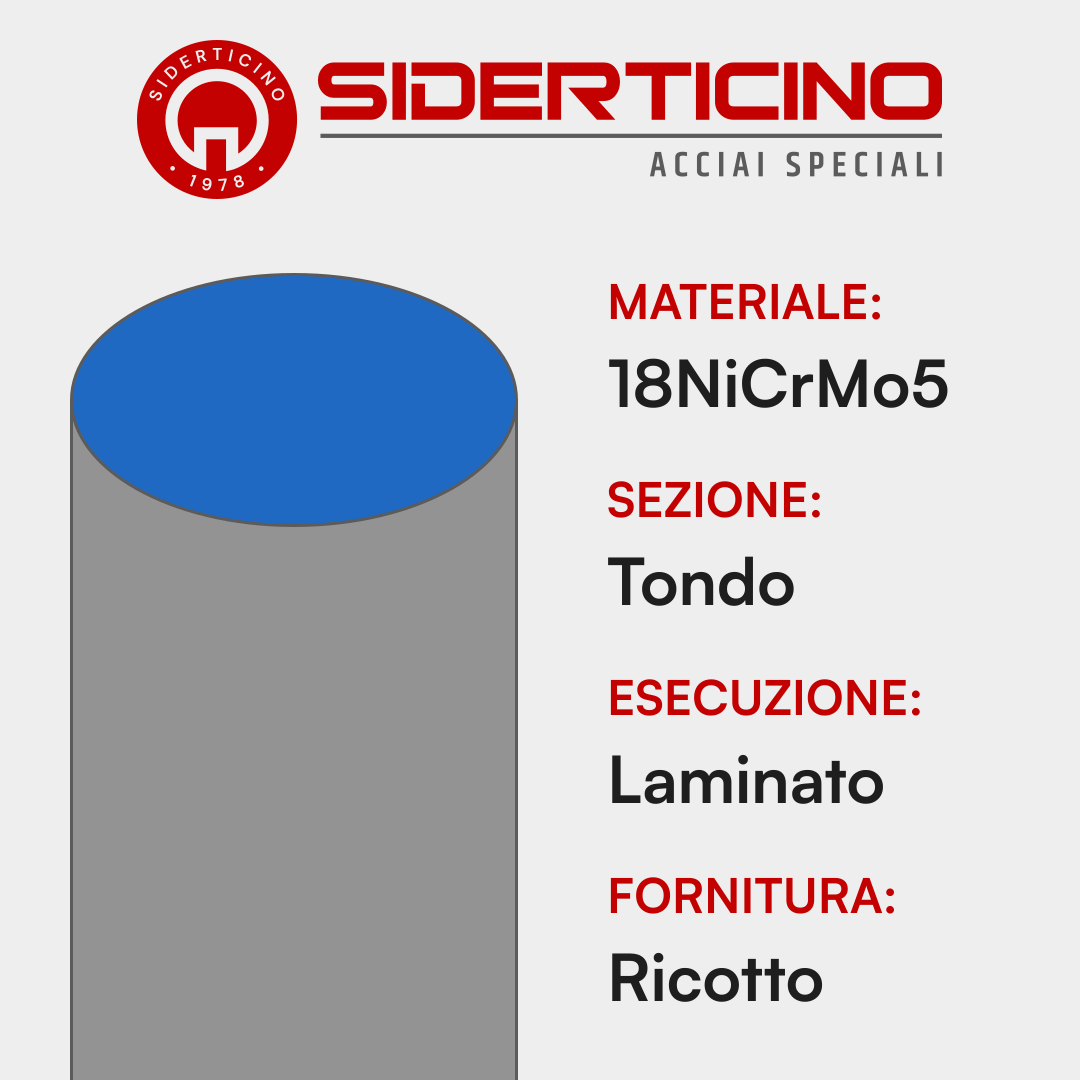
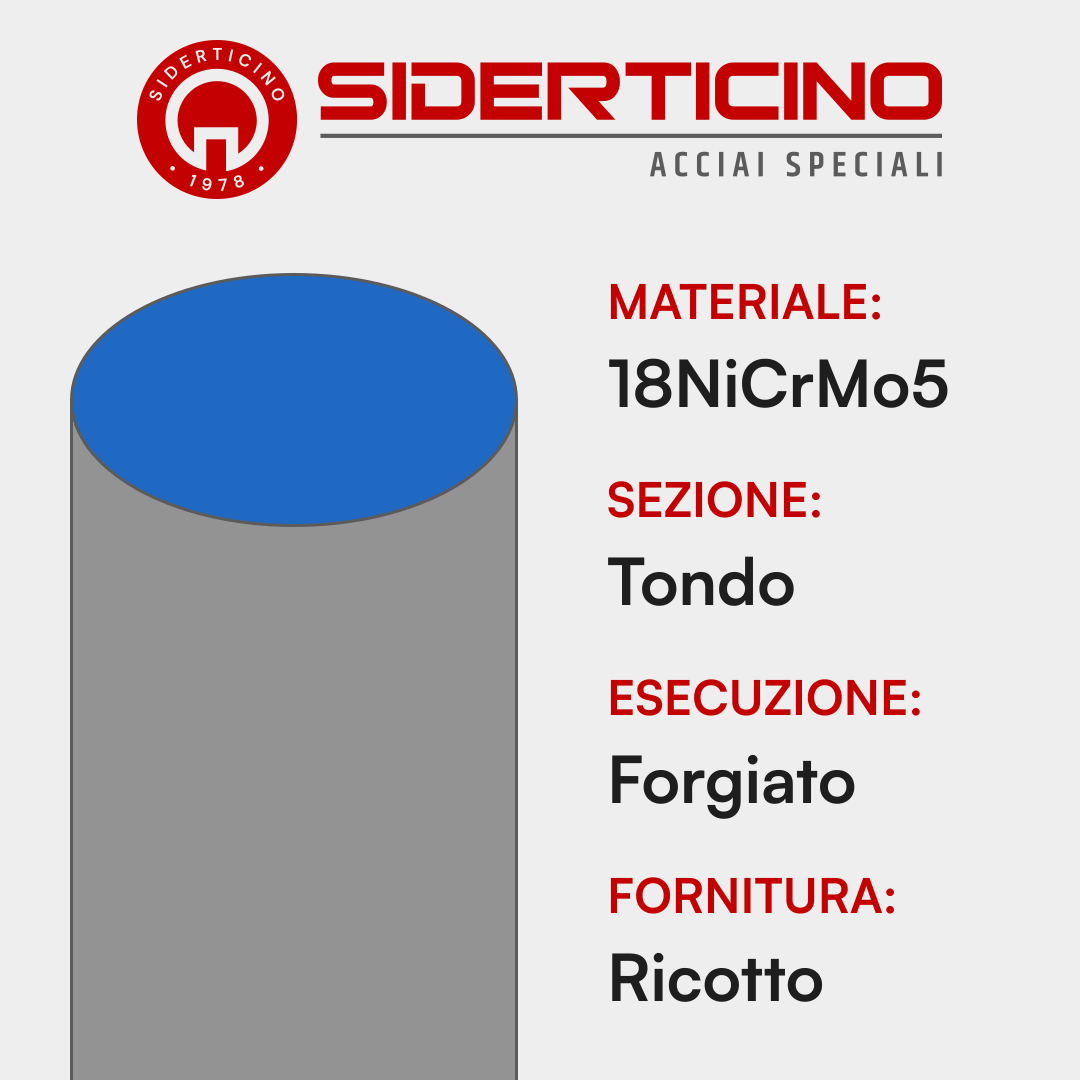
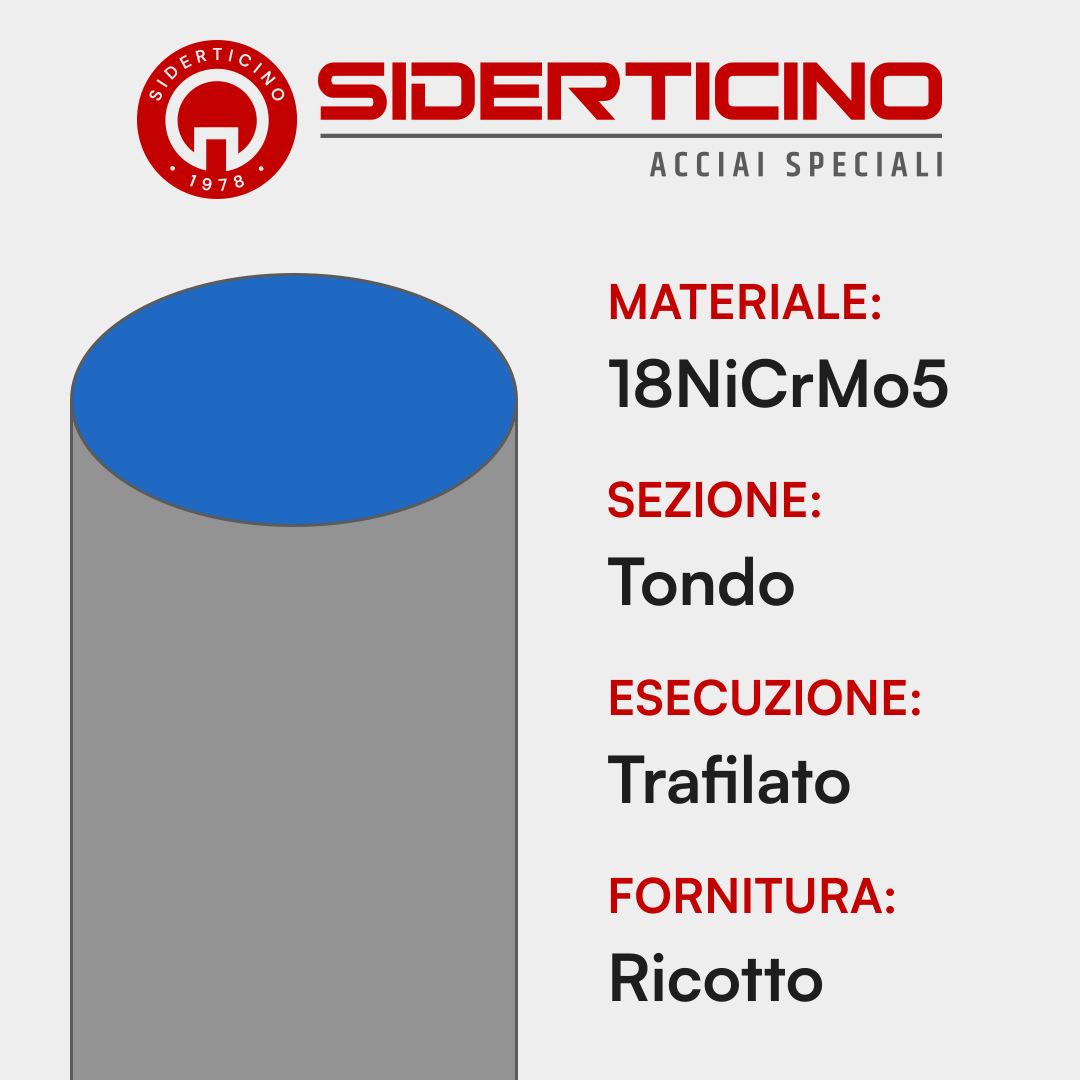
Every supply is accompanied by 2.1 quality certification or, on request, 3.1 according to EN 10204, attesting the mechanical properties and the 18NiCrMo5 chemical composition in compliance with the specific standards required for applications involving subsequent heat treatments of case hardening, quenching and tempering.
8.2. Specialized Technical Support for Heat Treatments
Our technical-commercial approach for 18NiCrMo5 is distinguished by the ability to support customers in the optimal selection of the delivery condition based on the 18NiCrMo5 heat treatments planned and the 18NiCrMo5 properties required by the final application.
8.3. Logistics Services and Supply Continuity
The availability of dedicated stock and competitive delivery times position us as a strategic partner for companies requiring timely supplies of 18NiCrMo5 steel for serial industrial production in the automotive sector, where supply continuity represents a critical factor for the operational efficiency of production plants. Optimized inventory management ensures immediate availability of the most requested formats for components such as gears, camshafts, half-shafts and bearings.
9. Machinability of 18NiCrMo5 Steel: Cutting Parameters and Optimal Techniques
The machinability of 18NiCrMo5 in the annealed delivery condition (200-225 HB) presents favorable characteristics for turning, milling and drilling operations, with cutting parameters optimized to maximize productivity and surface quality. The presence of alloying elements (Ni, Cr, Mo) influences chip formation and tool life, requiring appropriate selection of geometries and coatings to optimize production processes.
The cutting parameters for 18NiCrMo5 in the annealed condition require cutting speeds of 180-220 m/min for turning with TiAlN-coated carbide tools, with feed rates of 0.15-0.35 mm/rev and depths of cut up to 3-5 mm. Milling operates at peripheral speeds of 150-200 m/min with feed per tooth of 0.08-0.15 mm/z, using carbide cutters with positive rake angles (6-8°) to minimize cutting forces. Drilling requires reduced speeds of 80-120 m/min with feed rates of 0.10-0.25 mm/rev to avoid surface hardening from plastic deformation.
The lubrication and cooling for 18NiCrMo5 machining uses 5-8% oil emulsions for roughing operations and neat oils for precision finishing. Continuous chip formation requires effective chip breakers and forced evacuation to prevent interference with machining. Some manufacturers recommend controlled additions of sulfur (0.020-0.035%) to improve machinability, reducing tool wear by 15-25% while maintaining mechanical properties after heat treatment.
The surface finishes obtainable on 18NiCrMo5 reach Ra 0.8-1.6 μm for finish turning and Ra 0.4-0.8 μm for cylindrical grinding after heat treatment. Surface quality significantly influences tribological performance after case hardening, requiring strict control of machining parameters to minimize residual stresses and damaged microstructures that would compromise the effectiveness of the subsequent heat treatment.
10. Weldability of 18NiCrMo5 Steel: Procedures and Precautions
The weldability of 18NiCrMo5 presents specific critical issues related to the carbon equivalent content (CEV = 0.65-0.85%), which requires particular precautions to prevent cold cracking and maintain adequate mechanical properties in the heat-affected zone. Welding procedures must include preheating, hydrogen control and post-weld heat treatments to optimize the microstructure and relieve residual stresses.
The welding parameters for 18NiCrMo5 include preheating at 200-300°C for sections thicker than 25 mm, maintaining interpass temperature between 250-350°C and controlled cooling under thermal blanket. MIG/MAG procedures with Ar+CO₂ (15-20%) shielding gas and TIG in pure argon atmosphere ensure high metallurgical quality with control of specific heat input of 1.0-1.5 kJ/mm.
The filler materials compatible with 18NiCrMo5 include AWS E8018-C3 type coated electrodes for shielded metal arc welding, ER80S-D2 solid wires for MIG/MAG processes and ER80S-D2 rods for TIG welding. The composition of the filler material must be balanced to compensate for dilution with the base metal and maintain uniform mechanical properties throughout the welded joint.
The post-weld treatments for 18NiCrMo5 require stress relieving at 600-650°C for 1-2 hours/25mm of thickness followed by slow furnace cooling. For critical applications, normalizing at 850-900°C followed by tempering at 600-650°C fully restores the microstructure and mechanical properties, particularly important for joints subjected to dynamic loads or fatigue.
11. Quality Control and Testing of 18NiCrMo5 Steel: Standard Methodologies
The quality control of 18NiCrMo5 requires specific methodologies to verify compliance with UNI 7846:1978 standard and application performance, through mechanical tests, non-destructive testing and metallographic analysis. Quality certification ensures complete traceability from primary production to final application, supporting designers and users in verifying performance characteristics.
The standard mechanical tests for 18NiCrMo5 include tensile tests according to ISO 6892-1 on proportional specimens taken from each heat, verifying tensile strength (Rm), yield strength (Re), elongation (A%) and reduction of area (Z%). Impact energy is evaluated through Charpy V-notch impact tests according to ISO 148-1 at room temperature, with minimum absorbed energy of 35 J for thicknesses >25 mm. Brinell hardness HB is measured according to ISO 6506 on a metallographically prepared surface, with acceptance values of 200-225 HB for the annealed condition.
The non-destructive testing on 18NiCrMo5 includes ultrasonic testing for internal defect detection according to ISO 4992, with longitudinal and transverse scanning to exclude inclusions, cracks and segregations that would compromise performance after heat treatment. Wet magnetic particle inspection reveals sub-millimeter surface defects, while measurement of the oxide film thickness provides indications on the correctness of rolling and annealing parameters.
The metallography of 18NiCrMo5 analyzes microstructure, inclusions and distribution of alloying elements through optical and scanning electron microscopy. The purity index according to ISO 4967 evaluates the content and distribution of non-metallic inclusions, with maximum acceptable values of class 2.5 for oxides and sulfides. The austenitic grain size is determined according to ISO 643 for correlation with hardenability and final mechanical properties. The quality acceptance criteria for 18NiCrMo5 follow contractual specifications integrated with regulatory standards, ensuring compliance for critical applications where operational reliability is non-negotiable.