1. What are quenched and tempered steels
This family includes medium-carbon steels (approximately 0.25–0.50% C) that respond optimally to quenching and tempering. Quenching generates a hard but brittle martensitic structure; the subsequent high-temperature tempering transforms it into a sorbitic structure, which reduces brittleness and provides the strength/toughness compromise typical of these steels. Compared to case-hardening steels – low-carbon and hardened only on the surface – quenched and tempered steels develop uniform mechanical properties across the entire section. The family is standardized by EN 10083: part 2 for non-alloy steels (such as C45), part 3 for alloy steels (such as 42CrMo4 and 39NiCrMo3).
2. When to choose a quenched and tempered steel
A quenched and tempered steel is the correct choice when the component must offer mechanical strength and toughness across the entire section, not just on the surface, and operates under static or cyclic loads. This is the case for transmission shafts, pins, tie rods, gears and machine parts. If instead high surface hardness with a tough core is required – typical of gears subject to heavy wear – the choice falls on case-hardening steels. The selection of the specific grade within the family then depends on the section of the part, the stress level and the cost/performance compromise, criteria discussed further below.
3. Quenched and tempered grades in the catalog: how to choose
The three main grades distributed by Siderticino cover increasing needs for hardenability and toughness. The selection logic, in summary: from non-alloy for smaller sections, to Cr-Mo alloy for strength on significant sections, to Ni-Cr-Mo alloy when high toughness is required.
3.1. C45: non-alloy steel
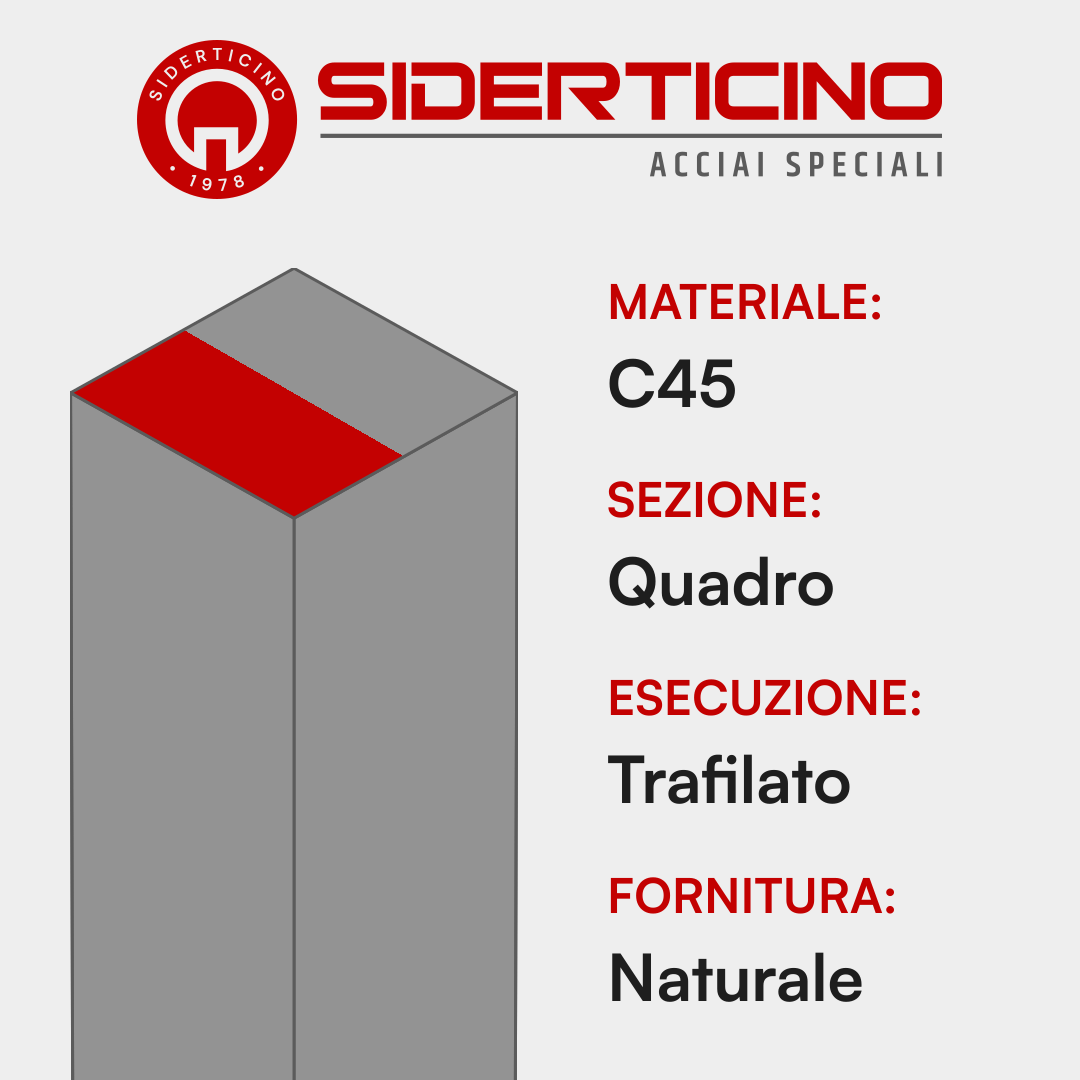
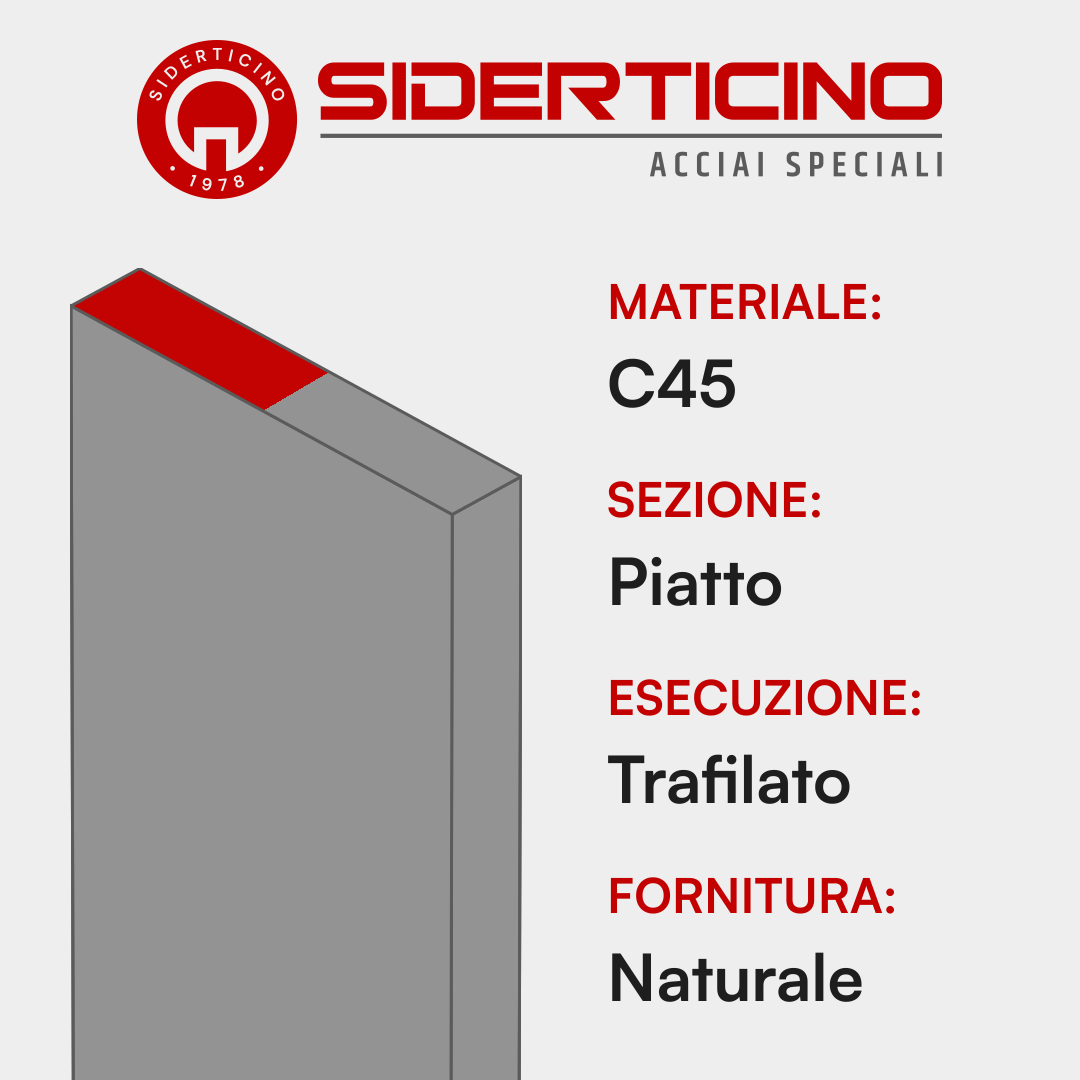
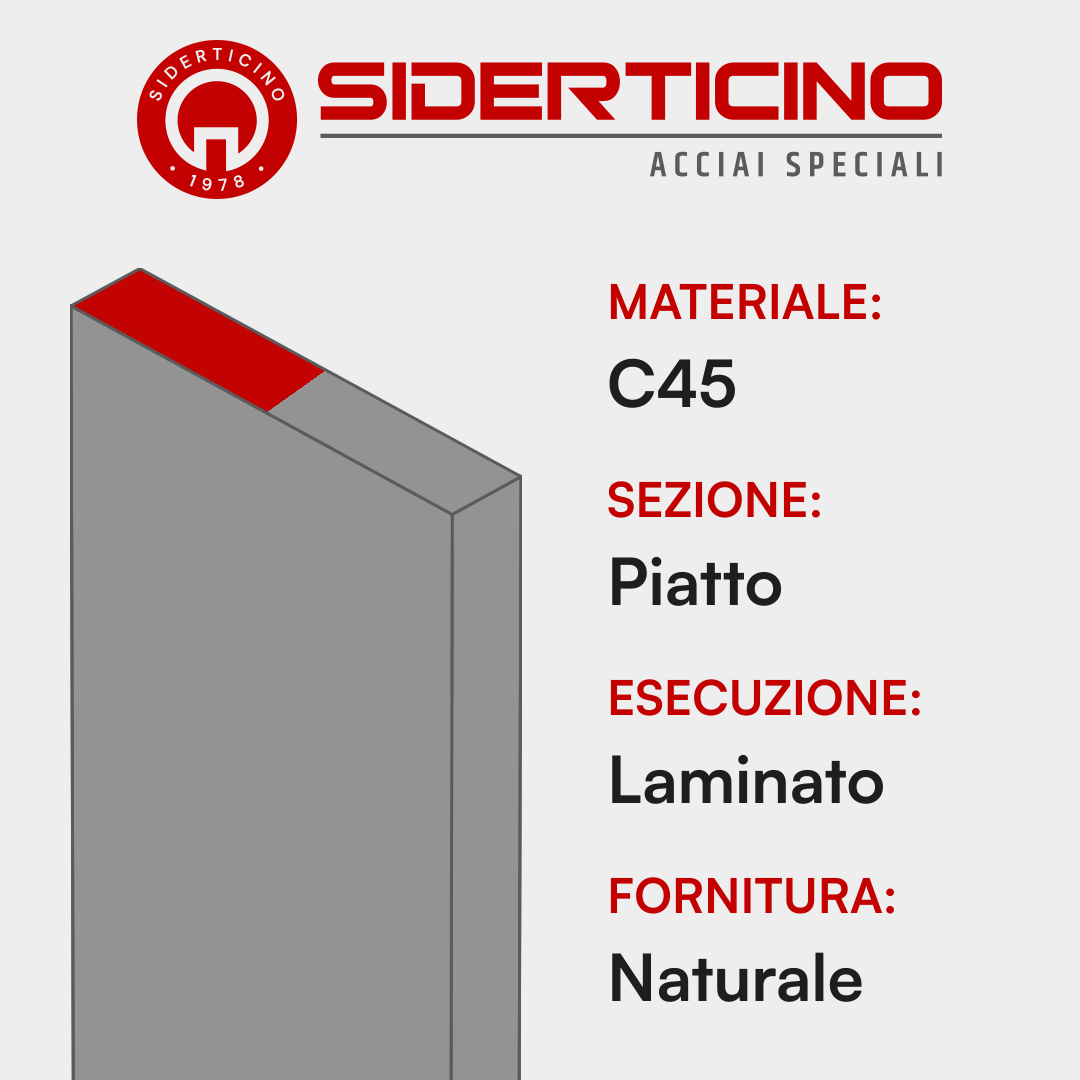
The C45 (EN 10083-2) is the reference non-alloy quenched and tempered steel. It offers the best ratio of machinability, availability and cost, but has modest hardenability: quenching and tempering properties are reliably achieved only on smaller sections, while on thick sections core strength decreases. It is the correct choice for general mechanical components of small-to-medium section where high core performance is not required.
3.2. 42CrMo4: Cr-Mo alloy steel
The 42CrMo4 (material no. 1.7225, EN 10083-3) is the most widely used alloy quenched and tempered steel, thanks to the balance between performance and cost. Chromium and molybdenum significantly increase its hardenability compared to C45, allowing significant sections to be effectively quenched and tempered with good core strength. It is the standard for shafts, gears and heavily stressed parts of medium and large section.
3.3. 39NiCrMo3: Ni-Cr-Mo alloy steel
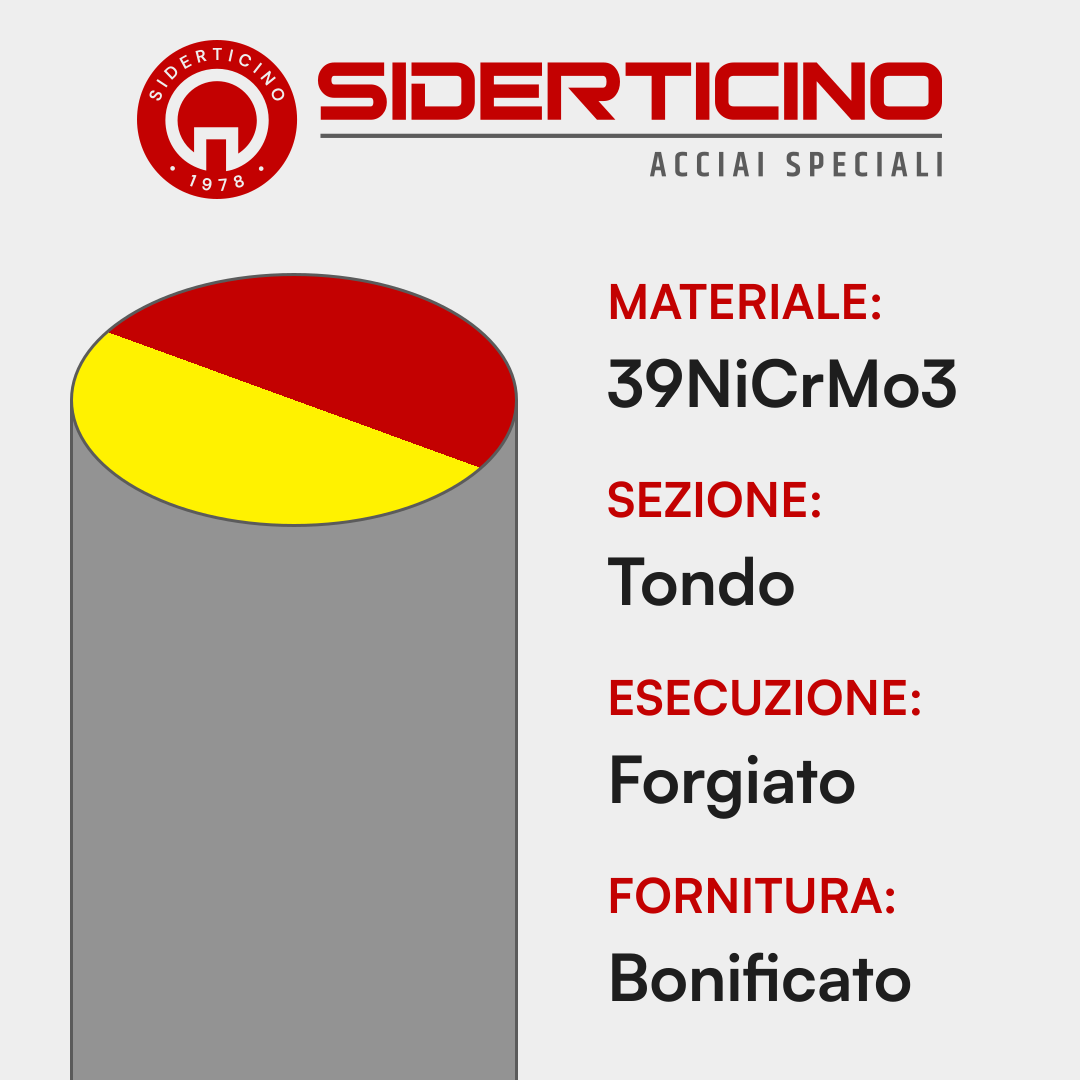
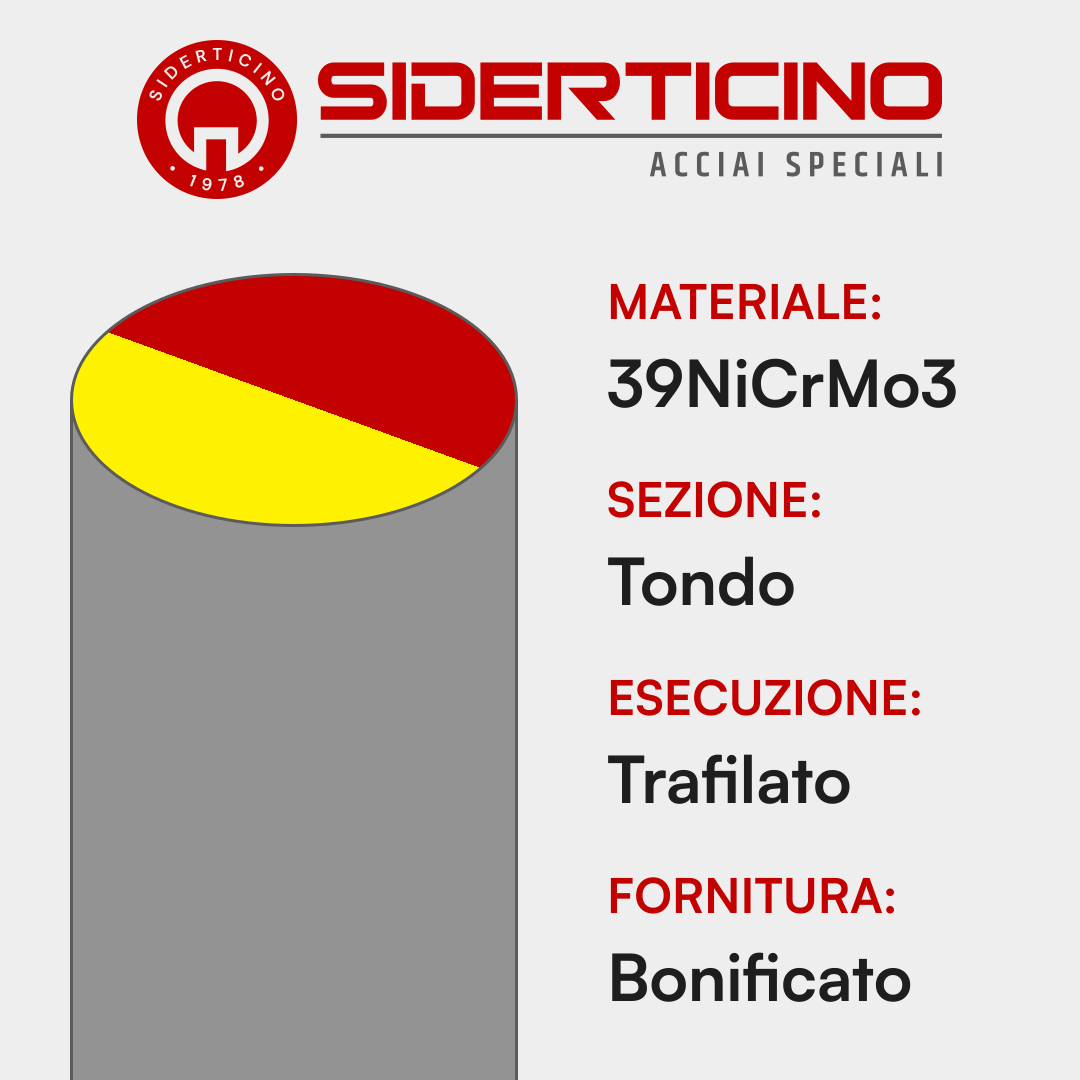
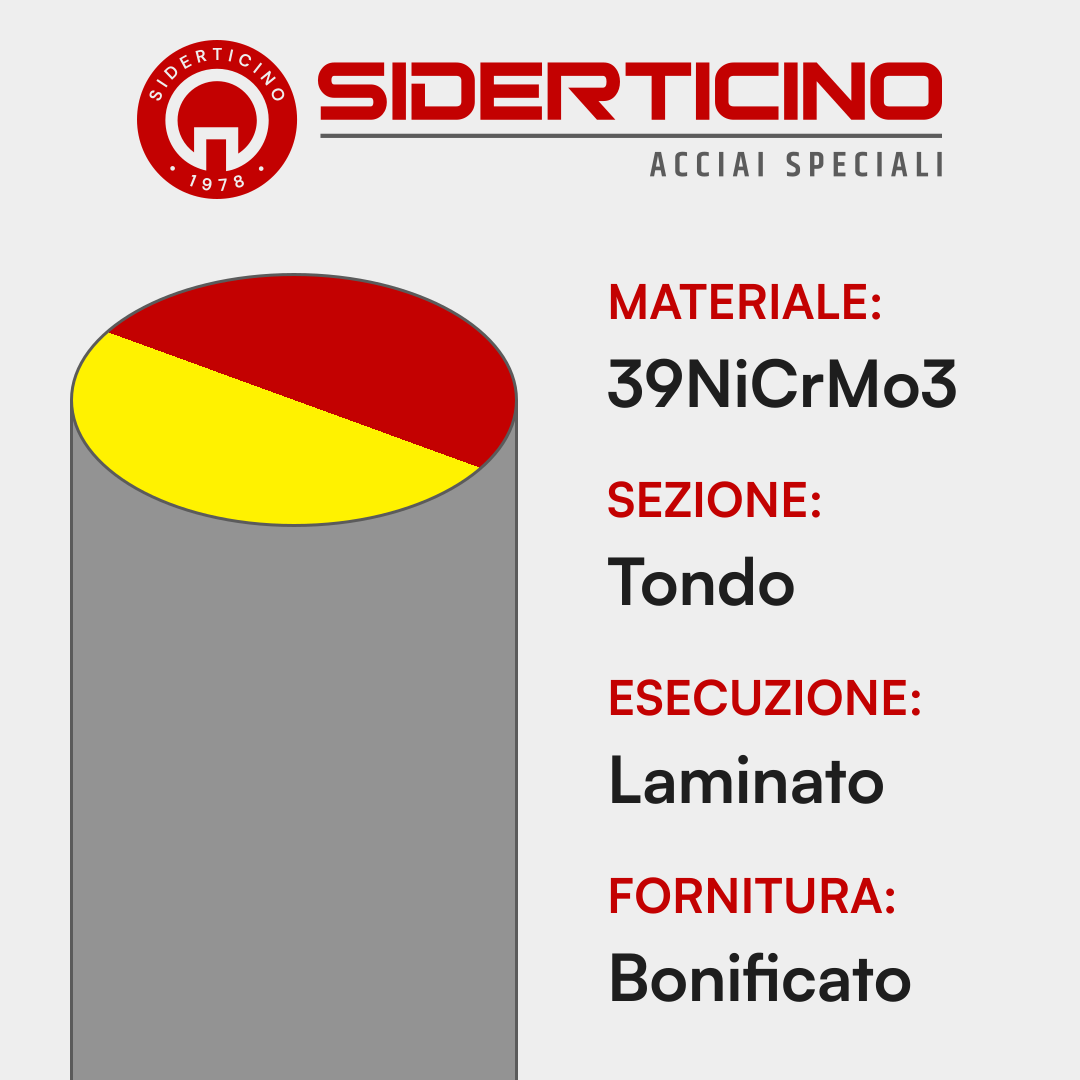
The 39NiCrMo3 (material no. 1.6510, EN 10083-3) adds nickel to the Cr-Mo base: this results in superior toughness, useful for components subject to dynamic loads and fatigue where impact resistance matters in addition to static strength. Compared to 42CrMo4, it favors toughness rather than maximum core strength on very large sections. For higher-responsibility applications, more highly alloyed grades are used (e.g. 34CrNiMo6).
4. Comparison table for the choice
Qualitative comparison between the three grades in the catalog, aimed at decision-making. For chemical composition, mechanical properties by size class and Jominy hardenability, please refer to the individual technical data sheets.
| Grade | Type | Standard | Hardenability | Toughness | Typical use |
|---|---|---|---|---|---|
| C45 | Non-alloy | EN 10083-2 | Modest | Medium | General components, small sections |
| 42CrMo4 | Cr-Mo alloy | EN 10083-3 | High | Good | Shafts, gears, medium-large sections |
| 39NiCrMo3 | Ni-Cr-Mo alloy | EN 10083-3 | High | High | Fatigue-stressed parts, where toughness matters |
5. Selection criteria: section, stresses, cost
The choice of grade depends on a few determining factors. The section of the component is the first: non-alloy steels such as C45 exhaust their hardenability on smaller sections, while Cr-Mo and Ni-Cr-Mo alloy steels maintain core properties on progressively larger sections. The type of stress guides the choice between strength and toughness: for predominantly static loads, 42CrMo4 is generally sufficient, for dynamic loads and fatigue, 39NiCrMo3 offers a toughness margin. The cost/performance compromise concludes the choice: the least alloyed grade that meets the requirements is adopted, moving up in alloy content only when section or stresses require it. For sizing semi-finished products, the steel bar weight calculation tool is available.
6. Typical applications
Quenched and tempered steels are widely used in power transmission and general mechanics: transmission shafts and crankshafts, gears, axle shafts, pins, connecting rods, spindles, tie rods and parts subject to bending and torsion. They are used in automotive, industrial and heavy mechanics, earthmoving and hydraulics (rods, pistons). For components with higher structural responsibility, or for use in regulated sectors, the selection must always be verified against specific service requirements, which may require grades with a higher alloy content than those in this family.
7. Delivery conditions, standards and certification
Siderticino supplies quenched and tempered steels in round bars, squares, flats and plates, in forged, hot-rolled, cold-drawn, peeled and ground execution, and in normalized (+N), annealed (+A) and quenched and tempered (+QT) delivery conditions. The reference standards are EN 10083-2 (non-alloy steels) and EN 10083-3 (alloy steels) for hot-rolled products, and EN 10277-5 for cold-finished products; certification follows EN 10204, with certificate 2.1 or, on request, 3.1. In addition to supply, cutting to size and third-party heat treatment are available. For a quote, you can request a quote indicating grade, format and quantity.
8. Frequently asked questions about quenched and tempered steels
8.1. What is the difference between quenched and tempered steels and case-hardening steels?
Quenched and tempered steels have medium carbon content and develop uniform mechanical properties across the entire section through quenching and tempering. Case-hardening steels have low carbon content and are enriched with carbon on the surface before quenching, achieving a hard surface layer over a tough core. The choice depends on the type of stress: bulk strength for the former, surface hardness with a tough core for the latter.
8.2. C45, 42CrMo4 or 39NiCrMo3: which one to choose?
In summary: C45 for general components of small section, where cost matters; 42CrMo4 when hardenability and core strength are needed on medium-large sections; 39NiCrMo3 when, for equal strength, higher toughness is required for dynamic loads and fatigue. The choice must always be verified against the actual section of the part and the delivery condition.
8.3. How does the section of the part affect the choice of grade?
As the section increases, the cooling rate at the core during quenching decreases and quenching and tempering properties decay. Non-alloy steels such as C45 are suitable only for smaller sections; for larger sections, alloy steels (Cr-Mo or Ni-Cr-Mo) are needed, whose hardenability ensures uniform structures and properties even at the core. This is the main reason for increasing the alloy content.
8.4. In which delivery conditions are they available?
Quenched and tempered steels are typically supplied in the quenched and tempered (+QT) condition, ready for use, or normalized (+N) or annealed (+A) when machinability needs to be prioritized or a subsequent treatment set up. The optimal condition depends on the planned machining and can be agreed upon at the quotation stage.
8.5. What certification accompanies the material?
Each supply is accompanied by the EN 10204 2.1 inspection certificate and, on request, the 3.1 certificate, with traceability of the chemical composition and mechanical characteristics of the batch, required for orders that need full traceability.